
The cement sector may be looking at better realisations and higher volume offtake going by the trends of the October-December quarter of the 2022-23 financial year (Q3FY23), a recent price hike, and the promise of a continued infrastructure thrust in FY24. In Q3, revenues rose by an aggregate of 17 per cent year-on-year (YoY), but Ebitda (earnings before interest, tax, depreciation and amortisation) per tonne, fell by 14 per cent YoY while profit after tax (PAT) rose by 23 per cent YoY. Expenses were up 30 per cent per tonne YoY - power and fuel costs in particular - and that's no surprise given the rise in fossil fuel prices.
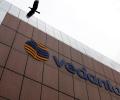
Vedanta investors were jittery on Tuesday as its share price fell and bond yields of its parent firm rose following concerns raised by a rating agency on its capability to repay debt maturing later this year. Shares of the mining and metals major were down by 7 per cent on Tuesday to Rs 268 a piece on the BSE. The company has lost market valuation of 30 per cent in the last one year and 13 per cent since January 1 this year. Yields on the bonds of Vedanta Resources, the parent firm of the BSE-listed Vedanta, shot up to 39.8 per cent - showing investors' rising concern over the group's debt situation

'Short term volatility is likely due to various factors, global and domestic; investors may use this as an opportunity to increase the allocation to equities.'

PSU divestment, LIC IPO, fiscal deficit: Budget 2021 marks a clear change in the Modi government's stance from fiscal conservatism to growth orientation.

The Securities and Exchange Board of India (Sebi), the market regulator, has said, in a submission to the Supreme Court, that it is "enquiring" into the allegations made by American short-seller Hindenburg Research against the Adani Group of companies and its impact on the markets. In the same matter, the central government has agreed to form an expert committee to strengthen the regulatory regime in order to ensure that market investors are protected. The Supreme Court had last week suggested an expert committee to look into the allegations and had asked the Centre for its response.

Bharti Airtel's fund raising is expected to strengthen its competitive positioning in the market and provide the telco with the necessary ammunition for aggressive 5G rollout, analysts said. The capital raising announcement, though unexpected and surprising, would enable Airtel to enhance its market share and provides it wherewithal to make faster investment in a scenario India moves to a two-player market earlier than expected, some analysts felt. Bharti Airtel's board on Sunday approved raising up to Rs 21,000 crore by way of rights issue at a price of Rs 535 per share.

Analysts are bullish on consumption and investment themes.
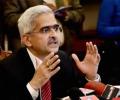
Following are the highlights of the RBI's first monetary policy statement of 2022-23 unveiled by Governor Shaktikanta Das: Policy repo rate unchanged at 4%; marginal standing facility rate & bank rate too remain unchanged at 4.25%. Monetary stance to be accommodative with focus on withdrawal of accommodation to keep inflation within target. GDP growth projection for FY'23 slashed to 7.2% from 7.8%; growth projections based on assumption of crude oil (Indian basket) price at $100 a barrel during FY'23. Inflation forecast hiked to 5.7% for FY'23 from 4.5%.

S&P Global Ratings on Thursday said about half of the Indian companies that it rates are getting a boost in their core profitability from rupee depreciation. "Much of our rated India corporate portfolio has sizable US-dollar linked revenue and, therefore, is not exposed to rupee depreciation. "This encompasses entities in the IT, metals, and chemicals sectors. About half of the firms we rate are getting an EBITDA boost from currency weakening," the US-based rating agency said in a report.
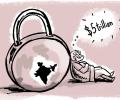
It would be a difficult task for the Indian economy to reach the $5-trillion mark a year before the International Monetary Fund (IMF) projection of 2026-27. Pankaj Chaudhary, minister of state for finance, said in the Rajya Sabha on Tuesday that the government is taking steps to make the country a $5-trillion economy at a date earlier than the IMF's projection. In that context, it would not be difficult to meet the projection in the third quarter of FY27.

Foreign currency loans raised by Indian companies nosedived to $210 million in the September quarter (Q2), 93.3 per cent less than the year-ago period when five firms raised $3.1 billion. The Q2 amount is the lowest since December 2003 quarter when India Inc raised $191 million. Companies cited volatility in the currency markets, sharp rise in interest rates in the United States, and fund availability in India as the main reasons behind the sharp fall.

Engineering giant Larsen & Toubro (L&T) is looking to divest its exposure to road and power concessions and incubate digital and e-commerce businesses as part of its new five-year plan ending 2025-26 (FY26). The base year for the plan is 2020-21 (FY21). The blueprint, called Lakshya 2026, is intended to help the company exit sub-scale businesses, concentrate on high-technology (tech) manufacturing, construction and green energy projects, and increase its share from information technology (IT) and digital services. The lending operations of the financial services business, meanwhile, will be reorganised, with focus on retail lending.

'After 2011-2012, both our investment rate and savings savings rate have declined. 'Correspondingly, the savings rate in the economy as percentage of GDP, also has come down.'

The company will move swiftly to consolidate its recent acquisition of three distilleries and will also take a decision on setting up a Rs 650-crore two-furnace glass plant in Andhra Pradesh, said sources.


India's current account deficit is expected to deteriorate in the current fiscal on account of costlier imports and tepid merchandise exports, according to the Finance Ministry's monthly economic review. The review released on Thursday by the ministry also said that global headwinds would continue to pose a downside risk to growth as crude oil and edibles, which have driven inflation in India, remain major imported components in the consumption basket. For the present, it said, "their global prices have softened, as fears of recession have dampened prices somewhat. This would weaken inflationary pressures in India and rein in inflation."

The Reserve Bank of India on Thursday kept the benchmark interest rate unchanged at 4 per cent and decided to continue with its accommodative stance against the backdrop of an elevated level of inflation.

After a tumultuous past few days that almost halved value of the Adani group, embattled tycoon Gautam Adani-led conglomerate had some pressure eased on Friday as two global rating firms stuck with their calls on its credit profile and its French partner backed its investments in the group firms. Also for the first time since January 24, shares of the group's flagship firm Adani Enterprises ended in positive territory after erasing an intraday loss of 35 per cent. Adani Ports and SEZ also ended 8 per cent higher. This is after a over $100-billion rout in value of group stock since the US short seller Hindenburg Research accused Adani group of stock manipulation and accounting fraud.

Fitch Ratings on Monday cautioned that the Indian government has little fiscal headroom at its disposal to respond to possible shocks to growth given the country's lowest investment grade credit rating with a negative outlook. "India's public debt/GDP ratio, at about 87 per cent in FY21, is well above the median of around 60% for 'BBB' rated sovereigns. "We revised the Outlook on India's rating to Negative, from Stable, in June 2020, partly owing to our assumptions about the impact of the pandemic on public finance metrics. "The government has little fiscal headroom at its current rating level to respond to possible shocks to growth," it said in a report.

Distribution yields could rise, but risk of Covid, higher interest rates remain.

Instead of conceding the demand for a cut in personal income-tax rates, Finance Minister Nirmala Sitharaman should phase out many exemptions in both personal and corporation taxes, suggests A K Bhattacharya.

The forthcoming budget needs to delay fiscal consolidation, instead should focus more on supporting the pandemic battered-economy and boost consumption demand by offering income tax soaps and cutting fuel taxes, says a report. In a pre-budget report, India Ratings said it expects the new budget to consolidate and strengthen the plan set out in the last budget, rather than trying out new things by continue with the revenue and capital expenditure pattern of FY'22 to provide stability and consolidation to the past/ongoing efforts, and to focus on boosting demand by generating employment opportunities in areas/sectors that have been impacted more by the pandemic. The report therefore expects the finance minister to delay fiscal consolidation and make it to be a gradual and calibrated process, thus ensuring the necessary fiscal support that the economy needs is available till the recovery acquires its own momentum.

Stock market investors are expecting a balanced Budget with a focus on job creation, increased spending on infrastructure, reigning in the deficit, and bringing the economy back on track, experts said on Wednesday. Stock markets have been subdued in the run-up to the Union Budget with BSE's benchmark Sensex is almost flat so far this month. Even the corporate earning season failed to excite the markets, while some indices like IT and bankex have seen some positive movements.

Members of the Monetary Policy Committee (MPC) felt that though the Indian economy was resilient in the third wave, it, however, lost some momentum and with inflation likely to soften, there is room to continue with the accommodative stance and support revival, the minutes of the MPC meeting released on Thursday revealed. The six-member MPC voted to keep the policy rate unchanged and continued with the accommodative stance at its meeting on February 10. However, external member Jayanth Verma voted against the stance because he felt a switch to neutral was long overdue and the current stance has become counterproductive and deflects focus away from addressing recessionary trends that date back to at least 2019.

India will grow at around 7.4 per cent in 2022-23 and continue at the same pace in the next year as well, Union Finance Minister Nirmala Sitharaman said on Friday. Sitharaman said there are risks on the external front and this is not the right time to throw caution to the wind, and also assured exporters of all the necessary support from the government as they face the headwinds. Speaking at the FE Best Bank Awards event here, Sitharaman said global agencies like IMF and the World Bank have taken cognisance of the strengths of the Indian economy by saying that it will be among the fastest growing ones in the next two years.

Admitting that credit growth is "very low" given the size and growth rate of the economy, the Reserve Bank on Wednesday said for both the numbers to match, "the very very wide output gap" has to close. The central bank also clarified that low credit growth does not necessarily mean low credit flow to the economy, or choking of credit to the system, as bank credit growth numbers that the central bank publishes regularly represent only the outstanding credit in the system. Output gap means due to poor demand conditions, companies are unable run their plant at full installed capacity or, in a larger sense, an economy is not producing optimally as the demand is missing.

'Top lines will grow, volume growth will be there, but margins might also be impacted.'
According to GHIAL chief executive officer P S Nair, the company is also introducing austerity measures to reduce cost of operations by 15-20 per cent besides exploring other sources of revenue. During the first six months of the current financial year, domestic traffic from the new airport has declined by 7.7 per cent to 2.49 million from 2.7 million in the corresponding period last year (from Begumpet airport).

IndusInd Bank was the top gainer in the Sensex pack, spurting over 5 per cent, followed by Bajaj Finserv, HCL Tech, Bajaj Finance, Kotak Bank and Axis Bank. NSE Nifty jumped 203.15 points to 17,780.00.

The Tata group is planning to invest $90 billion in new industries such as mobile components plant, semiconductor, electric vehicles, batteries, renewables energy and e-commerce by 2027. The Tata group's investment in India is far higher than the $75-billion investments planned by Mukesh Ambani-owned Reliance Industries and $55-billion investment planned by the Adani group in the next five years in the country, the Economist reported recently. The investment by the Tata group is a shift in its strategy to focus more in the home markets instead of international markets where the group lost money.
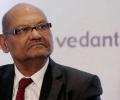
With a robust outlook for mineral-led growth in India, Anil Agarwal-led Vedanta Limited is looking to invest up to $20 billion across its businesses, which includes doubling of silver production and steel capacities. In a virtual press conference had last month, Agarwal said the company planned a capex of $5 billion over a period of three years. The company has not given a timeline for $20-billion investment.

Let's wait for the monetary policy on February 8 -- to see how it complements the fiscal commitments, points out Tamal Bandyopadhyay.
Six consecutive profitable quarters after an equal number of losses - for Bharti Airtel, the turnaround has been quick. But it is not a result of higher tariffs or absence of exceptional items alone. Execution and strategy are playing a part, too. Bharti Airtel's chief executive officer Gopal Vittal summed it up in a post-result conference call last month. "We track the profit in each of our 237,500 (cell) sites.

These could include strengthening the public-private partnership (PPP) dispute resolution mechanism, uniform PPP institutional framework, easier terms for infrastructure companies accessing bond markets, and tax sops, Business Standard has learnt. Investment in infrastructure projects with high multiplier effect has been the Centre's main plank to revive the economy, create employment and boost consumption.

Despite the Sensex's 74 per cent run-up over the past year, the Indian equity market could still reward investors if the expected revival in earnings materialises, according to market experts. Returns during the coming year are more likely to be in line with longer-term trends (the Sensex's five-year return is around 14 per cent). Several factors are expected to aid the market's performance this year.

Moody's Investors Service on Thursday slashed India's economic growth projection for 2022 to 7.7 per cent, saying that rising interest rates, uneven monsoon, and slowing global growth will dampen economic momentum on a sequential basis.

'We can go somewhere between 35 per cent and 40 per cent.'

This comes at a time when the COVID-19 crisis is expected to derail the government's revenue maths for 2020-21, hitting the mop-up from sources such as taxes and divestment.

This Budget is an interesting cocktail of growth orientation with inclusiveness and fiscal prudence. When one looks beyond the numbers, at the overall direction, there are distinct trends.

The government is planning to merge Bharat Broadband Nigam Limited (BBNL) with the loss-making state-run telecom operator Bharat Sanchar Nigam Limited (BSNL) this month, a senior official has said. BSNL chairman and managing director PK Purwar at a recent event organised by the All India Graduate Engineers and Telecom officers Association (AIGETOA) said that the government is giving the telecom firm an opportunity for a turnaround. "The government has taken a policy decision that BBNL is going to be merged into BSNL. "This means all work of BBNL at the pan-India level is going to come to BSNL," Purwar said at the All India Conference of AIGETOA on March 13.
 © 2026 Rediff.com - Advertise with us - Disclaimer - Privacy Policy - Sitemap - Feedback - About us - Terms of use - Grievances