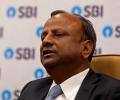
The country's largest lender, SBI on Tuesday said it has cut savings rate by 25 basis points, or 0.25 per cent, to 2.75 per cent on all deposits. The new rate will come into effect from April 15, 2020.

One risk of investing in a very low-cost ETF is if a fund house runs it at below cost, it could close it if it fails to attract institutional money
The government has already crossed the fiscal deficit at 132 per cent of the estimate as of December end.

As per the Budget estimate, net borrowing by the government in the current fiscal is pegged at a whopping Rs 3,97,957.47 crore (Rs 3,979.57 billion) to fund its widening fiscal deficit projected at 6.8 per cent of GDP this fiscal due to a slew of measures taken to boost the economy, which is facing the impact of financial meltdown.
ICICI Bank has increased auto loan rates by 100 basis points with effect from Monday, a bank official told PTI.

'Stick to FDs of shorter tenures, preferably one-two years.'
As liquidity eases and inflation turns negative, Dewan Housing Finance Corporation on Friday said it expects home loan rates to come down by 25-50 basis points in the near-term.
The chief of the country's second largest public-sector lender said interest rates should fall as and when inflation eases, but pointed out the need to lower deposit rates first.

Subdued prices of food items like vegetables pulled down retail inflation for the third month in a row to 5.3 per cent in August, within the RBI's comfort zone. While the Consumer Price Index (CPI)-based retail inflation declined to 5.3 per cent in August from 6.69 per cent in the same month a year ago, food inflation dipped at a much faster pace to 3.11 per cent from 9.05 per cent in August 2020. The food inflation was also lower than 3.96 per cent in preceding month of July.
.jpg)
Declining prices of food items like vegetables pulled down retail inflation to 5.59 per cent in July, bringing it back within the RBI's comfort zone after two months, official data showed on Thursday. The retail inflation based on the Consumer Price Index (CPI) had remained above 6 per cent during May and June. The government has mandated the RBI to maintain retail inflation at 4 per cent, with a margin of 2 per cent on either side. The CPI based inflation stood at 6.26 per cent in June 2021 and 6.73 per cent in July 2020.
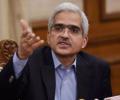
These are the highlights of RBI Governor Shaktikanta Das's statement and resolution of the Monetary Policy Committee (MPC):

State Bank announced a 15 basis points reduction in its lending rates, effective August 10 across all tenors.
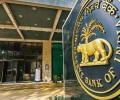
With inflation remaining at elevated levels, central banks around the world, including the Reserve Bank of India (RBI), will kill excess demand in economy over the next six to eight months, sources in the know said. They also indicated that there could be a rate hike in June, when the inflation forecast for the current financial year would be raised. The RBI, the sources said, might announce more steps such as raising the limit on held-to-maturity (HTM) bonds to support government borrowings but might not come out with any further quantitative easing GSAP (Government Securities Acquisition Programme) measures.

The central bank has, so far, cut its repo rate by 125 bps.

New borrowers should go for banks over housing finance companies as the new benchmark -- MCLR -- is more transparent.

Lockdowns imposed by the states in April and May to contain the second wave of the deadly COVID-19 pandemic has likely led to the economy contracting 12 per cent in the June quarter as against 23.9 per cent contraction in the same quarter in 2020, says a brokerage report. The economy had its worst contraction on record in FY21 at 7.3 per cent as the 2.5 months of unplanned lockdown announced by the centre with just a four-hour notice had crippled the economy in the first quarter with a massive 23.9 per cent contraction, which improved to -17.5 per cent in the second quarter.
In terms of magnitude of rate cuts, Morgan Stanley expects 50-100 basis points of policy rate cuts in 2015, depending on the inflation trajectory, which in turn will be dependent on the trend in commodity prices, fiscal deficit and rural wage growth.

Minutes of the MPC meeting show Das felt economy needs more monetary stimulus as inflation outlook remains uncertain.

Recent rates cuts by most banks may not have a significant impact on margins, say analysts.

China won the top prize on the basis of having won the round-robin stage.

RBI would get the comfort of meeting its 8 per cent January Consumer Price Index-based inflation target, BofA-ML said, adding that 'we expect the RBI to cut 75 bp in 2015 from February with inflation on course to 6 per cent in January 2016'.

For investors, every cost-saving means higher returns.

Despite lower growth scenario; companies say reworking strategy

Analysts factor in 200-300-bps impact on sales in FY16

Adopting a wait- and-watch approach ahead of US Fed meeting

After posting double-digit growth for the fourth consecutive quarter, chief executive officer and managing director Salil Parekh tells Yuvraj Malik and Debasis Mohapatra that the firm is not facing any delay in ramping up of large deals.

Union Bank of India, United Bank of India reduced base rates.

Low home loan rates by banks could put large players in an advantageous position over smaller non-bank players, believe analysts.
SBI cuts priority sector lending rates by 50bps
Bankers and economists agree rates will soften, though the quantum would depend on banks' asset-liability profile

BofA-ML said the liquidity deficit is running higher than the forecasts because the RBI has suspended its bond buybacks or open market operations.
The RBI is understood to be dithering since it would want more clarity on the cost of the fiscal policies the new government would undertake before it decides to cut rates, even though it has pencilled in a lower gross domestic product growth rate for this fiscal year.

The RBI is likely to raise CRR, the portion of funds that banks have to keep with the regulator, by 50 basis points in its forthcoming monetary review next week and signal tight monetary measures, says Moody's.
More steps are necessary to accelerate speed.
HDFC Bank, the country's second-largest private sector bank, has cut its base rate by 15 basis points (bps) to 9.70 per cent.

Existing bank deposits will continue with past rates until renewed on maturity.

The retail inflation rate breached the 6 per cent upper tolerance limit of the RBI for the first time in seven months in January, while the wholesale price index stayed in double-digits for the 10th month in a row, showed two sets of data released by the government on Monday. Retail inflation, the key input for the RBI while reviewing the repo rate every two months, soared during the month mainly because of a spike in certain food items. The previous high for retail inflation was 6.26 per cent in June 2021.

Given the developments, analysts expect fiscal and monetary support from the government and RBI to revive sentiment. However, recovery, they say, from these levels will be slow and painful.

MFs have benefited from a shift to financial assets from physical assets like real estate and gold.
RBI is committed to bringing down retail inflation to eight per cent by January 2015 and six per cent by January 2016.
