
Among the stocks that have seen the largest cut by MFs, the DVR shares (shares with differential voting rights) of Tata Motors have seen a cut of 243 basis points (bps) in MFs' stake.

Benchmark indices Sensex and Nifty gave up early gains to close lower for a fourth straight session on Thursday due to selling in IT and banking shares amid weak global equities. The 30-share BSE benchmark settled 98 points or 0.18 per cent lower at 53,416.15. During the day, it hit a high of 53,861.28 and a low of 53,163.77. The broader NSE Nifty also pared initial gains and ended 28 points or 0.18 per cent down to settle at 15,938.65.

If the banks throw caution to the winds for building loan books, the hydra-headed bad loans may resurface and spoil the party, warns Tamal Bandyopadhyay.

Equities went into a tailspin on Wednesday after the Reserve Bank surprised the market with a mid-cycle rate hike in a bid to tame soaring inflation.

What has hit sentiment further is a draft proposal by the government to increase vehicle insurance premiums for financial year 2022-23 (FY23). Third-party motor insurance premiums have not been increased over the last two years and if this is approved, insurance costs for specific segments could rise by a fifth. The worst impacted is the 350cc and above two-wheeler segment, where premiums are up 21 per cent. Royal Enfield (Eicher Motor) is the market leader in the segment. The premiums in the 150-350cc two-wheeler category are also being inc

The domestic stock market may face volatility amid the monthly derivatives expiry scheduled this week, while investors would mainly await the outcome of RBI's interest rate decision on Friday, said analysts. Global market movement would also continue to drive sentiment amid a bearish trend recently following rate hikes by the US Federal Reserve and other central banks. The Reserve Bank of India (RBI) may take cues from its global counterparts to raise interest rate for the fourth time in a row to control inflation.

It is nearly after 13 years that a foreign brokerage has resumed holistic coverage on stocks of public sector banks (PSBs). To that extent, Morgan Stanley's report dated March 3, where the analysts have listed their order of preference for PSB stocks, is an indication that the state-owned banks may once again be attracting some interest, thanks to three back-to-back quarters of good results in FY21 so far. "State-owned banks' balance sheets have improved, and bad loans formation should moderate going forward," the analysts note and this is the key reason for them to relook at their stance on PSBs. While State Bank of India (SBI) remains their preferred pick, stocks of Bank of Baroda (BOB) and Punjab National Bank (PNB) have been upgraded from 'underweight' to 'equal-weight'. The brokerage maintains its underweight recommendation on Bank of India and Canara Bank.

House economists at the nation's largest lender State Bank of India (SBI) have urged the government to budget for nursing the pandemic-ravaged economy and not to focus too much on fiscal consolidation as there is a need for more stabilisation measures to sustain the fledgling recovery. And one of the best way to begin the new fiscal is to complete the share sale of LIC this fiscal. This can go a long way in repairing the overstretched balance sheet which in turn will bring down fiscal deficit to a much lower 6.3 per cent in FY23 as the public coffers will be left with a cash surplus of at least Rs 3 lakh crore to begin the new fiscal, SBI chief economist Soumya Kanti Ghosh said in a pre-Budget note on Wednesday.

'While foreign institutional investor flows are still negative, they will turn positive in the latter part of 2023 as India's resilient growth becomes perceptible.'

Lower fuel subsidy payouts might restrict gross fiscal deficit in FY15.

While Infosys has increased the margin guidance for FY21 by 100 bps to 24-24.5 per cent, analysts believe there will pressure on near-term margins as discretionary cuts - promotions and travel, headcount addition, record utilisation, and wage hikes start to reflect on costs.
With the 115 bps reduction in repo rate beginning February, banks have already transmitted 72 bps to the customers on fresh loans and some large banks have transmitted as much as 85 basis points.

Sluggish rural demand along with higher inflation is set to mute revenue growth of the fast-moving consumer goods (FMCG) sector at 7-9 per cent this fiscal and the next compared to 8.5 per cent in the previous fiscal, a report said. Almost 40 per cent of the Rs 4.7-lakh-crore sector come from the hinterland markets, which have been hit by high inflation, low wages and high job losses since the Covid pandemic. Revenue growth of the FMCG sector will be muted at 7-9 per cent this fiscal and the next compared to 8.5 per cent in the last, while volume growth will be just about 1-2 per cent, down from 2.5 per cent last fiscal, Crisil said in a report on Monday.

Citing faster-than-expected recovery, rising consumer confidence and the resultant spending spike, Swiss brokerage UBS Securities has revised upwards its growth forecast for the current fiscal to 9.5 per cent from 8.9 per cent in September. The brokerage also sees the economy clipping at 7.7 per cent in FY23 but moderating to 6 per cent in FY24, as it expects the benefit of the low-interest rate regime to end by the end of FY23, and it sees the central bank hiking policy rates by 50 bps in the second half of the next fiscal. The Reserve Bank also forecasts 9.5 per cent GDP growth this fiscal while the average projection ranges from 8.5 to 10 per cent.

Shifting to floating rate deposits can work as an anaesthetic gel for some customers, points out Tamal Bandyopadhyay.

'We would advise investors to invest in a disciplined way in equities for the long term.'

Market experts say that FIIs have been caught off-guard on their exposures to companies with high-leverage and those facing cyclical headwinds.

Retail inflation hit an eight-month high of 6.07 per cent in February, remaining above the RBI's comfort level for the second month in a row, while wholesale price-based inflation soared to 13.11 per cent on account of hardening of crude oil and non-food item prices, government data showed on Monday. The previous high for retail inflation was 6.26 per cent in June 2021. The consumer price index (CPI) based retail inflation, which is taken into account by the Reserve Bank of India (RBI) while deciding its monetary policy, rose mainly because of costlier food items, as per the data released by the National Statistical Office (NSO).
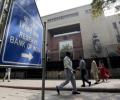
According to Soumya Kanti Ghosh, chief economic advisor of the State Bank of India group, a 50 bps rate cut is a possibility, but 25 bps is more likely.

Rising commodity costs, coupled with other marketing-related expenses, could weigh on profitability in the coming quarters.

A weak margin outlook in the near term and lack of fresh triggers may keep the Godrej Consumer Products (GCPL) stock under pressure. The stock, after tepid September quarter (Q2) results and marginal downward revision in earnings estimates, declined 3.5 per cent in trade on Friday. Though consolidated sales of the company, which owns the Goodknight and Cinthol brands, grew 8.5 per cent year-on-year (YoY), its operating profit declined because of the sharp contraction in margins.

Given the various risks to growth, one could argue for rate cuts to be deeper than the 5 per cent terminal repo rate that we are projecting at this stage, says Kaushik Das.

Neelesh Surana, who manages Mirae Asset Tax Saver and Mirae Asset Emerging Bluechip, remains constructive on Indian equities from a three to five-year time frame.

Das said banks have passed only 0.29 per cent in rate cuts to their borrowers as against 0.75 per cent cuts in interest rates by the Reserve Bank till June.

While weather forecasters remain divided on how the monsoons will play out in India over the next few months, analysts believe the news at the current juncture - at best - can trigger a knee-jerk reaction in the markets. They believe it is too early to say whether the sub-par monsoon on account of El Nino can seriously dent the market sentiment in the short-to-medium term. "These are just initial forecasts and we will have another round / status update from the weather forecasters a month down the line.
Illustration: Uttam Ghosh/Rediff.com After a brief respite at the year's start, FPIs have dumped shares worth more than $5.7 billion (Rs 42,596 crore), taking the cumulative net outflows since October to $10.5 billion (Rs 78,466 crore), and adding to the volatility on the bourses. The figure would have been a lot worse had it not been for net purchases to the tune of $5.7 billion in the primary market from October to date.

The firm is on course to replace state-owned Gail India in the widely-followed index during the semi-annual review set for March.

"In view of the festival season and extending the benefits to customers across all segments, we have reduced our MCLR by 10 bps across all tenures," the bank said in a statement.

The minutes of the December MPC meet reveal members felt the current spike in the headline inflation rate was due to a temporary supply shock on the food front, expected to moderate by the second quarter of 2020-21.

The State Bank of India SBI has raised the benchmark lending rate by 50 basis points to 12.25 per cent.

The Insurance Regulatory & Development Authority has capped the charges from the fifth year to around four per cent of the annual premium paid.

In its Third Quarter Review of Monetary Policy 2012-13, the Reserve Bank of India has reduced the policy repo rate under the liquidity adjustment facility (LAF) by 25 basis points from 8.0 per cent to 7.75 per cent with immediate effect.

Retail inflation softened to 6.71 per cent in July due to moderation in food prices but remained above the Reserve Bank's comfort level of 6 per cent for the seventh consecutive month. With retail inflation continuing to remain high despite a fall in prices of vegetables and edible oils, among other commodities in July, the Reserve Bank of India (RBI) might go for another rate hike in September. The Consumer Price Index (CPI) based retail inflation was at 7.01 per cent in June and 5.59 per cent in July 2021. It was above 7 per cent from April to June this fiscal.

The government's move to freely supply coronavirus vaccines to the states for universal inoculation and extend free rations to help the poor tide over the pandemic will only add an additional 40 bps of GDP to fiscal deficit, says a report, which also called for more transparent vaccine distribution plan for efficient vaccine allocation to the states.

The Reserve Bank of India on Friday hiked its key short-term lending and borrowing rates to banks by 25 basis points to combat rising inflation, a move that could signal hardening of commercial lending rates.

The external environment has worsened further. While the Finnish economy entered into a recession, Swedish economic growth also dipped. The Finnish gross domestic product (GDP) dropped 0.6 per cent in October-December, 2022. It was the second quarter of negative growth, which is a technical definition of recession.

Equity indices made an emphatic comeback on Friday after falling for seven straight sessions after the RBI hiked interest rates by 50 basis points on expected lines and projected inflation coming under control from January next year. A strong recovery in the rupee added to the momentum, traders said. Overcoming a wobbly start, the 30-share BSE Sensex soared 1,016.96 points or 1.80 per cent to settle at 57,426.92. During the day, it rallied 1,312.67 points or 2.32 per cent to 57,722.63.
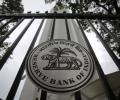
The Reserve Bank of India on Friday decided to keep the benchmark interest rate unchanged at 4 per cent but maintained an accommodative stance as the economy is yet to recover from the impact of the second Covid wave.
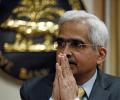
'Three external members of the first MPC are respected researchers with excellent academic background, but there is no harm in considering academicians with diverse backgrounds such as finance and labour along with economists for this body,' recommends Tamal Bandyopadhyay.

'The no-rate cut policy and preference to wait for the Budget and clarity on the fiscal front demonstrate RBI Governor Shaktikanta Das is maturing in his new role,' notes Tamal Bandyopadhyay.
