
Every 10 per cent rise in crude oil price will shave off around 0.2 percentage point (pp) from India's GDP growth and widen the current account by 0.3 per cent, says Nomura.

Global rating agency Fitch said on Monday that bank credit growth in excess of 13 per cent year on year in FY23 could put pressure on core equity tier ratios (CET1) of banks, especially public sector lenders. It may limit the buffers of Indian banks to absorb potential future losses. Bank credit expanded by 11.5 per cent in FY22. Full-year loan growth for FY23 will represent a modest slowdown from the 17 per cent YoY pace in H1FY23.

Mounting repayment pressure for some borrowers, particularly micro, small and medium-sized enterprises, amid India's interest rate hikes will test banks' loan underwriting quality, Fitch Ratings said on Thursday. However, asset-quality risks from higher rates should generally be moderate for most banks, it said in a statement. Higher rates will also affect securities valuations and could make it harder for banks to raise fresh capital, particularly at state banks, although wider net interest margins (NIM) will have offsetting positive credit effects, it added.

Housing finance major HDFC on Monday reported a 16 per cent growth in standalone net profit to Rs 3,700 crore for the January-March quarter, helped by record loan sales on the back of benign interest rates and the resultant fall in cost of funds along with the near-total repayments that culled provisions and credit costs. For the full year, the company, which is working on a reverse merger with its banking subsidiary, has booked a net profit of Rs 13,742 crore, up from Rs 12,027 crore in FY21, vice-chairman and chief executive Keki Mistry said on Monday in an earnings call with analysts. On a consolidated basis, net profit for the quarter surged 21.6 per cent to Rs 6,892 crore on-year and for the full year it jumped 21 per cent to Rs 22,595 crore, Mistry said and guided towards better days.

Rating agencies Crisil and Icra on Monday revised down their India growth projections for the current fiscal and the second quarter mainly due to the ripple effect of slowdown in global growth and mixed crop output. Crisil downgraded the India growth forecast by 30 bps to 7 per cent while Icra pegged the economic expansion at 6.5 per cent for the second quarter of FY2022-23. "We have revised down our forecast for real gross domestic product growth to 7 per cent for fiscal 2023 from 7.3 per cent, primarily because of the slowdown in global growth that has started to impact our exports and industrial activity.
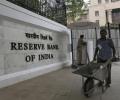
It further pointed out that the twin balance sheet problem -- at the end of banks and corporate -- more attractive interest rates for borrowers in the bond market and from non-banking financial institutions are other reasons for slow bank credit growth.

Striking a different note from its peers, US brokerage Bank of America Securities has maintained that the Reserve Bank will leave rates unchanged next week, recognising growth-focused and capex-driven fiscal expansion, which though poses huge price pressure and interest rate risks later. The RBI's rate setting panel Monetary Policy Committee (MPC) will begin its deliberations next Monday and announce the policy moves on Wednesday (February 9) in the backdrop of a massive spike in bond yields post the Budget. Almost all major central banks are in the process of hiking rates to tame inflation.

Bank credit is likely to grow at a four-year high of 11-12 per cent in fiscal 2023, on the back of better economic growth and budgetary support from the government, according to a report. In the fiscal ended March 2022, bank advances have likely grown at 9-10 per cent. "Healthy economic growth and budgetary support from the government should lift bank credit growth by 200-300 basis points to 11-12 per cent this fiscal," Crisil Ratings said in the report. The higher credit growth expectation is also supported by the improved resilience of the banking system, it added.

After new-age tech companies reported better-than-expected June quarter (Q1FY23) results, analysts said it will be a long road to recovery for their respective businesses and the stock prices. Moreover, brokerages differ on whether it is the right time to own these stocks. The common thread, however, that runs across most brokerages is Zomato, where they suggest buying the stock with the one-year target price ranging between Rs 60 - 115, translating into an upside of around 9 - 109 per cent from the current levels. The company's gross order value (GOV) of food delivery jumped 10 per cent quarter-on-quarter (QoQ) and 42 per cent year-on-year (YoY) in Q1, aided largely by growth in volume, and mild growth in average order value (AOV) at 1-2 per cent. The company also broke even on an adjusted Ebitda basis during the quarter.

Although Info Edge delivered good results in the October-December quarter of the 2022-23 financial year (Q3FY23), the management guidance flagged visible weakness in the IT segment. That seems to have spooked investors who downgraded valuations for a very highly-valued company. The stock dropped by over 9 per cent as the market responded to the guidance and its implications more than the results.

Despite a healthy March-May quarter (Q3FY22) show by global IT consulting firm Accenture, Indian IT companies shed up to 3 per cent on the National Stock Exchange (NSE) on Friday as analysts continued to highlight medium-term pain points for the sector. The Nifty IT index settled 0.9 per cent lower on Friday, as against a 0.9 per cent rise in the Nifty50 index. According to analysts at ICICI Securities, Accenture's Q3 saw moderation in year-on-year growth rate across verticals and US regions, which signals at likely normalisation in revenue momentum for Indian IT services going forward.

Bharti Airtel delivered encouraging results for the January-March quarter of the 2022-23 financial year (Q4FY23) as telecom and associated services moved into the 5G zone. In India, Airtel's mobile Q4 revenue and Ebitda (earnings before interest, tax, depreciation and amortisation) were Rs 19,550 crore (up 1 per cent quarter-on-quarter or QoQ) and Rs 10,530 crore (up 1.1 per cent QoQ), respectively. The Ebitda margin was flat at 52.2 per cent.

Equity benchmarks ended modestly higher on Friday after the Reserve Bank raised the key interest rate in an effort to cool stubbornly high inflation and defend the rupee. Continuous foreign fund inflows into the capital markets and softening crude oil prices also helped the bourses regain momentum, traders said. The 30-share BSE Sensex ended 89.13 points or 0.15 per cent higher at 58,387.93 after facing volatility during the fag-end of trade. During the day, it climbed 350.39 points or 0.60 per cent to 58,649.19. The broader NSE Nifty went up by 15.50 points or 0.09 per cent to finish at 17,397.50.

IT services firms' revenue growth in the fourth quarter will be affected by macro-driven headwinds, lower working-days, and the fact of the three-month period being low season. Analysts are expecting FY24 growth to be muted. Revenue growth will decline 600-700 basis points to 10-12 per cent for FY24, said a CRISIL Ratings report. The 10-12 per cent growth rate is a fall from the 18-20 per cent expected in FY23 and around 19 per cent growth in FY22, the highest in eight years, said the CRISIL Ratings report.

India has been relatively insulated from the severe headwinds in the West. However, with a third of the global economy expected to slip into recession in calendar year 2023, the impact will strongly be felt on India's exports and trade economy, leading economists said in a panel discussion at the Business Standard BFSI Insight Summit in Mumbai on Wednesday. The panel comprised former Reserve Bank of India executive director and former Monetary Policy Committee member Mridul Saggar, State Bank of India Chief Economic Advisor Soumya Kanti Ghosh, Citibank India Chief Economist Samiran Chakraborty, ICRA Chief Economist Aditi Nayar, and IndusInd Bank Chief Economist Gaurav Kapoor. The topic of the panel discussion was No recession in sight: Is India decoupled from developed economies?

With Viswanathan Anand resting, the Indian team managed to hold their own against the favourites before Yu Yangyi subdued B Adhiban with black pieces to secure another victory in the tournament.
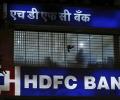
HDFC Bank Q4 review: HDFC Bank's January-March quarter (Q4) results, for financial year 2022-23 (FY23), brought no cheer to investors as elevated costs, and merger-related uncertainties continue to dent the sentiment. Moreover, analysts fear that merger-related costs may put pressure on margins and cost to income ratio in the near-term, while the return on equity could moderate owing to low leverage of the parent. Analysts, therefore, opine that the stock's re-rating may be some time away. "While the risk of a de-rating on a standalone basis appears to be quite low given that the business performance is holding up well, we believe a re-rating in the stock would happen as and when more clarity emerges on the smooth transition (merger)," said a report by Sharekhan.

The share of listed public sector undertakings (PSUs) in the overall market capitalisation has hit a three-year high of 11.4 per cent. This comes on the back of the sharp outperformance of the PSU pack over the past two years. In 2021 and 2022, the BSE PSU index gained 41 per cent and 23 per cent, respectively. Market participants said a combination of factors like value buying and bullishness, particularly in public sector banks (PSBs), were the reason for the improved prospects.

With the Nifty50 just about 3 per cent away from its all-time closing high of 18,812 points, analysts at BofA Securities suggest investors book profit. Their reasons for the advice include risks like the possibility of a cut in corporate earnings growth forecasts, high valuation (one-year forward P/E of 19.5x), interest rates staying elevated for longer-than-expected and credit tightening. Going ahead, they expect the Nifty50 index to drop to 16,000 levels - down nearly 12 per cent from the current level of 18,255 points, which they believe would be a good time to buy.

Hyderabad-based Andhra Bank is aiming to get a significant proportion of the state government's business, to boost its share of low-cost deposits

Bank of Baroda Q4 results: Key brokerages have raised their target prices on Bank of Baroda after the state-owned lender posted better-than-expected March quarter (Q4FY23) results. Analysts now see up to 29 per cent upside in the stock from a one-year perspective as they believe BoB is well-placed among the large public banks with nearly all key business metrics moving closer to the top-tier banks. Valuations, too, remain attractive despite steady strong quarterly performances.

Equity benchmarks extended their decline for the fourth straight session on Wednesday, with the Sensex falling 214.85 points after the Reserve Bank raised the key interest rate by 50 basis points. Continuous foreign fund outflows and surging crude oil prices also weighed on markets. The 30-share BSE benchmark dropped 214.85 points or 0.39 per cent to settle at 54,892.49.

The central government is likely to further consolidate its fiscal deficit by 50 basis points (bps) to 5.9 per cent in FY24 from 6.4 per cent in FY23, according to a recent report released by Goldman Sachs on Tuesday. In the current fiscal year, there is going to be an upside of 0.5 per cent on the receipts side due to higher nominal GDP growth, and higher tax buoyancy because of the formalisation, the report said. The upside to expenditure is mainly going to come from incremental subsidies (0.8 per cent of GDP), in both food and fertilizer, it said. The upcoming pre-election Budget will carry forward the trend of the increased capital expenditure seen in recent years.

The finance ministry on Thursday raised concerns over the possible impact of El Nio conditions on India this year, saying if recent forecasts came true, the country could see lower agricultural output and higher inflation. "Some meteorological agencies predict the return of El Nio conditions in India this year. "If these predictions are accurate, then monsoon rains could be deficient, leading to lower agricultural output and higher prices," the ministry said in its monthly economic review.
An aggressive rate hike by the US Fed and the possibility of a recession can trigger a slide in these stocks, which will be a good opportunity to buy from a long-term perspective.

Telecom infrastructure player Indus Towers has been largely ignored by investors with occasional bursts of trading when there's news flow. For example, the stock fell from Rs 188 (Jan 1, 2023) to Rs 135 (Jan 27) and then bounced back to Rs 165 in early February as the Government of India (GoI) converted Vodafone Idea's (Vi) debt into equity and Bharti Airtel pushed up its direct stake in Indus to 47.95 per cent. The cash-strapped Vi holds 21 per cent stake in Indus Towers and Indus also has substantial receivables to come in from Vi which is a negative overhang.

In addition to new launches and restructuring across product segments, festival demand also aided growth.

'Winning a deal is one aspect, making sure that we are able to execute it profitably is also important' says Rajesh Nambiar.

Jhunjhunwala increases stake in DHFL, luggage maker VIP Industries and pharma major Lupin but is cautious on auto holding. At the end of the March quarter, Jhunjhunwala held positions in 29 firms.

This is following revival of demand from the corporate sector and small and medium enterprises (SMEs), even as a nascent economic recovery is taking shape. Credit growth of scheduled commercial banks had accelerated to 9.2 per cent year-on-year (YoY) by the end of December 2021 after breaching the 7 per cent-mark in November, for the first time since April 2020.

There was a near-unanimous view that the time was right for an increase of 50 basis points in policy rates. Some even suggested that the rates be raised by 75 basis points.

Shares of Adani Green Energy (AGEL) continued their upward movement, hitting a new high of Rs 1,955.90, up 2.6 per cent on the BSE in Wednesday's intra-day trade in an otherwise weak market. The S&P BSE Sensex was down 0.77 per cent at 60,285 at 11:01 am. In the past 14 trading sessions, the stock of the renewable energy arm of the diversified Adani Group has zoomed 50 per cent from Rs 1,307.05 on December 30, 2021. In comparison, the S&P BSE Sensex was up 4.3 per cent during the same period.

After raising interest rate by a cumulative 250 basis points in 11 months, the Reserve Bank of India (RBI) on Thursday unexpectedly kept benchmark rate unchanged as global banking woes added uncertainty to the economic outlook. Five out of six members of MPC voted to remain focused on the withdrawal of accommodation to ensure inflation aligns with target while focusing on growth, RBI Governor Shaktikanta Das said on Thursday. The Monetary Policy Committee of the central bank decided to take a pause after a rate hike seen in previous six consecutive policies.

'FDs should hold your emergency funds, equivalent to around 6-12 times your monthly expenses.'
A seasonally-strong quarter, with no immediate impact of the second wave and continued acceleration of digital transformation will allow the IT services sector to report a robust Q1 this financial year. However, key metrics to look out for will be attrition rate and margin lever as they will be impacted by salary hikes. Analysts expect growth for the quarter to be broad-based, with sectors like banking, financial services and insurance (BFSI), retail, manufacturing, hi-tech and life sciences driving revenue growth. Analysts across brokerage houses are pegging revenue growth in the range of 1.5 per cent to 4.5 per cent.
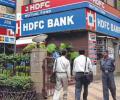
But there are challenges, observes Tamal Bandyopadhyay.
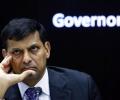
With the 'busy credit season' which witnesses a spurt in loan demand going up, it would be good to lower the rates ahead of it

Adani Enterprises, which is launching India Inc's second-largest follow-on public offer worth Rs 20,000 crore next week, on Thursday said it is planning to enter the water segment as this is a key element of its core business of infrastructure. The group is into the entire gamut of infrastructure -- being its ports, airports, roads, expressways power generation & distribution, among others. In ports and airports, the group is the largest player in the private sector. Addressing media from Milan, group chief financial officer Jugeshinder Singh said the company has fixed the price band for the Rs 20,000-crore issue in the range of Rs 3,112-3,276 per share.

'India has the potential to do a lot more to take advantage of the time today where we stand to gain, geopolitically and in terms of market attractiveness.'
The Reserve Bank is likely to maintain status quo on interest rates in its forthcoming monetary policy review but may change the stance in view of retail inflation piercing its upper tolerance limit, global uncertainties created by the ongoing Russia-Ukraine war, and the urgency to protect and boost growth, feel experts. The RBI governor-headed rate setting panel -- Monetary Policy Committee (MPC) -- will be holding its first meeting of the 2022-23 fiscal from April 6 to 8. The outcome will be announced on April 8.
