Apart from cotton, copper, petroleum and industrial machinery, India does not export much to China. This means that India buys six times the merchandise it sells to China, points out Abhishek Waghmare.
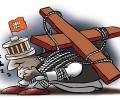
'Poor home work, and a subsequent loss of nerve.' 'This sums up the Modi government's current travails, the stall in key sectors, fading momentum, irritability,' points out Shekhar Gupta.

The fuel reforms are a very important signal of the government's commitment to tough economic reforms.

The Indian economy was on an impressive growth path through the first decade of this century till it was brought to an abrupt halt by the policy inertia during UPA2 and the Modi government's inability to restore economic and financial momentum. Fascinating glimpses of what went wrong from Puja Mehra's must-read book The Lost Decade: How India's Growth Story Devolved Into Growth Without A Story.

'The time has come to incorporate Indian sociology into economic policy.' 'The first step in that direction would be to listen to economists trained in India and not just the US and the UK, argues T C A Srinivasa-Raghavan.

In a Q&A with Doordarshan, Jaitley discusses how he chose the areas on which he would spend more.

His view will be shaped by his perception of US world interests and India's economic performance relative to China.

The government had committed to increasing spending in infrastructure

'What is bank recapitalisation? When the rich take loans and do not return and the government returns that money to the banks.' 'What is restructuring 5:25 scheme? The government says don't return now, just tell us you will return after five years.' 'Why don't we apply these schemes to farmers?' 'I want to increase the power of farmers to blackmail the government as everyone in the country has the power to blackmail.'

The Budget would preserve macro-economic stability.

The GST has been a great achievement, but it does suffer from weaknesses, says Chief Economic Adviser Arvind Subramanian.

The Budget shouldn't be stuck on fiscal numbers, the PMO apparently said.

Basu said there are a couple of big ticket items on the agenda.

'We are truly blessed to bear witness to the divine talents of, and scarcely human displays put on by, Roger Federer and his bromance buddy, rival, nemesis and plausible co-claimant to GOAT ('greatest of all time') status, Rafael Nadal,' says Arvind Subramanian, who steps down as chief economic adviser to the Government of India in September.

The road ministry has put forward two proposals before the Prime Minister's Office and the finance ministry.

Panagariya has advocated a more liberalised spending, arguing that greater capital expenditure could relax some of the infrastructure bottlenecks facing the country.
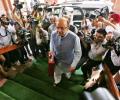
A strong showing will be vital to Narendra Modi's chances of a second term.
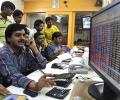
To be sure, this is not some stunning new revelation that our equity markets are beholden to foreign flows.

The list of exempted goods from central excise duty has shrunk from 400 items in 2011-12 to 300 now.
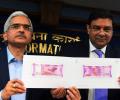
'When there is no middle ground possible between the government and the governor, the governor has to go.'
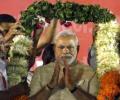
BJP's success in two state elections gave Modi room to cut through a thicket of regulations and state controls.

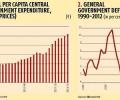
In 2014-15, capital expenditure in the April-September period was Rs 99,100 crore.

India's growth, he said, remains resilient with low inflation, fiscal prudence and low current account deficit, talking about robust structural reform measures.

It would be a miracle indeed if we grow at 7/8 per cent a year over the current and next few years, says A V Rajwade

Excise exemptions may be whittled in Budget to offset higher govt salaries, pensions
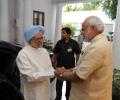
'If anyone is able to understand the importance of Modi's endeavours to revive the economy -- even against opposition from sections of his own saffron brotherhood -- it is the former prime minister,' says Amulya Ganguli.
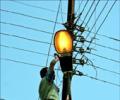
Power plant load factors are at historic lows of around 60 per cent.
One may fault this government for incompetence, corruption, and delayed action but it cannot be faulted for lacking a vision.
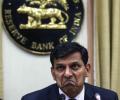
Will RBI chief have the final say, in the form of a veto

Fiscal situation better but spending cuts likely in FY16 too.
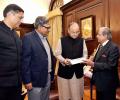
Finance Minister Arun Jaitley should not drop the ball on continuing the battle against black money and move towards digital transactions to reduce the preponderance of cash in the economy, says A K Bhattacharya.

'Four years into his tenure and Modi still has no idea what is wrong with the agriculture sector!'
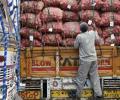
India's existing web of federal and state sales taxes is levied at different stages of the supply chain and often results in double taxation, while forcing trucks to spend nearly a quarter of their road time in border checks or other inspections.

oreign Policy magazine named him as one of the world's top 100 global thinkers in 2011.

The premium on insurance policies will get costlier by 3 per cent to 7 per cent, depending upon the rate fixed by the GST Council from April 1, 2017, says Harjot Singh Narula.

Will Arundhati Bhattacharya be the RBI's first woman governor? Or will Urjit Patel succeed Raghuram Rajanas RBI governor when his term ends on September 4?
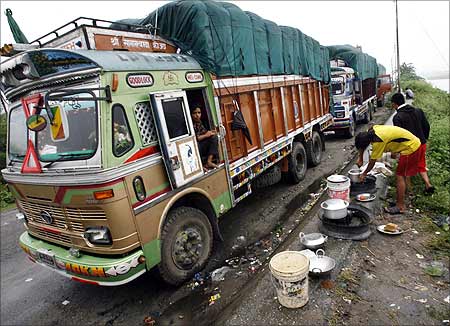
A strong proponent of the GST, Adi Godrej has been saying for five years or more that it will add one per cent to India's gross domestic product (GDP).

The pipeline for well-qualified and experienced policy economists at senior levels of government has broken, leading to a growing dearth of suitable candidates for top economist positions.
Taking away free healthcare facilities, as recommended by the Aayog, would place a huge burden on the people, especially in rural areas, says Devanik Saha.

For PPP projects, clause on consent requirement could be abolished or brought down to 50% of land owners, against the current 70%
