
The government has introduced new aviation rules, the Bharatiya Vayuyan Niyam, 2026, granting it the power to intervene in airline ticket pricing during extraordinary situations.
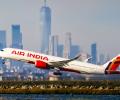
The reduction is primarily driven by high airfares, increased fuel costs, and rupee depreciation, leading to softer passenger demand.
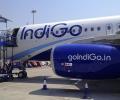
IndiGo is undertaking a comprehensive review of its long-standing policy against fuel hedging, particularly in light of rising jet fuel prices and its ambitious long-haul expansion plans. CEO Willie Walsh stated that while domestic competitors don't hedge, international expansion necessitates a re-evaluation to manage risk and provide stability against volatile fuel costs.
Civil Aviation Minister Kinjarapu Rammohan Naidu stated that no decision has been made regarding allowing Delhi and Mumbai airport operators to own and run airlines, as the government is carefully considering the implications of relaxing cross-ownership restrictions, including potential conflicts of interest and the need for more airlines.

IndiGo CEO Willie Walsh announced that the airline expects to begin receiving wide-body A350 aircraft from the second quarter of 2028, featuring a three-class configuration, as the airline sees significant opportunities in the long-haul market despite industry challenges like rising fuel costs.
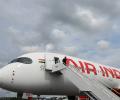
Air India group CEO Tewolde Gebremariam announced plans to order more wide-body aircraft to boost international operations, while simultaneously addressing the 'major concern' of high operating costs. The airline aims for profitability 'very soon' despite significant financial losses in recent fiscal years.
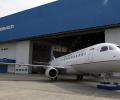
Embraer, the Brazilian aerospace firm, forecasts a demand for 2,520 aircraft with up to 150 seats in the Asia Pacific region over the next two decades. Excluding China, this figure stands at 1,050 jets. The company highlights the region's significant upgrade opportunities due to its large turboprop fleet and growing need for regional connectivity, driven by intra-regional trade and evolving economic environments.
Civil Aviation Minister K Rammohan Naidu announced that the government will not impose a cap on airfares during the upcoming festive season. Instead, airlines will be advised to maintain reasonable prices, considering the rising operating costs primarily due to increased Aviation Turbine Fuel (ATF) prices, exacerbated by the West Asia crisis.

From an Italian childhood to the heart of India's most consequential political family, Sonia Gandhi's memoir explores how we make a home, what we lose in the making, and what belonging demands of us.

India has significantly reduced Aviation Turbine Fuel (ATF) prices for international airlines by 27% due to easing global fuel benchmarks, while simultaneously increasing commercial LPG and 5-kg cylinder prices to record highs.
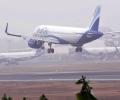
IndiGo, India's largest airline, has recently increased charges for several ancillary services, including infant travel and unaccompanied minors, citing rising operational costs and higher fuel prices. Domestic infant travel charges have risen to Rs 3,000, while unaccompanied minor services are now Rs 5,999 for domestic and Rs 12,999 for international flights.
Economy passengers are paying more year-on-year while business travellers are paying less.

Banks in a growing economy need patient, long-term foreign capital with good governance to meet credit demand. The direction is right, points out Tamal Bandyopadhyay.

The support will be provided to oil-marketing companies (OMCs) in the form of interest-free advances through the ministry of petroleum and natural gas. The OMCs, in turn, will use the fund to provide ATF price stabilisation support to Indian carriers operating domestic and international flights.

Airlines are cutting not only international services but also domestic flights, especially on routes projected to remain unprofitable in the coming weeks due to weak demand and high fares.

Becoming wealthier isn't only about earning more money. Sometimes, it starts with stopping the money you already earn from quietly disappearing.

Aviation fuel prices for domestic airlines remain unchanged, providing stability for local carriers, while commercial LPG and 5-kg cylinders see a significant rate hike due to rising international energy costs.

Air India, IndiGo and SpiceJet have told the government that the country's airline industry is under extreme stress and on the verge of "stopping operations", as they sought revision in ATF pricing and financial support.

A 'technical issue' in the UK's National Air Traffic Services (NATS) flight processing system grounded hundreds of flights across the UK, including long-haul routes to and from India, leading to widespread disruption and prompting Ryanair to demand the resignation of NATS CEO Martin Rolfe.

The Indian government has approved the sale of a 60.72 per cent stake in IDBI Bank Ltd to Canadian billionaire Prem Watsa's Fairfax Financial Holdings Ltd for approximately 52,878 crore, a move that reflects improving India-Canada ties and marks a significant turning point for the bank.

Air India has announced a reduction in international flights and temporary suspension of services on six routes, including Delhi-Chicago, due to airspace restrictions and high jet fuel prices.

India's aviation sector is facing fresh turbulence, with rising fuel costs, the Ministry of Civil Aviation's free-seat directive, and geopolitical disruptions in West Asia clouding near-term earnings visibility.
Aviation Turbine Fuel (ATF) prices have more than doubled to a record high, impacting airlines and consumers, while commercial LPG rates also see a significant increase.
The government has suspended its directive requiring airlines to offer at least 60% of seats on flights without additional charges, following industry concerns about the impact on fares and pricing structures.
IndiGo, India's largest airline, reported a net loss of Rs 238 crore for the June quarter, primarily attributed to a significant surge in fuel prices and operational constraints stemming from the West Asia conflict.
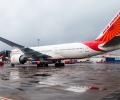
Air India group announces fuel surcharges on domestic and international flights due to rising Aviation Turbine Fuel (ATF) prices, following the government's decision to cap domestic ATF price hikes.
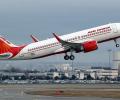
Air India Group has accumulated losses of about Rs 47,821 crore since its takeover, leaving its prolonged transformation among the biggest unfinished projects of N Chandrasekaran's tenure.

Civil Aviation Minister K Rammohan Naidu announced that public sector oil marketing companies will implement a partial and staggered increase in jet fuel prices for domestic airlines, aiming to protect passengers from steep fare hikes.

Pakistan has significantly increased the price of high-octane fuel, impacting luxury vehicle owners, while also seeing increases in petrol, diesel, and airline fares due to rising global oil prices.
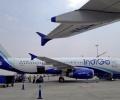
IndiGo airline will face near-term pressure on profitability from rising fuel prices following the escalation of conflict in West Asia, though it is likely to pass on higher costs to passengers over time because its ticket booking cycle is relatively short, according to a report by Moody's Ratings.
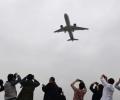
Domestic air traffic in India experienced a nearly 12 per cent decline in June, falling to 1.35 crore passengers from 1.53 crore in May, with IndiGo increasing its market share to 66.3 per cent.

The broader conflict in West Asia, the largest international market for Indian carriers, has forced a sharp reduction in daily flights relative to the summer schedule.

Government sources indicate a potential increase in petrol and diesel prices due to rising global crude oil costs and losses incurred from a prolonged freeze on retail rates.

'We may be able to wind back some of the schedule reductions we'd taken in recent months.'

Akasa Air, despite facing headwinds from the West Asia conflict and rising aviation turbine fuel prices, expects to maintain a 30-40 per cent growth trajectory over the next five years and aims for an initial public offering (IPO) within two to four years, according to CFO Ankur Goel.

Indian benchmark indices Sensex and Nifty experienced a significant decline in early trade, with the Sensex falling over 500 points and the Nifty over 150 points, as Brent crude oil prices surged past USD 100 per barrel due to escalating geopolitical tensions in the West Asia. track sensex, Nifty on July 24.

'They are claiming that they are very good in governance. All governments do propaganda. This is the propaganda of the government that they are doing very well, in spite of all the troubles.'
'They are claiming that they are very good in governance. All governments do propaganda. This is the propaganda of the government that they are doing very well, in spite of all the troubles.'

Indian Hotels Company (IHCL) reported a 20.8 per cent year-on-year rise in net profit for Q1 FY27, reaching 357.9 crore, despite macroeconomic headwinds like geopolitical tensions in West Asia impacting international travel and airline catering business.

Air India and Air India Express are introducing a fuel surcharge on domestic and international flights due to rising jet fuel prices, impacting travel costs for passengers.
