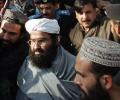
US Secretary of State Antony Blinken, in the 2020 Country Reports on Terrorism issued on Thursday, said that regionally, terrorist groups continued to operate from Pakistan.

An audio message has been released in Pushto, circulated by Taliban commanders, where Akhundzada said, "Taliban will never bow their heads and will not agree to peace talks," reports Dawn.
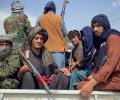
Even though the Taliban has managed to capture Afghanistan and form a government, an internal rift between the faction has started emerging, according to media reports.

Pakistan's Prime Minister Nawaz Sharif arrives in the US on Tuesday and is likely to face pressure to bring the Taliban to the negotiating table.
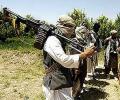
Pakistan on Saturday released former Afghan Taliban deputy chief Mullah Abdul Ghani Baradar, meeting a long-standing demand of Afghanistan President Hamid Karzai to advance peace efforts in the war-ravaged country.

Pakistan on Friday announced it will release former Afghan Taliban deputy chief Mullah Abdul Ghani Baradar on Saturday, meeting a long-standing demand of Afghan President Hamid Karzai to advance peace efforts in the war-ravaged country.

Media reports also cited the US aid restrictions over the F-16 fighter jets deal between the two countries.

The Tehreek-i-Taliban which claimed responsibility of the brazen attack on the Jinnah International Airport in Karachi, is made up of Chechens, Arabs, Afghan Taliban, Uzbeks and Central Asians, has become a fearful force to deal with. Vicky Nanjappa tells you why
'Women have 100 per cent inclusion in the health sector. They are also teaching in the education sector. They are working in each and every one of those sectors where they are required'

The Pakistani Taliban have sacked their official spokesman for issuing threats to Afghan Taliban, signalling internal fissures within the ranks of the terror outfit.

United States Secretary of State John Kerry would not meet representatives of the Afghan Taliban during his visit to Qatar later this week, his spokesperson said Thursday.

The US and others have long complained that Pakistan provides safe haven to the Afghan Taliban and their allies, the Haqqani network.

Pakistan has granted some concessions to key Afghan Taliban leaders in its custody, including Mullah Omar's deputy Mullah Abdul Ghani Baradar, shifting them to "roomier facilities" and allowing them to make telephonic contact with their families.
The Tehrik-e-Taliban Pakistan has held both India and Pakistan responsible for the 'unrest in Kashmir' and has vowed to liberate and establish Islamic Shariah there.
Mullah Omer-led Afghan Taliban have asked the United States and its allies to withdraw all their troops from Afghanistan instead of "troop reductions and gradual withdrawals" that will help the "foreign forces to avoid further humiliation".
That al-Qaeda-linked Haqqani militant network and Pakistan's military and intelligence establishment are working in tandem with each other has been established with a recent statement by Sirajuddin Haqqani, the operational commander of the Haqqanis. Amir Mir reports.
Downplaying the Afghan Taliban's recent praise of India in not kowtowing to the West, the US State Department has said the Obama administration is pleased with the support that New Delhi is giving to strengthen the security, stability, prosperity of Afghanistan.
Beyond assurances of support, the 100-plus delegations that congregated in Bonn failed to articulate anything particularly meaningful, says Amir Mir
Only punitive pressure against Pakistan can help in neutralising the Haqqani Network, says senior analyst B Raman

Islamabad and Kabul agree to jointly work for holding an Ulema Conference to address the issue of rising militancy and suicide attacks in the name of religion, reports Tahir Ali
Slamming Pakistan for refusing to cut ties with the Haqqani network of militants, a leading US daily has said the military of the 'crippled and chaotic' state continues to play a "double game" of accepting aid from America while enabling the Afghan Taliban.
The Taliban has chosen to interpret the lack of open Indian enthusiasm on the US idea of Indian military training role in Afghanistan as Indian rejection of the US feelers, says B Raman.
In an unusual comment, Afghan Taliban has praised India as a "significant country" in the region and said New Delhi has done well to resist United States calls for greater military involvement in Afghanistan.

'The worst case scenario for Pakistan is a full-scale Taliban takeover of Afghanistan.' 'Pakistani militants would be inspired and emboldened and seek to replicate the Taliban's successes in Pakistan.'
The Tehrik-e-Taliban Pakistan has decided that the outfit will now focus on jihad inside Afghanistan, reports Tahir Ali
No tears are shed for the thousands of American soldiers killed in Afghanistan by Pakistan's proxies such as the Afghan Taliban, says South Asia expert Professor C Christine Fair. Aziz Haniffa reports.
US troops after 10 years in Afghanistan are in the same position as the Soviet troops after eight years were in 1987 --victory increasingly elusive, says B Raman.
Pakistan on Wednesday reacted angrily to a leaked NATO report that accused its security services of helping the Afghan Taliban just as Foreign Minister Hina Rabbani Khar began a visit to Kabul, saying the allegations were "frivolous".
Rejecting General David Petraeus' claim that thousands of Afghan Taliban have either 'laid down' their arms or moving towards doing so, Mullah Omer-led Taliban vowed continuing their war until the establishment of Islamic Emirate in Afghanistan.

Tired of the alleged "double game" being played by Islamabad, American lawmakers have announced to hold a Congressional hearing next week to discuss whether Pakistan is a "friend or foe" of the US in the war on terror.
The offer of peace talks came at a time when the Pakistani military operations in the Federally Administered Tribal Areas on the Pak-Afghan border had had little impact on the operational capabilities of the Tehrik-e-Taliban. Amir Mir reports.
Following the recent killing of Al Qaeda chief Osama bin Laden in an American military raid, the Obama administration has adopted a new strategy towards the chief of the Afghan Taliban Mullah Mohammad Omar, which is aimed at persuading the fugitive extremist leader to agree to a negotiated settlement of the decade-long conflict in Afghanistan, writes eminent Pakistani journalist Amir Mir.
With the death of the terrorist mastermind, the emergence of a nuclear-equipped splinter group from within the Pakistani establishment looks disturbingly plausible, says Colonel Anil Athale (retd)
Hardening its stance on terror safe havens in Pakistan, the United States has made it clear to Islamabad that time is over for hedging its bets on terror groups like Haqqani network, the Afghan Taliban or the LeT against India.
The Tehrik-e-Taliban Pakistan has said it will continue carrying out suicide attacks and targetting Pakistani security forces despite joining other militant groups in a pledge not to kill innocent people or to resort to kidnappings for ransom.
The recent catastrophic attack on US troopers underlines the undamaged capability of the Afghan Taliban to take the NATO forces by surprise and inflict heavy casualties on them and its determination to make the US withdrawal from Afghanistan a humiliating retreat and not a successful withdrawal, says senior analyst B Raman.
Lashkar-e-Tayiba founder Hafiz Mohammad Saeed has became one of only four terrorist leaders for whom the United States has offered a bounty of $10 million, joining the likes of Afghan Taliban chief Mullah Omar.
Pakistan on Thursday dismissed reports that Afghan Taliban chief Mullah Muhammad Omar was being treated in a Karachi hospital, with the help of officials of the Inter Services Intelligence, after he suffered a heart attack."This is hackneyed speculation with no substance whatsoever," said Foreign Office spokesman Abdul Basit.He said such reports were aimed at maligning Pakistan and creating misgivings.
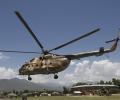
An MI-17 transport helicopter was on its way to Russia for maintenance when it crash landed on August 4 in a Taliban controlled area of Logar province. The rebels made the crew members as hostages.
After the killing of Osama bin Laden in Abbottabad, the United States has pressured Pakistan 'to do more' to nab Al Qaeda activists and key Taliban leaders including Afghan Taliban leader Mullah Muhammad Omer. It is suspected that Omer is hiding in Quetta city of Balochistan. Responding to US's pressure, Pakistan has speeded up its efforts and is tracking Al Qaeda terrorists all across the country.
 © 2026 Rediff.com - Advertise with us - Disclaimer - Privacy Policy - Sitemap - Feedback - About us - Terms of use - Grievances