
A weak margin outlook in the near term and lack of fresh triggers may keep the Godrej Consumer Products (GCPL) stock under pressure. The stock, after tepid September quarter (Q2) results and marginal downward revision in earnings estimates, declined 3.5 per cent in trade on Friday. Though consolidated sales of the company, which owns the Goodknight and Cinthol brands, grew 8.5 per cent year-on-year (YoY), its operating profit declined because of the sharp contraction in margins.

At the end of May, out of 26,500 outlets about 60 per cent showrooms and 80 per cent workshops were operational across the country.

Stock market barometers Sensex and Nifty ended marginally higher on Monday as rise in wholesale inflation capped early gains despite a positive trend in global markets. The 30-share index settled 32.02 points or 0.05 per cent higher at 60,718.71 with half of its constituents ending in green. The broad based Nifty edged up 6.70 points or 0.04 per cent to close at 18,109.45.

Under the new model, the surplus distribution in the participating policyholders' fund has been modified to 90:10 in a phased manner, wherein 90 per cent will go to policyholders and 10 per cent to shareholders. Further, 100 per cent of the surplus generated out of the non-participating business will be available for distribution to all shareholders.

While analysts remains overweight on financials, property, discretionary, industrials and materials, they maintain a neutral stance on pharma, telecom and energy; and underweight on staples, utilities, and IT services.

While slowdown was prominent in vehicle loan segment, home loans growth improved to 18.7% in May 2019 from 15.5% a year ago.

Airlines operated at much lower capacity of about 27% this July compared to July 2019 level, but there was a marginal rise over the 25% capacity achieved in June 2020.

India Inc's cash pile was up 13.8 per cent last fiscal year, thanks to a combination of higher profits in sectors such as IT and fund raising by top companies such a Reliance Industries, Bharti Airtel and Tata Motors, among others.

A home loan is a long-term contract, so do shop around before signing on the dotted line, advises Sarbajeet K Sen.
In the quarter gone by (Q3 of FY22), private lender HDFC Bank issued around 950,000 credit cards, its highest ever credit card issuance in any single quarter. Since the Reserve Bank of India (RBI) revoked the embargo on it in August 2021 to issue new credit cards, the lender has issued 1.37 million credit cards. This is according to a senior bank executive, who was present in an analysts' call after the lender's Q3 earnings. In Q3, we achieved the highest ever issuance, with 950,000 card issuances.

Net sales growth for the quarter ended December (Q3FY20) was 4.5 per cent on a year-on-year (YoY) basis for companies that have declared their results so far, compared to an 8.4 per cent rise in the first half of the financial year. This indicates that there could be a further rise in days' sales of inventory.

The biggest headwind to the consumption story in FY23 is a sharp decline in government subsidies on food, fertiliser and fuel, and overall decline in revenue expenditure net of interest payments. This, analysts say, will adversely impact purchasing power of households at the lower end of the income pyramid, translating into lower spending on consumer goods and services.

Even as most manufacturers are still assessing the overall impact on their businesses, early projections suggest the market may grow at its lowest ever rate, in 2020.

If financials and oil sectors were removed, India Inc has done quite well.
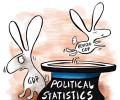
The GDP growth is estimated to come at the "deceptively high" level of 20 per cent for the April-June 2021 quarter but is far below the same in the pre-COVID times, rating agency Icra said on Wednesday. Icra said the low base of the last year, when the GDP had contracted by close to 24 per cent, "conceals" the impact of the second wave of COVID-19 infections. Economic activity is boosted by robust government capital expenditure, merchandise exports and demand from the farm sector, it said, estimating the GDP to grow by 20 per cent and the gross value added (GVA) will register a growth of 17 per cent for the June quarter.

A record-breaking year for the world's billionaires.

The two-wheeler industry was hit by an increase in insurance rates, liquidity crunch, poor sentiment, rural distress and uncertainty over the BS-VI regulations, among other factors.

What worked for Airtel was that its data traffic growth was 13 per cent sequentially and its average data usage was even higher than Jio's at 11.9 gigabyte per month per user.
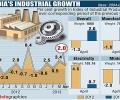
Vivek Mahajan (Head - Research) Aditya Birla Money, analysed the slow IIP growth.

Most of the index heavyweights are yet to declare their results.

Investors should await consistent growth metrics before looking at an investment in the company.

Employees of some top Indian companies were in for a pleasant surprise when they received a mail from their HR team announcing a hike in salaries and bonuses. Led by IT firms and start-ups, HR managers say that while some have offered cash and stock options, others are in a wait-and-watch mode and add the trend will pick up in other sectors. For example, IT giant Cognizant - which had an attrition rate of 19 per cent in the December quarter - has established a $30-million employee retention fund in order to bring down the high attrition rate.

Government gets Rs 17.1 lakh crore in its kitty
Companies also said confidence was yet to return among buyers, with many holding back their decision to buy cars.

Sectors which recorded positive growth were coal, refinery products and fertiliser.

The laggards include FMCG (16 per cent), Energy (37 per cent) and Media (34 per cent).

India's second-largest telecom operator Bharti Airtel on Tuesday posted more than twofold year-on-year jump in its consolidated net profit for the March quarter to Rs 2,008 crore, buoyed by a lift in average revenue per user and an exceptional gain. The telco said its Q4 scorecard was backed by strong performance delivery across the portfolio and its CEO Gopal Vittal, in a statement, exuded optimism about opportunities in the coming years and Airtel being "well-poised" as a company. Airtel, which competes in the market with Reliance Jio and Vodafone Idea, as well as state-owned BSNL/MTNL, promised to maintain razor sharp focus on financial flexibility, optimising the capital structure and finance cost.

Bajaj Auto and TVS Motor are the largest exporters in the listed space with export revenues of Rs 12,000 crore and Rs 5,000 crore.

However, despite Covid, Indian markets registered their best financial year performance in a decade, with the Sensex and Nifty50 rallying 68 per cent and 71 per cent, respectively, in FY21.

In November, DRL registered growth of 28 per cent year-on-year (YoY), which was the highest among peers and double that of the industry growth (14.5 per cent).

While Covid-related sales may come down going ahead, analysts expect the company's domestic sales to outperform the market, led by the chronics portfolio, which accounts for 55 per cent of sales.

The adverse impact on the margins of auto, consumer staples and consumer durables sectors will be counterbalanced by an earnings uptick in the metals, cement and oil & gas sectors.

Reliance Industries on Friday reported a 41.5 per cent jump in its third quarter net profit as oil, retail and telecom businesses fired on all cylinders. Net profit of Rs 18,549 crore in October-December compared with Rs 13,101 crore a year back, the company said in a stock exchange filing. Income from operations rose to Rs 1.91 lakh crore from Rs 1.28 lakh crore.

The COVID-19 pandemic has not only affected outpatient services, but also led to deferment of elective surgeries, and resulted in the loss of medical tourism, all of which would hit the FY21 financials.

Analysts tracking Apple said the India results were glimpses of what the company could achieve in emerging markets with a right pricing strategy for its products and local manufacturing.

For Paris-headquartered IT services major Capgemini, India has always been the backbone of its services delivery for its global clients, but the company is focused on driving more value from India as it gears up its engineering research and development (R&D) presence worldwide with its acquisition of Altran Technologies. The company, which has about 149,000 employees in India, is looking to hire 60,000 associates this year. Of them, 30,000 will be recruits from campuses and the rest lateral entrants. For Ashwin Yardi, chief executive officer India, Capgemini, the focus is to make sure that the India unit is aligned with the global plans of repositioning the company as a hub of engineering R&D, operational technology, and IT.

Some of the top indebted companies likely to face financial headwinds in the coming quarters include NTPC, PowerGrid, Tata Steel, Adani Power, JSW Steel, UPL, and Steel Authority of India. Together these 201 companies owed Rs 14.9 trillion to their lenders at the end of September 30, 2019, up 4.1 per cent year-on-year (YoY) during the first half of FY20.

Housing sales across seven major cities in the country fell 35 per cent year-on-year to 50,983 units during the July-September period even as the demand recovered post lockdown, according to data analytics firm PropEquity. Sales stood at 78,472 units in the year-ago period in seven cities -- Delhi-NCR, Mumbai Metropolitan Region (MMR), Chennai, Kolkata, Bengaluru, Hyderabad and Pune.

TCS was the top gainer in the Sensex pack, rising over 3 per cent, followed by L&T, Bharti AIrtel, HCL Tech, Tata Steel, Bajaj Auto and Reliance Industries. NSE Nifty rallied 164.70 points to its fresh closing peak of 16,529.10.

The coming years could be exciting for Bandhan Bank, IDBI Bank, IDFC First Bank, Federal Bank, and CSB Bank.
 © 2026 Rediff.com - Advertise with us - Disclaimer - Privacy Policy - Sitemap - Feedback - About us - Terms of use - Grievances