
This year, the combined net profit of 24 index companies, which have declared their June-20 numbers, has declined by 37 per cent year on year, while their revenues, including other income, is down by 21 per cent YoY so far.

ICICI Bank was the top gainer in the Sensex pack, surging nearly 3 per cent, followed by HDFC, Axis Bank, Sun Pharma, NTPC and M&M. NSE Nifty surged 119.75 points to 15,812.35.

Car deliveries during the nine-day period saw sharp year-on-year (double-digit increase for most automobile companies.
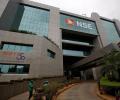
The market watchdog had directed that pending completion of the probe, revenues from the co-location facility - starting September 2016 - be transferred to a separate bank account.

The outstanding credit card base dropped to 77.99 million in August from over 80 million in July, mainly on account of the new norms of the Reserve Bank of India (RBI) that warrant the deactivation of cards that are inactive for a year. While there was a 2.8 per cent decline in net card additions on a month-on-month (MoM) basis in August, a first in many months, credit card spends slipped 3 per cent on a high base. Still, spends topped the Rs 1-trillion mark for the sixth consecutive month.
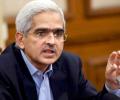
The increasing involvement of Big Tech in the financial system could give rise to concentration risk and there are potential spillovers, which call for closer attention, Reserve Bank of India (RBI) Governor Shaktikanta Das said on Tuesday. "...enormous amounts of consumer data is being generated and leveraged upon by a few entities (the so-called Big Tech) by virtue of their huge customer base. "Such developments raise concerns on concentration risk and potential spillovers as their level of engagement with the financial system strengthens in the years to come," Das said at the Global Fintech Fest 2022.

With the lockdown being eased gradually, providing more and more digital solutions, for service delivery and procurement of new policies, is what the corporation is focussing on.

While the overall loan disbursements stood strong at 15 per cent YoY in Q2, pockets such as vehicle finance, loans to NBFCs, and business banking showed some weakness. A continued fall in these numbers may make it tough for AU SFB to defend its valuations under the current circumstances.

In the first two months of the current fiscal, Indian exports of finished steel reportedly grew by almost 76 per cent on a YoY basis and China alone accounted for close to 60 per cent of the increase.

Experts say companies wanting to launch IPOs will have to scale back their expectations given the fall in valuations.

The trend in corporate earnings suggests that index earnings could fall to the levels last seen in early 2014.

There are multiple near-term worries for the stock of India's largest listed consumer company, Hindustan Unilever (HUL). While inflationary pressures will weigh on its profitability, demand pressures - especially in the rural market - are expected to hit the firm's revenues. This is why brokerages have cut the earnings estimates for financial year 2022-23 (FY23) by 7-10 per cent.

Ten billionaires including Mukesh Ambani, Sunil Mittal are in the world's richest list.

India's medical devices imports surged 41 per cent to touch Rs 63,200 crore in 2021-22, led by a 48 per cent year-on-year (YoY) jump in imports from China to Rs 13,538 crore, the commerce ministry data analysed by the Association of Indian Medical Device Industry (AiMeD) has showed. Local industry players say this has led to several small and medium units to shut shop. Rakesh Vaid of Usha Fabs, a garments exporter, had started making N95 masks in his Gurgaon factory during the peak of the Covid-19 pandemic.

After outperforming the broader market and their public sector peers for the better part of the post-Lehman period, private sector banks - such as HDFC Bank, ICICI Bank, Axis Bank, and Kotak Mahindra Bank - are now underperforming. Last week, the Nifty Private Bank index was up just 6 per cent year-to-date in the calendar year 2021, against nearly 13 per cent rally in the Bank Nifty and a 15 per cent rise in the benchmark Nifty50. Public sector (PSU) banks, such as State bank of India, Bank of Baroda, and Punjab National Bank, are now rally leaders and outperforming the broader market. The Nifty PSU Bank index was up 42 per cent since the beginning of this calendar year. But on a longer term, the Nifty Private Bank index is up 101 per cent since March 2016, against a 118 per cent rally in the Bank Nifty and just 2 per cent rise in the Nifty PSU Bank index in the period.

Morgan Stanley on Thursday became the latest brokerage to question the valuations of Indian equities and downgraded them from 'overweight' (OW) to 'equalweight' (EW) and recommended taking some money off the table. "We move tactically EW on India equities after strong relative gains - we expect a structural multi-year earnings recovery, but at 24 times forward price-to-earnings (P/E) we look for some consolidation ahead of US Fed tapering, an RBI hike in February and higher energy costs," Morgan Stanley equity strategists, led by Daniel Blake and Jonathan Garner, said in a note on Asia Pacific markets. The brokerage has upgraded Indonesia to OW, while maintaining an EW stance on China and UW on Taiwan.

Revenue up 15.8% at Rs 34,261 crore over year-ago period.

Finance Minister Nirmala Sitharaman will kick start the customary pre-Budget consultation exercise with stakeholders from Wednesday by holding the first such meeting with experts of agriculture and agro-processing industry. She will be seeking inputs from various stakeholders, including industry bodies, farmer organisations and economists for reviving consumption and boosting growth hit by the COVID-19 pandemic. The growth this year is expected to be in the double-digit during the current fiscal.

With liquidity crunch hitting operations, many finance companies have put the brakes on sanctions in the third quarter in the aftermath of the IL&FS crisis.

The increased tax target comes at a time when consumer spending and sales growth are slowing down and most companies are not investing in new capacities.
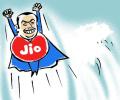
The incumbents Bharti Airtel and Vodafone Idea recorded adjusted gross revenue of Rs 10,701.5 crore and Rs 9,808.92 crore, respectively, during the quarter.

Housing sales jumped over 4.5 times year-on-year in April-June across eight cities to 74,330 units on lower base effect, while demand was up 5 per cent from the previous quarter, according to PropTiger data. Housing sales stood at 15,968 units in the April-June period last year and 70,623 units in the January-March quarter of 2022. The price of residential properties rose 5-9 per cent annually, driven by rise in input costs, inflationary pressures and premium attached with ready-to-move-in inventory. Pune and Chennai saw maximum appreciation at 9 per cent each.
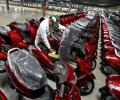
What has hit sentiment further is a draft proposal by the government to increase vehicle insurance premiums for financial year 2022-23 (FY23). Third-party motor insurance premiums have not been increased over the last two years and if this is approved, insurance costs for specific segments could rise by a fifth. The worst impacted is the 350cc and above two-wheeler segment, where premiums are up 21 per cent. Royal Enfield (Eicher Motor) is the market leader in the segment. The premiums in the 150-350cc two-wheeler category are also being inc

With the stock market turning choppy, fintech start-up MobiKwik, which had filed a draft red herring prospectus (DRHP) to raise around $250 million through an initial public offering (IPO), is now looking to raise money from the private market. "We will raise private money but we are not in dire need. "The business was profitable for the first time in the December quarter on a top line of around Rs 150 crore and that will be maintained in the March quarter also. We are generating cash," said Upasana Taku, co-founder of MobiKwik.

Consumer stocks remain the biggest laggard on the bourses. The Nify50 weighting of FMCG stocks declined to a decade low of 9.9 per cent at the end of March this year, down 150 basis points from 11.4 per cent a year ago. At their peak in March 2013, major FMCG stocks, such as Hindustan Unilever, ITC, and Asian Paints, together accounted for 15 per cent of the Nifty50. But now together with automobile stocks, the consumer goods sector accounts for only 14.7 per cent of the index, down 200 basis points in the past 12 months and 37 per cent from the record high weighting of 23.4 per cent at the end of March 2014.

Tesla Inc chief Elon Musk is set to acquire micro-blogging site Twitter for about $44 billion. Back home, India Inc, too, is seeing aggressive merger and acquisition (M&A) activity with PVR-Inox and HDFC-HDFC Bank announcing their mergers recently. While Axis Bank recently acquired Citi India's India retail business, reports suggest Larsen & Toubro Infotech (LTI) and Mindtree could be eyeing a merger.

As many as seven of eight core industries saw a contraction in output in September.

Among the key concerns of the Street is market share losses in growth segments, led by higher competitive pressures.

While sales in the domestic market declined 4.2 per cent during the April-July period, exports grew steadily at 9.5 per cent during the same period.

UBS, Credit Suisse see emerging markets doing well next year, but expect India to underperform, given its rich valuations.

The wholesale price-based inflation shot up to an all-time high of 10.49 per cent in April, on rising prices of crude oil and manufactured items. Also, a low base of April last year contributed to the spike in inflation in April 2021. The WPI inflation was 7.39 per cent in March 2021, and (-) 1.57 per cent in April 2020. This is the fourth straight month of uptick seen in the wholesale price index (WPI)-based inflation.

Inflation has reappeared as a global issue in both advanced and emerging economies and India needs to be wary of "imported inflation", especially due to high oil prices, according to the Economic Survey 2021-22 released on Monday. "Inflation has reappeared as a global issue in both advanced and emerging economies. "India's Consumer Price Index inflation stood at 5.6 per cent YoY in December 2021 which is within the targeted tolerance band," the survey report presented in the Parliament by Finance Minister Nirmala Sitharaman noted.

Amid the protests against leading e-commerce firms, Flipkart and Amazon, shipments through the online route in fact witnessed a double-digit growth every quarter.

Led by Trent, which hit its lifetime-high recently, apparel retailers have gained between 10 per cent and 36 per cent over the past three weeks. Given the network of physical stores, these stocks shall be major beneficiaries of the unlock theme, with most states doing away with Covid restrictions. Amid improving footfall, analysts expect the sector to post double-digit growth in FY23.

The world is home to a record number of 2,089 billionaires.

The two-wheeler sector has been underperforming its peers on the volumes front for over five quarters now. Even in the March quarter, Bajaj Auto and Hero MotoCorp posted a 17-24 per cent YoY decline in volumes, the sharpest in the listed auto universe. The ongoing impact of frequent price hikes, all-time high fuel prices, and muted rural sentiment has led to the lacklustre showing by two-wheeler makers. What has aggravated the situation for two-wheeler companies, which get almost all their sales from the internal combustion engine or ICE-based units, is the traction for electric two-wheelers (EV).

Dealers say that the full-year outlook remains negative with a projected contraction in retail sales of 15-35 per cent across segments, save tractors, which look set to clock a positive annual growth.

The duo bought additional shares in pharmaceutical companies Lupin and Jubilant Life Sciences, along with Agro Tech Foods and NCC during Q2FY21

Brent crude oil price surged 4 per cent on Friday, following tension between Iran and the US. Airlines, however, have been unable to pass on the price increase to customers due to the soft demand.

As the economic crisis in Sri Lanka - the world's largest exporter of orthodox tea - continues to rage across the island nation, tea producers in India look to cash in on the opportunity to seize the market. The country's largest tea growing company, McLeod Russel India, expects orders to come in from July. "A huge opportunity is coming up for everyone in India. "McLeod Russel is well placed because we have the capacity for orthodox tea," said Azam Monem, director, McLeod Russel. About 10 per cent of McLeod's production is orthodox tea.
 © 2026 Rediff.com - Advertise with us - Disclaimer - Privacy Policy - Sitemap - Feedback - About us - Terms of use - Grievances