
A Randstad report reveals that 90% of Indian employers are expanding their technology workforce to leverage AI for service scaling and revenue generation, ranking second globally after the US. The report highlights challenges like losing top tech talent to higher-paying competitors and the increasing demand for AI-qualified developers who command significantly higher salaries. It also notes a shift towards flexible talent and digital marketplaces to address skill gaps.

Tata Consultancy Services (TCS) announced a 15 per cent increase in net profit, reaching Rs 13,884 crore for the September quarter, driven by an 11.22 per cent rise in revenue from operations.

HDFC Bank, India's largest private sector lender, reported a reduction of 3,343 employees in FY26, bringing its total workforce to 2,11,178, even as its balance sheet expanded by 12 per cent. The bank's MD and CEO, Sashidhar Jagdishan, attributed the headcount reduction to redeploying talent from back-end functions to customer-facing roles due to technology-led efficiencies. The annual report also addressed the challenging resignation of part-time chairman Atanu Chakraborty, which raised questions about the bank's governance standards.

Tata Consultancy Services (TCS) plans for 80% of its new hires to possess digital and Artificial Intelligence (AI) skills, anticipating that the growing share of AI-led work will significantly boost its profit margins.

Indian IT major Infosys announced a 6.2 per cent increase in its consolidated net profit, reaching Rs 7,823 crore for the second quarter ending September 30, alongside a 10.2 per cent growth in revenue from operations.

PhonePe has announced a significant expansion plan to deepen digital payment infrastructure across India's towns and villages. This initiative includes hiring over 20,000 sales personnel and deploying more than 50 lakh payment devices, with a strong focus on rural areas, aiming to bring small merchants into the formal financial ecosystem.

IBM Chairman and CEO Arvind Krishna details the company's substantial annual investment in India and its global USD 10 billion commitment to quantum computing over the next five years. He addresses the potential for AI to displace 10-20 per cent of jobs, particularly in the BPO sector, while also highlighting India's significant opportunity in the AI ecosystem. Krishna urges India to accelerate AI adoption, scale existing tech initiatives, and build its semiconductor manufacturing, advocating for a light-touch approach to AI regulation and emphasizing critical thinking in an AI-driven economy.

Cognizant and Google Cloud have announced an expanded partnership to accelerate the adoption of agentic AI, forming a new 'Gemini Frontier Capability Group'. This initiative combines Google's AI platform with Cognizant's expertise to help enterprises deploy resilient, production-grade AI agents and drive business value. The group will focus on areas like legacy modernisation and cyber defence, with Cognizant also scaling Gemini internally.

Customer experience firm Fusion CX is significantly investing in AI-enabled services and data infrastructure, aiming to increase its share in total turnover to 25% within 12-18 months. The company, which reported a turnover of Rs 1,818.13 crore in FY26, is preparing for an IPO of Rs 800-1,000 crore in October, driven by organic growth, acquisitions, and its AI strategy.

A career break does not erase the experience that came before it. But the labour market can act as though it does. The more women invest in building professional careers, the more costly an interruption can become. How, then, do we enable women to make a comeback? Whose responsibility is it? asks Radha Roy Biswas.

The Union Cabinet has approved a significant increase in the mandatory EPFO wage ceiling from Rs 15,000 to Rs 25,000 per month, a move expected to bring over 51 lakh additional employees under mandatory social security coverage.

Artificial intelligence (AI) is significantly increasing the demand for flexible office spaces in India, as enterprises prioritise agility, speed-to-market, and struggle with forecasting workforce requirements. AI-native startups are a primary driver, while established companies are adopting 'core-plus-flex' strategies to balance stability with adaptability.

'While the population remains relatively young, its age structure is beginning to shift, setting the stage for a much older population later this century.'

Industry leaders at an AIMA panel discussion emphasised the need for businesses to quickly adapt to changing market conditions and invest in technologies like artificial intelligence to build resilience and achieve long-term growth. They highlighted the current era of uncertainty driven by geopolitical tensions, supply chain disruptions, and rapid regulatory changes, stressing that tactical responses are as crucial as long-term strategy.

India's manufacturing sector growth decelerated to a five-year low of 52.8 in August, down from 53.5 in July, as output and new orders moderated due to softer demand conditions, according to the HSBC India Manufacturing Purchasing Managers' Index (PMI).
Wipro has announced an expanded partnership with Google Cloud to accelerate the adoption of Gemini Enterprise and agentic AI. The IT company plans to create a workforce of 10,000 AI-certified specialists, including 1,500 forward-deployed engineers, to work on new Google Gemini-based solutions for enterprises, enhancing productivity and streamlining operations.

Air India has announced the appointment of Tewolde Gebremariam, former CEO of Ethiopian Airlines Group, as its new Managing Director and Chief Executive Officer, replacing Campbell Wilson. This strategic appointment comes as the airline navigates expansion amidst significant challenges.

Their message is blunt: Public scientific wealth should not be transferred at what they describe as 'throwaway prices'.capability, recruitment, promotional avenues and the voice of its employees.

For India, the goal is not simply to host another grand diplomatic gathering. It is to prove that a diverse coalition of emerging powers can still deliver.

Prof Ajit Kumar Chaturvedi, Vice-Chancellor of Banaras Hindu University, highlighted Artificial Intelligence's transformative potential in healthcare, emphasising its role in augmenting doctors' capabilities and enhancing efficiency. Speaking at PGIMER's Foundation Day, he stressed the need for India to develop AI solutions tailored to its unique healthcare realities, moving beyond being a mere consumer of Western-trained systems. PGIMER Director Vivek Lal also detailed the institute's expansion and commitment to affordable healthcare.

The physical centres will operate on a monthly subscription model, where access would be limited to verified active gig workers and platform verification.

This was perhaps a missed opportunity for India to spotlight a core domestic challenge: The scale of workforce preparation required for a young, populous, rapidly growing country seeking to reach net zero, points out Radha Roy Biswas.

The CEO of the National Health Authority, Sunil Kumar Barnwal, highlighted BRICS nations' shared aspiration for connected, patient-centric, and resilient healthcare systems through digital health infrastructure and responsible AI. Discussions at the 16th BRICS Health Ministers' meeting focused on overcoming challenges like limited interoperability and workforce constraints, with countries like Brazil and Indonesia sharing successful digital health initiatives.
Amazon has launched its next-generation Proteus robot in European fulfilment centres to assist employees with physically demanding tasks. This initiative is part of a broader 10 billion euro investment to modernise operations and create 25,000 new jobs, with Proteus using natural language commands for seamless human-robot collaboration.
Chief Economic Adviser V Anantha Nageswaran has urged the industry to invest in skilling, capability development, and innovation to counter the challenges posed by artificial intelligence, particularly for Global Capability Centres (GCCs). He noted that while the government has supported GCCs through Budget measures like simplifying transfer pricing and promoting expansion into tier-II/III cities, industry must move beyond low-cost execution to thrive in an an AI-driven landscape. Nageswaran emphasised that AI displaces routine tasks, necessitating a focus on higher-value work and continuous skill enhancement to maintain India's competitive edge.

The Budget reframes healthcare as a strategic national capability, backing biopharma innovation, workforce expansion and technology-led governance to power India's next growth phase.

India's new manufacturing project announcements more than halved in the fourth quarter of FY26, falling 60 per cent sequentially and 78 per cent year-on-year to approximately 1.7 trillion, driven by global uncertainties, geopolitical conflicts in West Asia, and existing unutilised manufacturing capacity.
ExlService Holdings, a data and AI company, announced its acquisition of AI data solutions firm iMerit for up to USD 310 million. This strategic move aims to accelerate AI innovation, deepen EXL's AI capabilities in model training and evaluation, and expand its market presence in high-growth AI tech sectors. The transaction is expected to conclude in Q3 2026.

In her address to the nation on the eve of the country's 80th Independence Day, the president stressed that just as government and society remain united to ensure national security, everyone must contribute through joint and concerted efforts to safeguard the present and future of students.

Major US technology companies, Meta and LinkedIn, are undergoing significant workforce restructuring, with Meta planning to lay off 8,000 employees while shifting 7,000 into AI-focused roles, and LinkedIn cutting over 600 jobs across various departments.
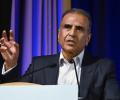
Bharti Airtel is strategically shifting its focus towards data centres, cloud services, and financial services as key drivers for its next phase of growth, leveraging significant past investments in digital infrastructure, as outlined by Chairman Sunil Mittal in the company's Annual Report for 2025-26.
ServiceNow has announced an expansion of its AI Control Tower offering with new capabilities that give enterprises control over every AI system, agent, and workflow, regardless of where it runs.
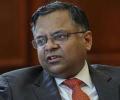
N Chandrasekaran, chairman of Tata Consumer Products (TCPL), stated that India continues to experience credible economic growth, driven by strong demographic fundamentals and accelerating digital public infrastructure, despite a fragmented global landscape.

SIS Ltd, a security and facility management services provider, aims to cross Rs 20,000 crore in revenue by FY27, driven by strong double-digit growth, expansion of its service network, and a simplified regulatory framework under new labour codes, said its Group Managing Director Rituraj Sinha.
Haryana recorded the fastest growth in unincorporated non-agricultural employment among major Indian states in 2025, with a 29.8 per cent increase to 3.1 million workers, while Gujarat experienced the sharpest contraction, declining by 12.6 per cent to 8 million.
US-based Redwood Software has inaugurated its global centre in Hyderabad, designating it as its primary operational location. The centre will focus on AI-powered automation and aims to enhance Redwood's ability to manage operations across hybrid IT environments. Redwood plans to hire over 300 new employees by the end of 2027.
Nasscom's newly appointed Chairman, Srikanth Velamakanni, outlines key priorities including restoring revenue growth in IT firms and promoting the role of artificial intelligence and other technologies in companies.

Mangala Kuppa, an Indian-origin technology leader, has been appointed as the Chief Information Officer (CIO) of the US Department of Labour, after serving in an acting capacity since October. She also serves as the department's Chief Artificial Intelligence Officer.
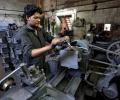
India's manufacturing sector growth slowed to a four-year low in March, impacted by cost pressures, competition, market uncertainty, and the Middle East conflict, according to the HSBC India Manufacturing PMI.

India has expressed firm opposition to attacks on merchant shipping amidst the ongoing Iran conflict, revealing that several Indian nationals have died or are missing due to these incidents. The nation also called for restraint, de-escalation, and prioritising civilian safety in the region.
