
A Chinese team of virologists has discovered a new bat coronavirus that can infect human cells, raising concerns about potential animal-to-human transmission. The virus, a new lineage of the HKU5 coronavirus, uses the same human receptor as the virus that causes COVID-19. The study, led by Shi Zhengli, a prominent virologist at the Wuhan Institute of Virology, was published in the journal Cell. The discovery comes amid ongoing scrutiny of the Wuhan lab, which was previously accused of being the source of the COVID-19 pandemic. The Chinese government has denied any involvement in the virus's origin and insists that the Wuhan lab never engaged in gain-of-function studies on coronaviruses.

The research revealed that coronaviruses and their hosts are engaged in an evolutionary arms race that promotes genetic variety in the virus.

In what appears to be an astonishing revelation, a US-based scientist who worked at a controversial research lab in China's Wuhan, has said that Covid-19 was a "man-made virus" that leaked from the facility.

Confirming the visit, Chinese foreign ministry spokesman Zhao Lijian told a media briefing on Monday that China supported scientists around the world to conduct a global study on the origins and transmission routes of the virus.
British intelligence agencies now believe it is 'feasible' that the COVID-19 pandemic began with a coronavirus leak from a Chinese bio laboratory, a media report said here on Sunday, prompting Vaccines Minister Nadhim Zahawi to demand that the World Health Organisation (WHO) must fully investigate the origins of the deadly virus.

China will carry out major scientific research to enhance its biosecurity science and technological capacity against future infectious diseases, state-run Global Times quoted Xiang as saying.

Three researchers from the Wuhan Institute of Virology sought hospital care in November 2019, weeks before Beijing disclosed the COVID-19 pandemic, a United States media report said, citing a previously undisclosed American intelligence document that could add weight to growing calls for a full scale probe of whether the coronavirus may have escaped from China's top bio lab.
'It came out of China and it could have been stopped and I wish they had stopped it and so does the whole world wish they had stopped it'

Shastri shared a picture with former West Indies player Vivian Richards calling him a 'King'.

Thursday's first ODI between India and West Indies was abandoned due to rain in Guyana, but Indian skipper Virat Kohli found a way to entertain the fans in the stadium with some slick dance moves.

A look at what your favourite celebrites are tweeting.

Sharma was sent back to the pavilion in the sixth over of India's innings.

West Indies displayed a clinical performance to defeat Thailand by seven wickets

World leaders gathered at the G7 Summit in Cornwall discussed the possibility that a laboratory leak in central China's Wuhan city may have a connection with the start of the COVID-19 pandemic, with the World Health Organisation (WHO) chief saying all hypotheses behind the origins of the deadly disease remain in play.

The match between Thailand and Pakistan in the ongoing Women's World Cup was abandoned due to rain. Thailand players kept their fans entertained while dancing to the tunes of Venga Boys' famous track 'We like to Party'
"We raced against time and were the first country to report cases to the world," Chinese foreign minister Wang Yi said in interviews to the official media over the weekend.
'Never believed that we humans have the capability at this time to create such a virus'

As the Indian team gears up to take on the West Indies in the first Test in Antigua, a look at what some of the players have been up to on social media.
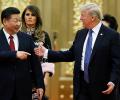
Trump indicated that his administration is looking at a bigger compensation from Beijing than the $140 billion being sought by Germany over the coronavirus pandemic.

The paper also includes musing that SARS -- which hit China in 2003 -- could have been a man-made bioweapon deliberately unleashed by "terrorists".
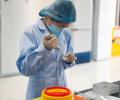
Shi explained that she and a group of researchers obtained samples of coronavirus on December 30 last year and performed high-throughput sequencing of the samples and the isolation of pathogens.
