
Experts suggest that a significant setback for US President Donald Trump in the midterm elections could compel him to pursue a swift trade agreement with India, as he seeks a quick foreign policy win amidst challenges with Russia, China, and Iran.

Former US Secretary of State Antony Blinken stated that the US must respect India's right to self-defence and maintain a zero-tolerance policy towards terrorism, highlighting the "fundamentally different" nature of Washington's relationships with New Delhi and Islamabad. He described US-India ties as global and strategic, while US-Pakistan relations are regional. Blinken also touched upon cooperation in emerging technologies, India's ties with Russia, rapid global changes, US domestic politics, and the West Asia conflict, advocating for a two-state solution.

Former US National Security Adviser John Bolton criticises JD Vance's attempt to distance himself from Donald Trump by blaming Republican midterm losses on the Iran war, calling it a "big political mistake". Bolton argues that broader voter dissatisfaction stemmed from economic issues, rising prices, and Trump's tariff policies, not just the Iran war. He also discusses Trump's leadership style, potential investigations, and the impact of US domestic turmoil on US-India relations.

This ends a 16-month selling streak, the longest since 2006, after FPIs sold every month from July 2025 to October 2026 in the secondary market.

Congress leader Rahul Gandhi has declared Indian democracy 'sacred' and dismissed the idea of boycotting elections, arguing it would dismantle the country's democratic framework. His remarks, made at the University of Chicago, came as the BJP intensified its criticism, accusing him of spreading anti-India propaganda by reiterating vote theft allegations on foreign soil. Gandhi also commented on India's foreign policy and the Israel-Gaza conflict.
The highly anticipated interim trade deal between India and the United States is currently on hold, awaiting Washington's finalisation of its internal tariff framework, even as the US has assured New Delhi of a crucial comparative tariff advantage over its global competitors.

US Ambassador to India, Sergio Gor, highlighted the evolving US-India space partnership, moving from cooperation to "co-creation" at the Bengaluru Space Expo. He emphasised joint design, funding, and co-authoring the future of human discovery, citing the NISAR satellite and India's participation in the Artemis Accords as key examples of this growing synergy.
Analysts predict that the US midterm election results, which saw Democrats gain control of Congress, will primarily influence Indian markets through changes in global financial conditions, trade policy expectations, and geopolitical developments, with a keen focus on the US administration's actions in West Asia and their potential impact on crude oil prices.

Several Indian-Americans have achieved significant victories in the US midterm elections, with five securing seats in the House of Representatives and Maryland Lieutenant Governor Aruna Miller winning re-election. The article profiles these successful candidates, highlighting their backgrounds and contributions to American politics.

US Secretary of State Marco Rubio kick-started a three-day visit to India on Tuesday to advance bilateral ties in energy, trade and investment, defence, critical technologies, and exchange views on the West Asia crisis.

Six US Democratic lawmakers, including Pramila Jayapal and Ilhan Omar, have urged US Secretary of State Marco Rubio to address alleged excessive force during student protests in India and concerns over voter purges during his upcoming visit. They also accused Indian diplomatic missions of surveillance of protesters in the US and called for investigations into human rights violations and potential arms sales implications.

Nepal has launched a diplomatic initiative to secure climate-related compensation from major greenhouse gas emitters, asserting that post-disaster assistance for recent deadly flash floods should be viewed as a moral and legal liability, not charity. Foreign Minister Shisir Khanal highlighted Nepal's disproportionate suffering from global warming despite negligible emissions, citing rapid glacier melt and extreme mountain disasters. The country has formally approached the Loss and Damage Fund board for urgent financial aid following a catastrophic flash flood in the Bhotekoshi river basin.

US Secretary of State Marco Rubio visited Reliance Industries' Jamnagar refinery, a day after calling India a crude oil refining 'superpower', and met with top Indian business leaders Gautam Adani and N Chandrasekaran to advance bilateral ties in energy, trade, investment, and defence.

Cisco Chairman and CEO Chuck Robbins announced plans to expand the company's silicon design team in India, citing the country's pro-growth strategy, scale, ambition, and engineering focus as key reasons for its strategic importance.

Sustained selling by foreign investors is weighing on domestic equities, with the benchmark Sensex and Nifty 50 down 15.60 per cent and 14.4 per cent, respectively, this year.
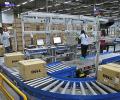
India's manufacturing sector activity surged to a seven-month high in September, driven by a significant acceleration in new orders and output, leading to solid expansion in factory hiring and a four-month peak in business optimism.

External Affairs Minister S Jaishankar highlighted that India's primary concern regarding terrorism from its neighbour, Pakistan, if not fully appreciated by partners like the US, negatively impacts bilateral relations. Speaking at the Asia Society, Jaishankar discussed the turbulence in India-US ties, particularly in light of Washington's renewed engagement with Pakistan and the perceived lack of empathy for India's terrorism concerns, especially under the second Trump administration. He emphasized that addressing these sensitivities is crucial for improving the relationship.

President Donald Trump is set to sign the Sanctioning Russia and Iran Act, which includes tariffs on countries buying Russian oil and gas, such as India. India has voiced concerns over the potential impact on its ties with the US and the global energy market.

External Affairs Minister S Jaishankar met US Secretary of State Marco Rubio on the sidelines of the UN General Assembly session in New York. India raised its concerns regarding the recently signed "Lindsey O. Graham Sanctioning Russia and Iran Act of 2026," which authorises tariffs on countries buying Russian oil and gas. Both leaders also discussed bilateral relations, regional priorities, and the situations in the Gulf and Ukraine.

'These limits will change. Very soon restrictions, restrictions will come.'

'If you listen to a rowdy in a class, he will keep on bullying you.' 'India can say do whatever you want. We will not compromise on anything.'

The political confidence required to place high-end Japanese aircraft and personnel on Indian soil is itself a data point.
It indicates a level of trust that would have been difficult to imagine when India-Japan defence ties were largely symbolic, explains Varun Arya.

French aerospace and defence major Thales views India as a highly dynamic market for avionics, with significant growth potential as Indian airlines expand their fleets. The company, which has a substantial presence and MRO facilities in India, is also exploring opportunities to replicate India-developed solutions globally and sees increased use of AI in development.

'The Chinese military cannot advance much in Ladakh, even if they want to.' 'Similarly, in Arunachal Pradesh, they can rename a village or two, intrude here or there, but cannot do much more realistically.'

US President Donald Trump is expected to sign the Lindsey O. Graham Sanctioning Russia and Iran Act of 2026 later on Friday (local time). A White House official confirmed the development to ANI without revealing further details.

India has finalised a deal with the United States to acquire Javelin anti-tank guided missile systems, significantly enhancing the Indian Army's combat capabilities. This procurement, facilitated through the US Foreign Military Sales process, underscores the deepening bilateral defence partnership and opens avenues for future collaboration and co-production between the defence industries of both nations.

'It beggars belief that Saudi Arabia would deploy military force against India, a top partner and market.'
Any military response to a cross-border terror attack from Pakistan will have to take into account the new alignments beginning to take shape in the region, points out former foreign secretary Shyam Saran.

NASA has invited ISRO to join its ambitious Moon Base mission to establish a permanent lunar outpost near the Moon's South Pole, aiming for scientific discoveries and future deep space exploration. This invitation follows discussions at the Civil Space Joint Working Group meeting in Bengaluru, where both nations also advanced cooperation under the Artemis Accords and the TRUST initiative.

India and China have agreed to advance discussions on an "Early and Substantial Harvest" of boundary delimitation and border management during the 25th round of Special Representatives talks between National Security Advisor Ajit Doval and Chinese Foreign Minister Wang Yi in Beijing. Both sides reached an eight-point consensus, committing to the 2005 Agreement on Political Parameters and Guiding Principles for Settlement. Key outcomes include enhancing border management, improving understanding of the Line of Actual Control, establishing new meeting points and hotlines, and continuing cooperation on trans-border rivers and pilgrimage.

India's chances of reaching the Hockey World Cup semi-finals are slim, requiring a significant victory against Argentina and favourable results from the Netherlands-England match. The team must overcome their finishing struggles and defensive concerns to keep their hopes alive.

US Vice-President J D Vance's unexpected phone call to Prime Minister Narendra Modi on August 8 has ignited speculation about a potential diplomatic overture, possibly seeking India's support amidst the escalating US-Iran conflict and a shifting global power landscape, suggests Ambassador M K Bhadrakumar.

A US Congressman has raised serious concerns regarding India's proposed amendments to the Foreign Contribution Regulation Act (FCRA), warning that these changes could lead to government takeovers of religious charities and strain bilateral relations.

Indian benchmark indices, Sensex and Nifty, bounced back significantly after two days of losses, with the Sensex climbing 443.97 points to settle at 76,922.64, driven by positive global market trends and a drop in crude oil prices.

US Ambassador to India Sergio Gor revealed that President Donald Trump views Prime Minister Narendra Modi as 'a friend' and is deeply committed to enhancing cooperation with New Delhi, highlighting their personal equation as a crucial factor in advancing bilateral ties.

Senior Indian officials highlight the indispensable role of the private sector in translating India-US cooperation in AI, semiconductors, quantum technologies, and critical minerals into tangible outcomes. The collaboration aims to build trusted, resilient technology ecosystems and position India as a global electronics and semiconductor hub.
David Perdue said in a post on X that the US-India relationship delivers real results through close cooperation in diverse areas, including defence, energy and through Quad engagement.
A senior US official has warned against the weaponisation of digital and artificial intelligence sovereignty by political voices, urging nations to avoid costly re-invention of existing technology. The official highlighted the economic dangers of rebuilding entire tech stacks and emphasised India's crucial role as an indispensable partner in global technological leadership due to its engineering talent and innovation ecosystem.

Gwadar is viewed as a critical pearl in China's maritime strategy as it would give a permanent logistical footprint near an important choke point - the Strait of Hormuz and the oil rich Persian Gulf, explains Commodore Venugopal Menon (retd).

'They talked bad about our leaders. They said India was a dead economy. They were not sensitive to the Indian psyche.'
