
India has 54 institutions in the QS World University Rankings, making it the 4th most represented country after the US (192), the UK (90) and China (72).

The US not surprisingly dominates the Times Higher Education World Reputation Rankings while India's Panjab University features in the unranked category between 226 and 300.

90 per cent of institutions recorded no improvement in international student metrics, despite government initiatives such as the Study in India programme, UGC regulations on internationalisation, and efforts to attract foreign students.

The only Indian university in THE world rankings this year.
The Times Higher Education is out with the top 100 universities in the world, and Harvard is number one on the list.

India improved its representation in the Times Higher Education rankings with 25 universities in the top 200. But it is far behind China which has four in the top five.

The SBIF Asha Scholarship Programme for Overseas Education 2024-25 aims to provide financial assistance to meritorious students from low-income families across India, ensuring the continuity of their education.

Like last year, IISc Bangalore, Delhi University and five Indian Institutes of Technology -- Bombay, Delhi, Madras, Kharagpur, Kanpur -- have secured positions in the elite top 100 institutes in Asia.

The Times Higher Education World University rankings lists the top 800 universities in the world.

In the 2021 QS rankings announced in London on Wednesday, IIT Bombay continues to be the best-ranked Indian institute at 172, a 20-slot dip from the 2020 ranking.

Should we really pay attention to them, asks Ajit Balakrishnan.

The Indian Institute of Technology-Bombay is the top Indian institute as per the Quacquarelli Symonds Graduate Employability Rankings 2022.

The UGC chairperson stressed that foreign varsities with campuses in the country can only offer full-time programmes in physical mode and not online or distance learning.

The Indian Institute of Science, Bangalore and Indian Institute of Technology, Bombay were ranked among the Top 40 as per Times Higher Education BRICS and Emerging Economies Rankings 2015.
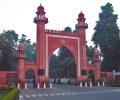
These self-appointed well-wishers of AMU are basically for the control or police model of university governance. They have no faith whatsoever in the democratic functioning of the universities, observes Faizan Mustafa, former dean, Faculty of Law, and Registrar, Aligarh Muslim University.

Shashi Tharoor, an alumnus of the college and Member of Parliament, talks to Ritika Bhatia about the marking system that leads to such anomalies as well as the future of higher education in the country.

Universities must be the bastions of free speech and expression. It must be the arena where diverse and conflicting schools of thought contend. There should be no room for intolerance, prejudice and hatred within the spaces of this institution. Further, it must act as flag-bearer for the coexistence of multiple views, thoughts and philosophies, says Pranab Mukherjee.

There are three aspects of this decision that you would have to weigh in to make an appropriate choice -- namely skills, interests and values.
