
'The prime minister has given us the task of taking at least 300 satellites to orbit in the next five to six years.'
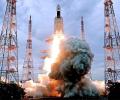
ISRO is developing a third launch pad at Shriharikota to accommodate heavier satellites and next-generation launch vehicles. The new facility will support both crewed and uncrewed missions.

'It is not economical to operate GSLV-Mk II due to its cost and complexity. Future launches to be managed with LVM3.'

The larger question raised by the associations is simple: If ISRO is no longer to manufacture launch vehicles, what will happen to the institution's accumulated capabilities and the people who built them?
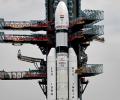
'The LVM3 rocket will orbit one Block 2 BlueBird satellite in Low Earth Orbit.'

A rocket designed and developed by ISRO is being transferred to industry for production.
Nine ISRO associations want to know whether this is simply an effort to expand India's industrial capacity or part of a larger policy under which ISRO itself will eventually withdraw from rocket manufacturing.
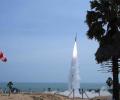
The fuel cost will come down if rockets are launched from Kulasekarapattinam as they will have a straight trajectory and need not have to avoid Sri Lanka, which is being done by rockets flown from Sriharikota.

The Indian Space Research Organisation (ISRO) on Sunday said the two satellites launched to perform space docking experiments were brought within three metres and then moved safely back in a trial attempt.
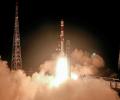
The Indian government has approved the construction of a third launch pad at Sriharikota, capable of sending heavier spacecraft into orbit. This new facility will support India's ambitious space program, including the Gaganyaan human spaceflight mission and a lunar landing. The launch pad will be built at the Satish Dhawan Space Centre and is expected to be operational within four years.
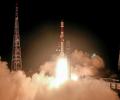
The two Space Docking Experiment (SpaDeX) satellites that the Indian Space Research Organisation is hoping to unite are at a distance of 1.5 km and will be brought much closer on January 11, the space agency said on Friday.

The GSAT-31 is a 'high power' communication satellite going to serve and replace some of the satellites that are going to expire soon.

India took another leap in space infrastructure with the foundation stone laid for a new launch pad at the country's second rocket port in Kulasekarapattinam.

The RISAT-2B would replace the RISAT-2, which has been actively used by India to monitor activities in camps across the border in Pakistan to thwart infiltration bids by terrorists.

Under the defence partnership, India and the UAE are eyeing defence industrial collaboration and cooperation in advanced technologies, cyberspace training, special operations, interoperability of their militaries and counter terrorism.

The United States, which entered this war in expectation of a short, sharp win along the Venezuela model, is now preparing for deeper involvement in a conflict it does not fully control, without the allies it typically relies on, against an adversary that is not behaving as expected, in a global environment that is already absorbing economic shock. Prem Panicker continues his must read daily blog on the Gulf War.

The ISRO had earlier said Chandrayaan-2 will be launched in a window from January-February 16, 2019.Sources said it is expected by the middle of next month but no date has been finalised.

Skyroot Aerospace has become the first private company in India to give wings to the Indian space programme, after the sector was opened to private players by the Centre in 2020.

The year ended with the launch of the PSLV's 50th mission.

'We started AgniKul to show that space transportation should be as simple as road transportation.'
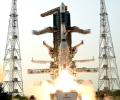
Over 32 missions -- satellites and rockets -- have been planned for the year.

The 6-metre tall launch vehicle Vikram-S is named after Vikram Sarabhai, the father of the country's space programme and lifted off at 11.30 am.
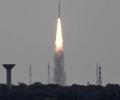
The space agency has set 2020 as the deadline for the first privately built rocket to be launched into space.

ISRO has an opportunity to be the one-stop shop for satellite manufacturing, and Alpha Design is just the booster it needed.

India needs to be technologically and militarily prepared to defend itself from both Pakistan and China, alerts Ramesh Menon.

The crater was formed during the Nectarian period, which dates back to 3.85 billion years and is one of the oldest time periods in the Moon's history, the team, including researchers from the Physical Research Laboratory and Indian Space Research Organisation (ISRO), Ahmedabad, said.

'India has got a unique opportunity to get more and more business from outside as India is cost-effective and reliable.'

K Sivan has to hasten the effort to bring in private players into satellite and rocket building and replicate India's software success in aerospace.

The success of the PSLV-C34 mission is a result of ISRO's professionalism and the hard work put in by their scientists over the last many decades., says Ajay Lele.
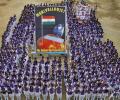
Godrej and some other firms are frustrated at what they say is the slow execution of projects and lack of government support, which are hampering India's efforts to compete with China and Russia as a cheaper option for launching satellites.

'What we have done is a symbol of new India; that is what a small start-up can do, a few hundreds of people coming together, developing a rocket and launching to space and succeeding at the very first attempt.'

Government think-tank body Niti Ayog CEO Amitabh Kant supported the industry demand and called for setting up of a single window clearance system for expeditious approval of projects. Start-ups and small medium enterprises requested the prime minister to provide support in low-cost capital at the virtual launch of space and satellite industry body Indian Space Association (ISpA).
India's first solar mission, if successful, will showcase ISRO's ability to explore the cosmos, explains Kumar Abishek.

The Mars mission is overwhelmingly irrelevant to space science and won't advance the frontiers of knowledge. It will divert attention from the real technological challenges facing the Indian space programme, and will further distort our science and technology priorities, says Praful Bidwai.

Mission Shakti 'shows the development within India's military space programme, its desire to be seen as a global space power and its recognition of the potential dangers of China's counterspace programme.'

'One thing about ISRO is that all the people who work there are passionate about their work.' 'They did not mind spending day and night over there.' 'Even today it is like that.'

NASA said it is looking forward to explore the solar system with its Indian counterpart.

'India must close the missile technology gap with both China and Pakistan as early as possible, or else the credibility of India's nuclear deterrence will remain suspect,' says Brigadier Gurmeet Kanwal (retd).

It has already tasted success with the moon mission and Mangalyaan. Is man in space the next frontier for ISRO?

If the initial analysis of this YJ-21 is correct, then China becomes the first country in the world to operationally field such a missile from a naval vessel.

'Wherever in the world there is political instability, those countries are beset with severe crises today. But India is in a much better position than the rest of the world due to the decisions taken by my government in the national interest,' President Droupadi Murmu said in her address to both Houses of Parliament.
