
'The innovators have been able to more or less stay where they are, in terms of revenue even as the generics are seeing exponential growth due to their affordability.'

The bumper rise is due to the rising demand for the drug and patients' gradual shift towards its higher dosage.

While the introduction of branded generics is likely to accelerate volumes for GLP-1 agonists, value growth may moderate because of price erosion.

India's domestic pharmaceutical market recorded its highest value growth in five quarters during Q4 FY26, driven primarily by pricing and an early indication of volume recovery, with a significant structural shift towards chronic and sub-chronic therapies.

'Once the 60-plus population hits 20 to 30 per cent of the country, the demand for elderly-care treatments will surge -- cardiac, metabolic, neurological, and musculoskeletal medicines are going to dominate the market for the next several decades.'
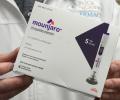
'As more patients are prescribed these drugs, intolerance due to gastrointestinal and other side effects will become more visible, leading to higher discontinuation rates.'
For decades, multinational pharmaceutical companies and Indian drugmakers worked in ways that supported each other: MNCs brought innovation and brands, while Indian companies built scale through generics and cost efficiency. There was an important overlap - generic drugs - but this is shrinking fast. And the consequences are reshaping India's gigantic pharmaceutical market.

The semaglutide patent expiry next year could unleash a wave of generic versions from Indian drugmakers, with prices expected to go lower -- at least 80 per cent.
'Willingness to try new drugs for obesity management have propelled the growth of this market, which today is almost five times what it was five years ago.'

India is home to more than 100 million diabetics, and the demand for anti-diabetic drugs is on the rise -- the Rs 20,611 crore anti-diabetic drug market in India is growing at 9 per cent or so.
Indian pharma companies are focussing on flagship products or mother brands under which they launch various new combinations to ensure robust revenue growth as well as therapy leadership. An analysis by market research firm Pharmarack showed how such flagship brands have posted strong growth CAGR in the last five years, with some even doubling sales. Sheetal Sapale, vice-president, commercial at Pharmarack, said, "Mother brands are analogous to an aggressive player who has put in a lot of effort during the prime years of life but now continues to silently nurture the brand family to collectively cross newer benchmarks of success."

The government has been stringent with pricing changes. Prices of 651 essential medicines came down from April 1, 2023 by 6.73 per cent with the government capping ceiling prices of these drugs.

Kerala has had 202 fatalities in 2024 so far. In July alone, there were 202,122 episodes of fever, 2,250 cases of dengue, 1,850 cases of mumps and several other illnesses. 10,000 cases of dengue have been reported from Karnataka. 1,000 swine flu cases have been documented in Rajasthan.

For the consumer, there would be practically no impact on prices of essential medicines this year.

The Indian pharmaceutical market (IPM) grew 6.8 per cent to touch a turnover of ~1.93 trillion in calendar year 2023, despite volumes going down marginally by 0.9 per cent. This indicates the price increase has been the major growth driver. Growth in the moving annual turnover (the previous 12 months' turnover) in December was 5.1 per cent and that in new product introduction 2.6 per cent, while volumes dipped 0.9 per cent, leading to an overall growth rate of 6.8 per cent, according to the data from market research firm Pharmatrac.

Several firms are stepping up to help their workforce cope with soaring temperatures
Drug sale volumes are almost stuck at pre-pandemic levels but price growth has improved value, data from market research agency Pharmarack AWACS showed. The Indian pharmaceutical market's (IPM) volumes in April 2023 grew by 0.21 per cent when compared to April 2019. Key therapy areas like cardiac, anti-diabetic and vitamins recorded negative volume or consumption growth, while respiratory, anti-infectives, and pain and analgesics had positive growth from April 2019 to April this year.

Codeine-based formulations are under the scanner for misuse as a narcotic product.

When compared to the domestic sales of April 2019, the growth is around 37 per cent. However, compared to the previous month (March), the growth is 18.4 per cent.
