
The BSE Midcap and the BSE Smallcap indices pared all intraday gains to end 0.3% and 0.5% lower

Analysts attribute this outperformance to the government's proactive economic reform measures

After a stellar run in 2021 that saw the S&P BSE Sensex and the Nifty50 clock gains of 20 per cent and 22 per cent respectively, global equity markets, including India, are gearing up to welcome 2022 on a cautious note. For one, new variants of the Covid -19 infection that make current vaccines less effective is one of the key risks worth flagging, analysts said. Inflation was also a risk for this asset class in 2021, although most market participants expect that the current elevated inflation levels will be transitory.

The apex court had observed that the allocation was arbitrary, illegal, and resulted in unfair distribution of national wealth.

The market breadth was extremely weak with 1,806 losers against 1,009 gainers on the BSE.
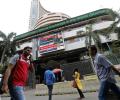
Pharma was the top losing index amid worries about their earnings outlook with Lupin down over 4%
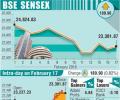

The IMF on Tuesday cut India's economic growth forecast by 0.5 percentage points to 9 per cent for the current fiscal year, with its chief economist Gita Gopinath saying that the slight downgrade is mainly due to the impact of the spread of the Omicron variant. "If you look at the 2021-22 fiscal year, we have a slight downgrade of -0.5 percentage points and for the next fiscal year 2022-23 we have a slight upgrade of 0.5 percentage points. So, growth for the previous fiscal year is now nine per cent and for this year now is at nine per cent. We moved it up slightly," Gopinath told reporters during a news conference in Washington. In its latest update of World Economic Outlook on Tuesday, the International Monetary Fund has cut India's economic growth forecast to 9 per cent for the current fiscal year ending March 31, joining a host of agencies which have downgraded their projections on concerns over the impact of the spread of Omicron on business activity and mobility.
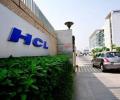
Shares of HCL Tech hit a fresh record high of Rs 1,118.55 on Friday, up 2 per cent on the BSE in intra-day trade, surpassing its previous high of Rs 1,101 touched on Thursday in intra-day deals.

Banking stocks dipped with Nifty PSU Bank index falling 1.7% after the government notified the ordinance that seeks to tackle non-performing loans in the sector.

From the enactment of the capital control Act to the recognition of the BSE as a stock exchange and the infamous Harshad Mehta scam, here are the 18 biggest events for stock markets from 1947 to 1993.

Among major Sensex movers, Ultratech Cement rose over 4 per cent, Bajaj Finance by 2.63 per cent and Maruti by 2 per cent. BSE Sensex closed up by 133.14 points at a record high of 47,746.22. NSE Nifty rose by 49.35 points at its lifetime high of 13,981.95.

HDFC and HDFC Bank's merger - touted as India's biggest-ever corporate merger - pumped up shares of the two entities on the bourses. Shares of Housing Finance Development Corporation (HDFC) skyrocketed 9 per cent while those of HDFC Bank zoomed 10 per cent. In comparison, the benchmark S&P BSESensex and the Nifty50 indices settled 2.2 per cent higher on Monday.

Amid rupee sliding below 64 to a dollar, global agency Standard & Poor's on Tuesday said it will maintain negative outlook for the country as currency depreciation is adversely impacting investor confidence.

"It's a welcome development, but we also feel it was long overdue... It's a recognition of the actions that the government has undertaken like GST, bankruptcy. We also need to keep all these things in perspective," Chief Economic Adviser Arvind Subramanian said.

The Indian economy remains on track to regain its position as the world's fastest-growing major economy after official estimates on Friday put the expansion at a tempered 9.2 per cent this fiscal amid concerns over the impact of a resurgent virus on the fragile recovery. The growth in the gross domestic product (GDP) of 9.2 per cent in April 2021 to March 2022 fiscal (FY 2021-22) given by the National Statistical Office (NSO) in its first advance estimate compares with 9.5 per cent expansion forecast by the Reserve Bank of India (RBI) last month. The economy had contracted by 7.3 per cent in the previous financial year.

It is not clear as to whether we are in a bubble in technology stocks. What is clear, however, is that there is no reason why this potential bubble will pop anytime soon, notes Akash Prakash.

The Nasdaq Composite hit a high of 5,143.316.

The breadth, indicating strength of the market was strong

Omkeshwar Singh, Head, Rank MF, a mutual fund investment platform, answers your queries.
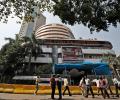
There were more than three losers against every gainer on BSE

S&P, which holds 51.4 per cent in Crisil, named Roopa Kudva as the region head for South Asia. Kudva would be part of S&P's Asia-Pacific executive committee, the agency said in a statement. She would continue as the managing director and CEO of Crisil.

Nifty PSU bank index dropped nearly 2%

India's economy will do well once vaccination reaches a critical mass as pent up demand, global recovery and easy financial conditions will boost activities, RBI's Monetary Policy Committee (MPC) member Ashima Goyal said on Tuesday.
Adani Ports, HUL and L&T gained the most, while ICICI Bank, ONGC, GAIL and Tata Steel lost the most

Nikunj Saraf, Vice President Choice Wealth, answers your queries.
Global rating agency Standard & Poor's on Tuesday said tight monetary policy to tame rising inflation will slow down India's growth a bit to 7.5-8 per cent in 2008 and expressed concern about the worsening fiscal situation.
Two mid-sized Indian companies - Rolta India and Nestle India have been named among 300 top challengers to the world's leading blue chip firms, complied by leading global index provider Standard and Poor's.

The International Monetary Fund (IMF) on Tuesday cut its economic growth forecast for India to 9.5 per cent for the fiscal year to March 31, 2022 as the onset of a severe second COVID-19 wave cut into recovery momentum. This forecast for 2021-22 is lower than the 12.5 per cent growth in GDP that IMF had projected in April before the second wave took a grip. For 2022-23, IMF expects economic growth of 8.5 per cent, larger than the 6.9 per cent it had projected in April.

'Earning expectations remain strong.'

As many as 142 stocks from the S&P BSE500 index are currently trading below their level of May 12, 2014

The economic impact of the Omicron variant of COVID-19 on emerging economies will depend on a mix of government restrictions, public comfort with social interactions, and capacity of governments and central banks to provide additional policy support to the private sector, Moody's Investors Service said on Wednesday. The emergence of the new variant poses new risks to the global economic growth and inflation outlook, as concerns mount about the variant's health risks and several countries have imposed new travel restrictions in recent days. These restrictions will likely increase over the coming weeks until scientists learn more about the variant, it said.

So, what does 2016 have in store for the Indian markets? Will they be able to take a giant leap forward in the leap year, and what are the key risks?
On the contrary, the fall in the US markets was lower with the S&P 500 and Dow Jones both declining by around 9 per cent and 6 per cent respectively, while emerging markets lost around 18 per cent during the month. Pessimism in the financial markets following the filing for bankruptcy by Lehman Brothers, Merrill Lynch's sell-off, the AIG bailout and perceived uncertainty around the US bailout package added to investor fears.

Long-term investors should not reduce or stop their equity mutual funds through SIPs.

The growth prospects are particularly high for Indian companies in the speciality and complex generic drugs segment in the US, the report said.

Despite the 3 per cent gain in September 2019, the FPI sell-off during the quarter has seen the benchmark indices - the S&P BSE Sensex and the Nifty 50 register negative returns in Q3CY19.
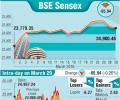
The S&P BSE Sensex ended at 24,900, down by 66 points.


Reliance Industries Ltd, the nation's most valuable company, on Thursday said it has raised $4 billion (around Rs 30,000 crore) in debt through the largest ever foreign currency bond issuance by an Indian entity. The oil-to-telecom conglomerate plans to use the proceeds of the three tranche issues to retire existing borrowings. The issue was "nearly 3 times oversubscribed with a peak order book aggregating around $11.5 billion," the company said in a statement. This is the largest ever foreign currency bond transaction in India, eclipsing ONGC Videsh Ltd's $2.2 billion US dollar bonds issue of 2014.
