
An aggressive rate hike by the US Fed and the possibility of a recession can trigger a slide in these stocks, which will be a good opportunity to buy from a long-term perspective.
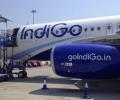
Wadia Group-owned Go First Airways' (Go First) insolvency plea could trigger a 'momentum rally' in shares of rival airlines, Interglobe Aviation (parent company of IndiGo) and SpiceJet, as they look to gain bankrupt airline's market share, said analysts. On the bourses, shares of InterGlobe Aviation hit a 52-week high of Rs 2,235.95, surging 8 per cent on the BSE in Wednesday's intra-day trade, before settling 4.5 per cent higher at Rs 2,164 apiece. Those of SpiceJet and Jet Airways, meanwhile, rallied up to 6 per cent in the intra-day trade, and ended 1 per cent and 5 per cent higher, respectively, following the development, which was announced post market hours on Tuesday.
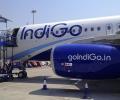
At Rs 919 crore, InterGlobe Aviation, the parent firm of low-cost airline IndiGo, posted its best-ever fourth quarterly net profit in the January-to-March quarter (Q4) of financial year 2022-23 (FY23). The bottom-line, however, was lower than the Street's expectations where estimates ranged from Rs 1,160 crore to Rs 2,180 crore. On the bourses, shares of IndiGo have added just 30 paise (0.01 per cent) since the announcement of the Q4-FY23 results on May 18.

Amid a shift in mobility trends and people increasingly opting for less polluting energy sources, sales of compressed natural gas (CNG) vehicles increased more than 82 per cent in the past five years. A total of 729,902 CNG vehicles were sold in 2022-23 against 400,825 in 2017-18, according to VAHAN Dashboard. Though the increase in sales of CNG-powered vehicles has been significant, their share in overall vehicle sales remains minuscule as is the case with EVs.

Gold looks cheap compared to the stock markets that are highly overbought at the moment.

Mid- and small-cap indices have outperformed the frontline benchmarks - the S&P BSE Sensex (up around 10 per cent) and the Nifty50 (13 per cent) - in the first half of calendar year 2021 (H1-CY21) by rallying 26 per cent and 39 per cent, respectively. The trend, analysts believe, is likely to continue in H2-CY21 as well. The outperformance in H1-CY21 comes on the back of improved earnings and strong inflows from the foreign portfolio investors (FPIs) in Indian equities. However, good monsoon so far, gradual opening up of the economy and the pick-up in the pace of vaccination provides support to the market.

Foreign investors, according to them, will now wait-and-watch how the economy takes shape in the backdrop of doubts over monsoon, interest rate trajectory and other global events such as the US - China trade war.
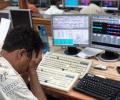
Infosys fell the most among Sensex stocks, declining by 2.85 per cent. Among other IT stocks, TCS fell by 1.87 per cent, Wipro by 1.52 per cent, and HCL Tech by 1.70 per cent. NSE Nifty plunged by 174.65 points to close at 17,938.40.

The combined market-cap of all listed Adani group firms has plunged nearly Rs 7.11 trillion since January 24 when the Hindenburg report was made public.

Shares of telecom services providers - Reliance Industries (parent of Reliance Jio), Bharti Airtel, and Vodafone Idea - have shed up to 23 per cent so far in the current calendar year as growth in the wireless subscriber segment begins to plateau amid higher tariffs and rising costs of smartphones. By comparison, the benchmark S&P BSE Sensex, and sectoral index BSE Telecom have dipped 1.8 per cent, and 12.6 per cent, respectively, ACE Equity data shows. However, analysts expect the trend to reverse soon as telecom services providers focus on the next leg of growth -- fixed broadband (FBB) segment.
While the collapse of a large financial intermediary can wreak havoc on the system because of the interconnectivity, a large business conglomerate too can play spoilsport if the banks have too much exposure to the entity, explains Tamal Bandyopadhyay.

Most private companies are not initiating large projects.

Majority of equity linked savings schemes as well as mid and small-cap funds outperformed their respective benchmark indices over a five-year period ended December 2015.

Days after keeping India's rating at lowest investment grade for 13th year in a row, the rating agency in a webinar said despite the contraction in GDP this year, the country continues to be an outperformer among the peer groups.
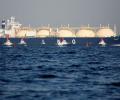
Tightening Russian gas supplies to Europe has led to scramble for tankers before winter sets in.

Nikunj Saraf, Vice President Choice Wealth, answers your queries.

Two firms belonging to the Adani group - India's most valued conglomerate - are part of the Nifty 50 index. The group, however, has no representation in the Sensex. And it could stay this way if a proposed index qualification rule change gets approved. Recently, Asia Index, a joint venture between S&P Dow Jones Indices and BSE responsible for index composition, floated a consultation paper where it proposed that a stock must have a derivative contract to be eligible for inclusion in the flagship 30-share Sensex index.

HDFC was the top loser in the Sensex pack, shedding nearly 2 per cent, followed by Kotak Bank, Asian Paints, UltraTech Cement, HDFC Bank, HUL and Tech Mahindra.

The rally in the broader markets, a spate of new listings, and the influx of retail investors have resulted in a boom for research and this has spurred a surge in the number of entities providing such services. From 467 entities that provided research services as of March 2018, the number jumped 57 per cent to 733 as of March 2021. And, another 46 entities have been added to the list in the six months since, to take the total number of registered research analysts to 779 as on September 13. However, the total number of analysts could be a multiple of this number.
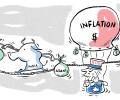
'The biggest risk to the Indian markets from a 12-18-month view is that the current government does not get re-elected, or loses in a way that is not represented at all in the next central government.'
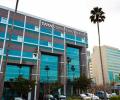
S&P said Indian technology players will continue to grow at a slightly slower pace over the next two to three years due to technological disruptions.
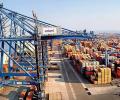
S&P Dow Jones Indices on Tuesday said it will remove Adani Ports and Special Economic Zone from its sustainability index following reports of its business ties with Myanmar's military that has been accused of human rights violations after a coup. The Adani Group firm is building a $290 million port in Yangon. In a statement, S&P Dow Jones Indices said: "Adani Ports and Special Economic Zone will be removed from the Dow Jones Sustainability Indices following a media and stakeholder analysis triggered by recent news events pointing to heightened risks to the company regarding their commercial relationship with Myanmar's military, who are alleged to have committed serious human rights abuses under international law."

Earlier in May, Ford India announced that it had dropped its plans to make electric vehicles (EVs) in India, which it intended to export, under the production-linked incentive scheme (PLI). Ford was among 20 companies that had signed a Champion OEM Incentive Scheme under the PLI project with the government in February this year. The decision comes as a blow for the 4,000-odd employees at Ford India's Maraimalai Nagar plant near Chennai and in Sanand, Gujarat. In September last year, the company had announced that it would exit the India market, which it had entered in 1995 through an on-again, off-again joint venture with Mahindra & Mahindra (they split in 1998, signed a JV in 2019 and split again in December 2020), retailing petrol and diesel brands such as the EcoSport, Figo, Aspire, and Endeavour.

Reports suggested that stock market regulator, the Securities and Exchange Board of India (Sebi), is looking into the allegations of insider trading in the shares of Aptech, a computer training company in which Jhunjhunwala is a promoter. An email sent to Jhunjhunwala on the allegations did not immediately receive a response.

India's climate change goals are turning combustible. On the one hand, a protracted dispute between the government and manufacturers over subsidies threatens to slow the pace of electric vehicle (EV) sales. On the other hand, repeated assertions by different arms of the government over banning sales of new fossil fuel-fired vehicles have queered the pitch for energy investments. Before we address the issue of the recommended diesel vehicle ban in the recent report on energy transition, issued months before the next round of global climate talks begin in Dubai in November, let's look at what's at stake.

Reliance Industries (RIL) was the top-performing index stock on Friday (May 26) and closed the day with gains of 2.8 per cent, against a 1 per cent rise in the benchmark S&P BSE Sensex during the day. RIL's performance on the bourses on Friday was, however, an exception, and the stock has struggled to beat the broader market for nearly two years now. The company's share price is currently at the same level as in September 2021, while the benchmark index is up 6 per cent in the period.

The Indian economy recovered from the Covid-induced downturn during 2022 and is poised for further improvement in the coming quarters though downside risks emanating from geopolitical tensions, strengthening dollar and elevated inflation will continue. The positive trajectory in the growth trend and improved fundamentals will help the nation in neutralising the impact of global headwinds which are expected to have a bearing on the country's exports in the months to come. The challenges before the government and the Reserve Bank in the new year would be to arrest inflation, check declining value of rupee against US dollar and promote private investment and growth, with a view to ensure that the country remains one the fastest growing major economies of the world.

The 50-50 partnership would bring together BSE's closely watched India index suite, which includes the Sensex, with S&P Dow Jones Indices' 115 years of experience in publishing transparent and independent global benchmarks.

'The market will focus on the fact that India does have strong earnings growth this year.'

A sub-division in the face value of equity shares -- from a higher to a lower denomination

The BSE Midcap index has declined 5.7% thus far in May 2018. In comparison, the S&P BSE Small-cap index has lost 5.6%

An escalation in the already simmering tensions between North and South Korea, China and Taiwan, and Russia and Ukraine could prove to be a bigger worry for the markets over the next few months rather than central bank policy action, said analysts. The markets, they said, are still not fully factoring in this possibility. "The conflict between Iran and Saudi Arabia is another geopolitical worry.

Mutual funds (MFs) are investing in more stocks despite the recent volatility. The industry invested in 824 companies across the listed universe as of October, according to primemfdatabase.com. The S&P BSE Sensex hit its all-time high of 62,245 that month. The index has since corrected to 57,864, around 7 per cent below the peak.

The market's sensitivity to the US Fed's balance sheet changes makes it vulnerable to the possible tapering of the bond buying programme and the resulting stagnation or even shrinkage in the balance sheet.

market rally, especially in mid-caps, has also been driven by a pick-up in the monsoon and the government's resolve to get the goods and services tax (GST) Bill cleared in the recent session of Parliament.

Investors became poorer by over Rs 4.47 lakh crore on Friday as markets faced severe drubbing, mirroring weak trends in global equities. The 30-share BSE benchmark dived 866.65 points or 1.56 per cent to settle at 54,835.58. During the day, it tumbled 1,115.48 points or 2 per cent to 54,586.75.

The Karnataka election is being seen as the semi-final to the 2019 general elections and appears to be heading towards a close fight

Adani Power will also be dropped from the S&P BSE 100 index
The S&P BSE Midcap and the S&P BSE Smallcap indices gained 0.3% and 0.5%, respectively
The performance has been a clear contrast to the movement in the first two months of 2014, when the S&P BSE PSU index massively underperformed the S&P BSE Sensex (down 0.2 per cent) by slipping nearly seven per cent.
