
Through his commitment to democratic norms, debate, dissent and constitutionalism, Jawaharlal Nehru helped ensure that parliamentary democracy took deep root in independent India. Utkarsh Mishra evaluates Nehru's 17 years as India's first prime minister, examining his role in nation-building, democratic institution-building, economic planning, scientific advancement and foreign policy.

A 19-year-old self-described ethical hacker who exposed the alleged security gaps in CBSE's on-screen marking system (OSM) was recruited by IIT-Kanpur's cybersecurity research hub, an official said on Thursday.

Researchers at IIT Kanpur are studying alpha waves in the brain to understand how stress affects cognitive functions. The study aims to build automated models of stress dimensions using EEG and correlating them with factors like loss of control, helplessness, and anxiety.

The NIA's investigation into the Delhi Red Fort blast case has revealed that the main accused used a false identity to obtain chemicals for making explosives.

Mother Dairy has launched a naturally degradable milk pouch, a first in India, designed to break down in soil and reduce plastic waste. The new packaging will be used for cow milk across Delhi-NCR starting June 5th.
A DRDO employee in New Delhi was defrauded of over Rs 15 lakh in a sophisticated online investment scam involving fake work-from-home tasks and promises of high returns. Police have arrested three individuals from Haryana and Rajasthan who played different roles in facilitating the movement of the illicit funds, with further investigation ongoing.

Russian President Vladimir Putin asserted that any attempts to undermine India's sovereignty through 'threats of sanctions' would 'boomerang immediately' under Prime Minister Narendra Modi's leadership, highlighting India's sovereign decision-making and strong national interests.

IIT-Roorkee, which conducted the exam this year, said that the information circulating on social media 'does not accurately reflect what happened' and alleged an attempt to spread misinformation.
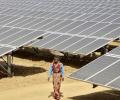
Researchers at the Central University of Jharkhand have developed an eco-friendly solar cell using dye extracted from the Mirabilis jalapa flower, demonstrating the potential of natural, non-toxic materials for solar energy applications.

Indian stock market benchmark indices, Sensex and Nifty, experienced declines in early trade due to escalating tensions between the US and Iran, which led to a surge in crude oil prices and weak global equity trends.

Pakistan has criticised India's recent remarks on Pakistan-occupied Kashmir (PoK) protests, asserting it is addressing issues democratically. Pakistan also warned India against blocking water, calling it an "act of war," and commented on India's nuclear capabilities and its own military strikes in Afghanistan.

Indian benchmark indices, the BSE Sensex and NSE Nifty, snapped a four-day losing streak, with the Sensex climbing 382 points, primarily driven by a strong rally in IT sector shares. Major IT firms like TCS, Infosys, and HCL Tech saw significant gains, contributing to the market's recovery.

India's economy in FY26 saw significant momentum from investment demand, with gross fixed capital formation (GFCF) accelerating to 8.2 per cent, while private final consumption expenditure (PFCE) also grew steadily, according to provisional estimates.

Indian benchmark indices Sensex and Nifty rebounded in early trade, tracking a recovery in global equity markets and an easing of hostilities between Israel and Iran, after a sharp fall in the previous session.

Indian benchmark indices Sensex and Nifty surged significantly in early trade, tracking a global rally fueled by US President Donald Trump's declaration of an end to the war with Iran and a subsequent drop in crude oil prices.

'DRDO has been directed to license missile technologies to the private sector.'
Researchers have developed a lightweight, wearable polygraph system that adheres to the chest and measures heart activity, breathing patterns, sweat response, blood flow, and temperature to provide a real-time, whole-body view of stress.
Indian benchmark indices, Sensex and Nifty, closed sharply higher, with the Sensex climbing 1,695.40 points and the Nifty surging nearly 2 per cent, driven by a global market rally and a decline in crude oil prices following US President Donald Trump's declaration that his country has ended the war with Iran.

Crude oil prices are projected to fall significantly this year, driven by hopes of a peace deal between the US and Iran, which could lead to the reopening of the Strait of Hormuz, and a notable drop in Chinese demand for seaborne crude imports.
Indian benchmark equity indices Sensex and Nifty closed higher, recovering from previous losses, driven by a global market rebound, a pause in Israel-Iran hostilities, and a rally in bank stocks.
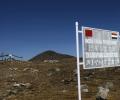
A rare yellow puffball mushroom, provisionally identified as Bovista colorata, has been documented in Arunachal Pradesh's Longding district by the ICAR-Krishi Vigyan Kendra. This discovery highlights the state's rich biodiversity and the ecological importance of such fungi.

A new report from the Stockholm International Peace Research Institute (SIPRI) indicates that India has expanded its nuclear arsenal and is developing long-range weapons capable of reaching targets across China, while also maintaining focus on its rivalry with Pakistan.
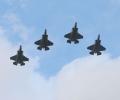
A Congressional Research Service report reveals that at least 42 US aircraft were lost or damaged during Operation Epic Fury, targeting Iran, with costs estimated to reach USD 29 billion.

Scientists stress there is currently no evidence of human infections, or community spread linked to the virus.

Indian benchmark indices Sensex and Nifty closed flat, paring early gains due to renewed hostilities between the US and Iran, which unsettled investor sentiment and led to profit booking in metal, oil & gas, and telecom shares.

Dr Dinesh Amalnerkar, president of the Maharashtra Academy of Sciences, has emphasised the need for Maharashtra to strengthen its semiconductor research and manufacturing ecosystem to compete with states like Gujarat and Telangana.

The Supreme Court has established a high-powered committee, chaired by Kanchan Devi, Director General of the Indian Council of Forestry Research and Education (ICFRE), to independently review the Centre's report on the definition and delineation of the Aravalli hill range, aiming to resolve 'critical ambiguities' in its findings.

During the meeting with Prime Minister Narendra Modi, Vijay raised concerns, including rendering Tamil Thai Vazhthu at the beginning of government events, opposition to Karnataka's proposed Mekedatu dam project, the release of Tamil Nadu fishermen detained by Sri Lanka, and the establishment of a key defence research facility in the state.

Indian benchmark indices Sensex and Nifty experienced a significant slump, with the Sensex tumbling 719.08 points, driven by escalating West Asian tensions, a sharp rise in crude oil prices, and a global sell-off in technology stocks.

Indian benchmark indices Sensex and Nifty closed marginally lower due to profit-taking, following the Reserve Bank of India's decision to keep the repo rate unchanged while lowering its growth expectations for the current fiscal year and forecasting higher inflation.

India has strongly refuted claims by the United States Trade Representative (USTR) regarding excess capacity in its steel and textile sectors, arguing that the nation's significantly low per capita consumption of these products contradicts such assertions, according to Amitabh Kumar, Additional Secretary in the Ministry of Commerce.

Indian stock market benchmarks, Sensex and Nifty, saw gains in early trading, driven by anticipation surrounding the Reserve Bank of India's monetary policy decision, despite mixed global cues and significant FII outflows.

Astronaut Shubhanshu Shukla discusses the Gaganyaan mission and its potential to inspire other nations in space exploration, drawing on his experiences as an IAF test pilot and his time on the International Space Station.

St Stephen's College is set to embrace artificial intelligence (AI) under its newly-appointed principal, Susan Elias, the first woman to hold the position in the college's 145-year history. Elias aims to equip students with AI and quantum computing skills, introducing certification courses for students and alumni.
Indian benchmark indices Sensex and Nifty experienced a significant slump in early trade, mirroring a sharp decline in global equities and a fresh spike in crude oil prices, exacerbated by simmering tensions in West Asia and a global unwinding of the AI-led rally. Track how sensex, Nifty fared on June 8.

This marks a significant step towards legally safeguarding the cultural and spiritual identity of one of Hinduism's most revered pilgrimage centres.

A US federal judge has ruled that the USD 100,000 fee imposed by former President Donald Trump for H-1B visa applications was unlawful, as it lacked congressional approval. The ruling states the fee was a tax, exceeding the administration's authority and impacting skilled global talent.

Foreign Portfolio Investors (FPIs) withdrew nearly Rs 33,000 crore from Indian equities in May, bringing the total outflow for 2026 to Rs 2.25 lakh crore, driven by weak earnings growth, rupee depreciation, and more attractive opportunities in other global markets.
A new study reveals that evening caffeine consumption can impact sleep quality by reducing slow-wave activity, even if sleep duration appears normal. Researchers used EEG to analyse brain activity during sleep, finding that caffeine can shift the brain towards a more wakeful state, hindering restorative sleep.

IIT-Guwahati has partnered with Kaashyap Cleantech Innovations to commercialise bio-methanol production technology, which converts greenhouse gases into a versatile liquid fuel, offering environmental and performance benefits.
