
rediffGURU T S Khurana answers readers' personal income tax queries.

The NBFCs, which filed for ECB in January with the Reserve of India (RBI), include REC (over $500 million), Tata Motors Finance ($200 million), L&T Finance Holdings ($125 million), and Shriram Finance ($750 million), according to the RBI data. A senior executive with State Bank of India (SBI) said overseas borrowing by Indian companies, including highly rated NBFCs, was likely to grow because hedging costs were low and there was a softening bias in global interest rates.

Teaching is not only a profession but an art where you discipline students and groom them, former Indian cricket captain Mahendra Singh Dhoni said.

Among the 30 Sensex companies, Larsen & Toubro, Power Grid, NTPC, State Bank of India, Reliance Industries and HDFC Bank were the biggest laggards. Sun Pharma and Nestle were the only gainers.

The post-Covid pandemic boom in corporate revenues appeared to have faded away in 2023-24. Yet, companies have reported a sharp recovery in their profits in FY24, driven by high margins. Their combined net sales, including gross interest income for lenders, rose by a modest 4.8 per cent year-on-year (Y-o-Y) in FY24.

Shares of public sector enterprises have corrected by up to 22 per cent month-to-date until March 19, 2024. Analysts attribute this steep fall to the valuation exuberance seen after a sharp run in these counters last year and suggest investors remain selective regarding the stocks in this space. "The rally in public sector undertaking (PSU) stocks has been stretched and sharp, although it is somewhat justified by improvements seen in earnings, operations, balance sheets, and overall profitability.

State-run power sector lenders Power Finance Corp and Rural Electrification Corp are mulling a foray into the banking space, a move that would foster greater competition in infrastructure funding.

The rally in the equity markets in the second half of 2023 has led to a sharp surge in the cutoff for stocks to qualify as largecaps and midcaps. On the latest list put out by the Association of Mutual Funds in India (Amfi), the smallest largecap stock now has a market capitalisation (m-cap) of Rs 67,000 crore, 35 per cent higher than in July 2023. In the case of midcaps, the cutoff has surged 26 per cent to Rs 22,000 crore.

At a time when exchange-traded funds (ETFs) were unloading Jio Financial Services from their portfolios, some active fund managers were placing large bets on the demerged financial services arm of Reliance Industries Ltd (RIL), a report by Nuvama Alternative & Quantitative Research shows. Motilal Oswal Mutual Fund and Quant Mutual Fund were the top MF buyers of the stock in August. They bought around 60 million shares each, together investing around Rs 2,800 crore.

Interrupting a two-month streak of decline, outward foreign direct investment (FDI) rose sequentially to $1.85 billion in July over $1.07 billion in June, an increase of 73 per cent. However, it was lower than the $2.18 billion in July last year, according to the Reserve Bank of India data. Outbound FDI, expressed as financial commitment, has three components - equity, loans, and guarantees.

The S&P BSE Sensex and the Nifty50 have hit record highs amid the poll outcome-triggered bull frenzy at the bourses. Most analysts feel that the indices are on course to rise further over the next few months - till the general elections - albeit amid intermittent corrections - largely triggered by global developments. Bharatiya Janata Party's (BJP's) win in the three state elections of Madhya Pradesh (MP), Rajasthan and Chhattisgarh, analysts at Jefferies believe, reinforces the consensus expectations of a Modi win 2024 national elections with a greater likelihood of over 300 seats for the BJP.

With general elections on the horizon, the government's privatisation bandwagon has almost but stalled as a government wary of being accused of selling family silver opts for minority stake sales on stock exchanges over outright privatisation. The result -- the divestment target for current fiscal year is again likely to be missed. Big ticket privatisation plans such as that of Bharat Petroleum Corporation Ltd (BPCL), Shipping Corporation of India (SCI) and CONCOR are already on the backburner and analysts feel meaningful privatisation can happen only after April/May general elections.
Stocks of public sector undertakings (PSUs) have been on fire in the past year as investors cheered an improvement in key operating metrics and embraced counters of these state-owned enterprises, analysts suggest. The S&P BSE PSU Index has gained over 90 per cent in the past year, rising much higher than the S&P BSE Sensex, which has rose nearly 19 per cent during this period, according to ACE Equity data. The BSE PSU Index, reports show, has delivered a compound annual growth rate (CAGR) of 28 per cent (including dividends reinvestments) over five years and risen by almost 60 per cent in the past year.

A follow-on public offer of the state-run Rural Electrification Corp to raise around Rs 2,900 crore (Rs 29 billion) is likely to come up by the end of the current financial year (2009-10).

Days after JP Morgan announced the inclusion of government bonds in its emerging market (EM) bond index, a host of banks and other financial institutions (FIs) are set to tap the debt market. They plan to raise Rs 18,000 crore by issuing non-convertible debentures (NCDs) and bonds. National Bank for Agriculture and Rural Development (Nabard) plans to raise up to Rs 3,000 crore via five-year social impact bonds on Tuesday, the first of its kind in India.

This is a good opportunity for long-term investors to pick quality small and midcap stocks at reasonable valuations.

Anil Rego, CEO, Right Horizons, answers your personal income tax queries.

The Lok Sabha contest in Thiruvananthapuram is shaping up to be a significant battle involving key candidates like Shashi Tharoor, Rajeev Chandrasekhar, and Panniyan Ravindran. This three-cornered fight highlights the political dynamics in Kerala's capital city, with each candidate bringing their own vision and promises for the region's development, notes Rajeev Srinivasan.

Public-sector enterprise stocks have seen a good run thus far in 2023-24 (FY24), with the S&P BSE PSU Index surging by over 26 per cent during the period, compared to an 11 per cent increase in the benchmark S&P BSE Sensex.

LIC, EPFO and PSBs are likely to be asked to subscribe to bonds.

Anil Rego, CEO, Right Horizons, answers your personal income tax queries.

'Like all long-term bull markets, the Indian stock market will continue to climb the proverbial wall of worry.'

Billionaire Mukesh Ambani's Reliance Industries Ltd on Friday announced the buyout of British battery maker Faradion Ltd for an enterprise value of 100 million, as the oil-to-retail conglomerate continued with the acquisition of end-to-end technology for its multi-billion-dollar clean energy portfolio. Reliance New Energy Solar Ltd (RNESL), a unit of the nation's most valuable company, signed definitive agreements to acquire 100 per cent shareholding in Faradion for an enterprise value of 100 million and will invest an additional 25 million as growth capital to accelerate the commercial roll-out, the company said in a statement. Based out of Sheffield and Oxford in the UK and with its patented sodium-ion battery technology, Faradion is one of the leading global battery technology companies.

The last year has seen public sector undertakings (PSUs) outperforming the Nifty50, albeit by a small degree. But PSU valuations are still, on average, less than half of private sector peers at price-to-equity or PE 8.7x for the Nifty PSU Index versus 20.9x for the Nifty50. There are several reasons for lower valuation.

'I asked him why were he and other writers being targeted.' 'I saw his point of view, that he and others being writers, their work was popular and well-appreciated by people, especially the youth.' 'This made the State fear them.'

The headline for corporate profit growth has been very encouraging in the July-September quarter (Q2) of 2023-24 (FY24), with the combined net profit of listed companies up by 38 per cent year-on-year. However, the earnings distribution has been very lopsided, with most of the growth coming from public-sector oil-marketing companies (OMCs), banks, non-bank lenders, automobile (auto) companies, and cement producers. By comparison, companies from information technology services, fast-moving consumer goods (FMCG), retail, and consumer durables were disappointed, experiencing a sharp slowdown in net sales growth and a relatively muted increase in reported net profit.
In an interview with Sanjay Jog, REC chairman and managing director P V Ramesh talks of the growth strategy and the company's plan to ride the transformation wave in the power sector.

Anil Rego, CEO, Right Horizons, answers your personal income tax queries.

Ajit Mishra, vice president, Research, Religare Broking, answers your queries.

The credit guarantee cover under the scheme would be both transaction-based (for single eligible borrowers) and umbrella-based (for a group of eligible borrowers).
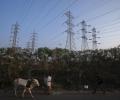
Two years after the Centre's flagship village electrification scheme Saubhagya concluded with the government claiming 99.9 per cent success, several states have added close to 1.1 million rural households that remain to be connected to the electricity grid. This new list includes earlier unwilling households that have now agreed to have a metered connection and also those built or discovered in the states' surveys since 2019. Assam and Uttar Pradesh are the states that have the majority of such new additions.

The RBI governor's assurance should give investors enough confidence to start believing in the NBFC sector again, say bankers.

Air India sale will give a boost to India's privatisation drive, the Economic Survey said on Monday, as it suggested redefining the public sector role in business enterprises to encourage private participation in all sectors. The government earlier this month handed over ownership rights in national carrier Air India to Tata Group for Rs 18,000 crore. The amount includes the takeover of the debt burden of Rs 15,300 crore and another Rs 2,700 crore in cash.

Reliance Industries Ltd, whose offering of rock-bottom tariffs shook up the telecom industry, is looking to repeat the feat in the green energy business, where its billionaire chairman Mukesh Ambani sees promise to outshine all existing growth engines in 5-7 years. Having pledged Rs 6 lakh crore on green energy, Ambani says RIL will scale up investments in this business which will start going live in the next 12 months. "Over the next 12 months our investments across the Green Energy value chain will gradually start going live, scaling up over the next couple of years," Ambani, chairman and managing director of RIL, said in the company's latest annual report.

The UT has been facing a widespread power shutdown Since Sunday owing to a deadlock between the Power Development Department (PDD) employees and the administration over the latter's bid to privatise electricity in the region.
With the new owner shelling out Rs 18,000 crore for the buyout of 'Maharaja' this would be the highest ever amount garnered through privatisation or even the cumulative sum garnered through strategic sale in 1999-00 to 2003-04. The government had garnered roughly over Rs 5,000 crore during that five-year period by privatising 10 CPSEs.

After a hiatus of nearly two decades, the government's programme to privatise state-owned firms restarted with the handing over of debt-laden national carrier Air India to the Tata Group. With the new owner shelling out Rs 18,000 crore for the buyout of the 'Maharaja', this would be the highest-ever amount garnered through privatisation, and is even more than the cumulative sum mopped up through strategic sales from 1999-00 to 2003-04. The government had in October last year inked the share purchase agreement with the Tata Group for sale of national carrier Air India for Rs 18,000 crore. Tatas would pay Rs 2,700 crore cash and take over Rs 15,300 crore of the airline's debt.

The divergence shows lack of financial depth in the Indian stock markets.

While power utilities and traders have generally welcomed the Central Electricity Regulatory Commission's draft regulations on renewable energy certificates (RECs), they have warned that the short supply of renewable energy (RE) may encourage speculative activity and volatility in the already tight market.

"Till September we have refinanced loans worth Rs 1,500 crore (Rs 15 billion). We will lend another Rs 3,500-4,000 crore (Rs 35-40 billion) to REC and PFC by the end of this fiscal," IIFCL Chief Executive Pradeep Kumar said.
