
Both India and the EU are likely to announce a conclusion of trade talks on January 27.
'RCEP may be in India's long-term interest, but it is certainly not in India's short-term and medium-term interest.'

Asked for China's comments on India not joining the RCEP deal over concern of cheap Chinese products potentially harming its domestic industry, Chinese foreign ministry spokesman Geng Shuang told the media in Beijing on Tuesday that China welcomes India joining the deal.
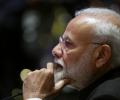
According to the industry body, the 16-member RCEP has the potential to become one of the largest and economically dynamic trading blocs of the world, even bigger than the European Union.
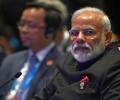
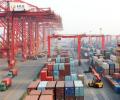
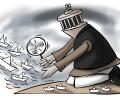
India has been forcefully raising the issue of market access as well as protected lists of goods mainly to shield its domestic market as there have been fears that the country may be flooded with cheap Chinese agricultural and industrial products once it signs the deal.
'It seems a wiser decision to pull out at the right moment than regret after joining the pact,' explains Dr Rahul Mishra.

The Asean secretariat hopes the meet may be able to iron out existing wrinkles raised by India. Since there had been no significant progress on the matter over the past two years on most issues, New Delhi is yet to decide on the invite.

Sources said China was forcefully pushing for inking the deal during the RCEP summit later in the day, which was seen as an attempt to counter-balance the impact of its lingering trade war with the US as well as to project the region's economic might to the West.

The BJP's effort comes in the wake of Commerce and Industry Minister Piyush Goyal set to attend the eighth RCEP ministerial meeting in Bangkok from October 10 to 12.
Modi will have limited choice other than stressing upon a request for more time to decide on tariff rates, especially with elections in 2019.
It became increasingly clear that the real negotiations the government had to conduct were with Indian business which was wary of yet another free trade agreement, points out T N Ninan.
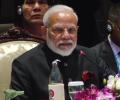
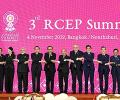
The agenda prepared by ministers will be discussed by Prime Minister Narendra Modi and other RCEP leaders in Nonthaburi, a city north of Bangkok, on November 4, the official deadline to close talks.
The report by the High Level Advisory Group said India stands to benefit even more when the US and China are locked in a global trade war.
'But I don't think the government is in a great hurry to sign the BTA.'
'India's farmers will be unable to compete with the US, given the subsidies that the latter provides its farmers.'
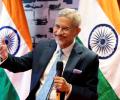
'The logic every one of our neighbours must realise is that working with India will give you benefits, and not working with India has a cost.'
'New Delhi is not naive about its foreign policy choices.'

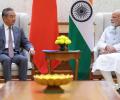
During the meeting on the sidelines of the 11th BRICS Summit on Wednesday, prime minister Modi said there was a "new direction and new energy" in bilateral ties after the two leaders' second informal summit in Chennai.
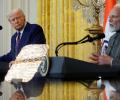
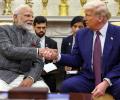
'When Prime Minister Modi met President Trump, they agreed to initiate a bilateral trade dialogue.' 'It makes sense to give these negotiations a chance.'

Tata Sons will likely choose Singapore as a "key partner" for its semiconductor plans, a senior minister from the city-state said on Friday. Speaking to reporters after a meeting with Tata Sons chairman N Chandrasekaran earlier in the day, Singapore's minister for home affairs and law K Shanmugam said semiconductors was a "big discussion" point during the meeting. "If they (Tatas) want to, they can do business with anybody in the world.

The Budget should undertake further reductions in import tariffs and seriously consider an announcement of India's intention to join one or both of the two Asian mega-regional free trade agreements, suggests Shankar Acharya, former chief economic adviser to the Government of India.
The World Bank on Tuesday raised the growth forecast for the Indian economy to 7 per cent for the current fiscal year on the back of recovery in agri sector and rural demand. World Bank had in June projected India to grow at 6.6 per cent for FY24. According to the World Bank Report released on Tuesday, India's growth continues to be strong despite a challenging global environment.

Countries that have signed the RCEP agreement can start negotiations with India for joining the pact once New Delhi submits a written request stating its intention for the same, according to a declaration. On November 4 last year, India walked out of mega free trade agreement RCEP (Regional Comprehensive Economic Partnership) as negotiations failed to address New Delhi's outstanding issues and concerns. The remaining 15 member countries have signed RCEP agreement and have stated that the pact would remain open to India.
Moody's Investors Service on Thursday said India is likely continue to face challenges in raising longer-term growth potential and creating enough jobs for its young population in the absence of higher trade openness. In its report on South Asia sovereigns, Moody's said compared with other South Asian economies, India appears to be in a better position to deepen its integration in global value chains, attract FDI and increase exports. The country has better macroeconomic fundamentals, more stable politics and a more developed export sector.

Goyal was to visit Beijing from August 2 to 3 to take part in the RCEP Intersessional Ministerial meet.

To propel demand, one should concentrate on indirect taxes and bring down the goods and services tax (GST) rates to a uniform 12 per cent as the Vijay Kelkar panel had recommended, said Ajit Ranade, chief economist at Aditya Birla Group.

Sources said Wang is primarily visiting India to hold boundary talks with National Security Advisor Ajit Doval.
Panagariya also pointed out that COVID-19 pandemic may lead to integration of global labour market.
As US President Joe Biden launched a new trade deal with 12 Indo-Pacific nations, including India, to enhance trade, economic and investment opportunities, China, which sees the pact as a threat to its dominance in the region, went on the offensive against it, promising more opening up, while the official media here termed it as "economic Nato".
India will have to show more willingness to import, and since Biden will not encourage sale of oil and gas to bridge the gap, it means there has to be more meaningful duty reduction in other areas even if Delhi baulks at a Free Trade Agreement so soon after walking out of RCEP.
Existing trade deals, especially the 2009 pact with the Asean bloc, have been panned by the Centre for not boosting exports but flooding the domestic market with cheap imports. Subsequently, New Delhi has called for reviewing FTAs with Japan and South Korea. Going by that, a trade deal with the US is unlikely to be beneficial, say experts.

Among the current FTAs with significant trade deficits for India, five are with countries from the 10-nation Asean bloc. Exports to the 10 economies stood at $ 37.4 billion in 2018-19, up by 9% year on year. On the other hand, imports were higher at $ 59.31 billion, up by 25% from the previous year's $ 47.13 billion.
As India goes into firming up trade deals with developed nations like Australia, the United Kingdom (UK) and the regional bloc, and the European Union (EU), it will have to be well prepared to negotiate on new-generation issues, such as data protection regulation, e-commerce, and environment. India is yet to negotiate pacts with its trading partners on these evolving issues since discussions between them have until now been largely focused on tariff and non-tariff barriers and the rules of origin. "We can no longer look at trade just as trade. We have to look at it in totality of global and regional conditions.

India, Jaishankar said, is a "prisoner of its past image" and must get over it.

China is on the lookout for investment pastures where its money is welcome, safe and earns a decent return. India also needs vast investment - about $1 trillion over the next 10-15 years - in infrastructure, green energy, transportation and heavy industry, says Ravi Bhoothalingam.

Their favourite alternatives: Malaysia, Vietnam and the Philippines. Note, India is missing from that list. And this is despite an attractive financial incentive scheme for OSAT players. The reason, said a senior executive of a US chip company who had a meeting in Taiwan just a few weeks ago, is that "they want more predictability in government policy because they plan to put in big money."

Surjewala said the party's 10-day agitation was formalised at a meeting in which Rahul Gandhi participated in, but neither he nor Sonia Gandhi would be participating in the state and district level programmes.
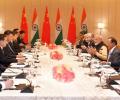
China had been trying hard to enter the Indian market, without opening its own to Indian products. There is an economic crisis in India-China relations that the Chennai Connect barely scratched the surface, points out Srikanth Kondapalli.

'Keeping Kashmir out of the informal summit does not mean that they have given up their strategic interest.'

Had India agreed to join the trade pact, Indian markets would have been flooded with cheap Chinese products.
