
The next government in these states may find it tough to push economic growth through long-term reforms, which would be necessary.
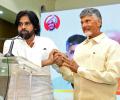
The actor-turned-politician has been allotted Panchayat Raj and Rural Development, Environment, Forests, and Science and Technology portfolios.
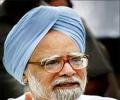
The prime minister said the country's economy was likely to grow by 7 per cent or a little more in the current financial year.
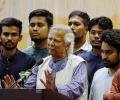
Yunus, 84, was administered the oath of office by President Mohammed Shahabuddin at a ceremony at the presidential palace 'Bangabhaban'.
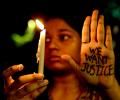
'I humbly request the government to create safe spaces for ALL women, the strictest of punishment and the swiftest justice.'
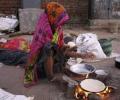
The World Bank said improved infrastructure, specifically rural electrification, has had far-ranging effects

Heatwave conditions are expected over northwest India during the next five days, with Punjab, Haryana, Rajasthan and Delhi predicted to bear the maximum impact, the India Meteorological Department (IMD) said on Thursday.

Fortunes of five richest men have more than doubled since 2020 and the world could have its first-ever trillionaire in just a decade while it would take more than two centuries to end poverty, rights group Oxfam said on Monday.
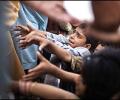
The committee, to be constituted in a couple of months, would take a comprehensive view on the entire method of estimating poverty, including the Socio-Economic Caste Census 2011.
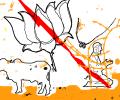
Despite failing to secure a simple majority in Parliament, we will continue to see him on TV, newspapers, magazines, bill boards, vaccination certificates, railway stations, bus shelters, airports, sea ports, on the highway and on rural roads, sighs A Ganesh Nadar.

The ban is also estimated to have prevented 18 lakh men in the state from becoming overweight or obese, it said.
Among the major states, Orissa recorded the steepest fall in poverty from 2004-05 to 2009-10.

Prime Minister Narendra Modi on Friday gave a clarion call to all neighbouring and countries of the South Asian Association for Regional Cooperation to work "shoulder-to-shoulder" to remove poverty from the region, leaving behind the world of death and killings.
The Survey estimated that a UBI that reduces poverty to 0.5 per cent would cost 4-5 per cent of GDP, assuming that those in the top 25 per cent income bracket are not part of the loop.
Amidst acute poverty across South Asia, the five states of Delhi, Kerala, Goa, Punjab and Himachal Pradesh have the least number of poor people in India, according to a new measure of global poverty developed at the University of Oxford for the UNDP.

Looking under the hood, I see India on the terrible, but commonplace, road to prosperity failure, warns Rathin Roy.
Angus Deaton's Nobel Prize should spark off more research on the measurement and usefulness of poverty percentages.
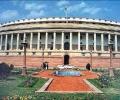
The BJP president said that the focus of development should be on agriculture and its allied industries and called for the promotion of PPP model to encourage private entrepreneurs to participate in development projects.
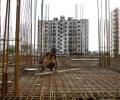
The construction sector is now India's second-largest employer after agriculture, the trend coinciding with India's high-growth phase and decline in poverty levels
Several states have witnessed higher GSDP growth and higher poverty at the same time.
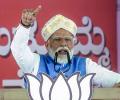
'The biggest festival of democracy is here! EC has announced the 2024 Lok Sabha election dates. We, the BJP-NDA, are fully prepared for elections'
There is certainly something missing with the way poverty is measured in India.

A programme that endeavours to graduate the poorest people could have seminal implications for Prime Minister Narendra Modi's government.

In July, the Planning Commission said that the number of people living below poverty line has come down both in rural as well as urban areas.
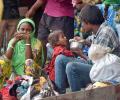
According to a new report by international management consulting firm Arthur D Little, the worst of COVID-19's impact will be felt by India's most vulnerable in terms of job loss, poverty increase and reduced per-capita income, which in turn will result in a steep decline in the Gross Domestic Product (GDP). "Given the continued rise of COVID-19 cases, we believe that a W-shaped recovery is the most likely scenario for India. This implies a GDP contraction of 10.8 per cent in FY 2020-21 and GDP growth of 0.8 per cent in FY 2021-22," the report said.
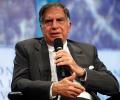
'What's sad today is that there are so many people who cannot find work, not because the country is devoid of that opportunity, but because we are not doing enough in the country.'

'The aged with retina and finger print issues are not getting access to pension and ration.' 'If all becomes digital -- what'll happen to the poor?'

The consistently heavy downpour of films, shows, events, videos and whatnot is causing economic disruption.

The report also said that the productivity gap between the industrialised region and most others remains wide, even as productivity levels have been on the rise over the past decade worldwide.

In private, questions are being raised about the wisdom of a 'dual-SIM' leadership during the long run-up to the 2026 assembly polls where 'family rule' could become an election issue, reports N Sathiya Moorthy.
The national poverty rate is 14.7 percent.
The poverty ratio was highest in Chhattisgarh at 39.93 per cent.
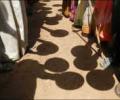
Poverty in the country fell 7.4 percentage points in the past five years.

It has been slower compared to smaller neighbouring countries.
 © 2026 Rediff.com - Advertise with us - Disclaimer - Privacy Policy - Sitemap - Feedback - About us - Terms of use - Grievances