
SBI was the top laggard in the Sensex pack, shedding over 4 per cent, followed by Bajaj Finance, Asian Paints, Axis Bank, Kotak Bank and ICICI Bank. M&M, PowerGrid, ONGC and Reliance Industries were among the major gainers. NSE Nifty fell 87.90 points or 0.95 per cent to close at 9,205.60.

Coffee Day Global Ltd (CDGL) and its financial creditor IndusInd Bank have reached a settlement, following which NCLAT has set aside an insolvency order against the company which owns and operates coffee chain Cafe Coffee Day. Counsel representing CDGL and IndusInd bank on Wednesday informed the Chennai bench of National Company Law Appellate Tribunal (NCLAT) about the settlement and sought permission to withdraw insolvency litigations. A two-member bench comprising Justice M Venugopal and Shreesha Merla took their submissions on record and set aside the order admitting CDGL to insolvency.

Adani group opened a $1.2 billion copper plant, bought a port in Odisha, raised stakes in a cement company and stitched an alliance with rival Mukesh Ambani's Reliance Industries, all in a matter of one week in signs that the apples-to-airport conglomerate has shrugged off the Hindenburg effect and is back to rapid expansion spree. In the last one week, Adani group has through regulatory filings and press statements announced expansions and investments in its mainstay ports business, diversification into metal refining, fund infusion into a two-year-old cement foray and continuing progress in the commissioning of its mega solar project.

Benchmark stock indices Sensex and Nifty fell for the third day running on Friday due to weak trends in global markets and soaring crude oil prices. Foreign fund outflows also weighed on investor sentiments amid strengthening US bond yields which are nearing 5 per cent for the first time since 2007. The 30-share BSE Sensex fell 231.62 points or 0.35 per cent to settle at 65,397.62.

'There is not any negative connotation associated with it.'

In the reprisal attacks, several missiles struck the city of Kharkiv with two children among those injured, the Ukrainian military said.


'The problems that the film explores still remain. It was a different time when we made the film. We were young and we thought we could change the world.'

Coffee Day Enterprises Ltd has reported a total default of Rs 465.66 crore on payments of interest and repayment of principal amount on loans from banks, financial institutions and Unlisted Debt Securities as NCDs and NCRPS, for the quarter ended September 30, 2022. Coffee Day Enterprises Ltd (CDEL) which is paring its debts through asset resolution, has a total debt of Rs 490.66 crore, including short-term and long-term debt. "The delay in debt servicing is due to liquidity crisis," said Coffee Day Enterprises Ltd (CDEL) in a regulatory update.


While the market may remain volatile this year, analysts expect equities to deliver positive returns by outperforming inflation and government bonds, supported by the fiscal stimulus in the US.
Among the stocks that have seen the largest cut by MFs, the DVR shares (shares with differential voting rights) of Tata Motors have seen a cut of 243 basis points (bps) in MFs' stake.

Style Junkiie's new line was a casuals fest.
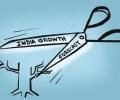
The Reserve Bank on Wednesday marginally lowered the country's GDP growth projection for the current fiscal at 6.8 per cent from its earlier estimate of 7 per cent. However, despite the downward revision in the economic growth projection, India will remain among the fastest growing major economies in the world, said RBI Governor Shaktikanta Das while announcing the latest bi-monthly monetary policy.

Bankrupt Infrastructure Leasing & Financial Services (IL&FS) has sold the entire stake in the waste management arm IL&FS Environmental Infrastructure & Services (IEISL) and its subsidiaries to EverEnviro Resource Management (EverEnviro), an arm of the PE major Everstone Group, the companies said in separate statements. Though the value of the deal was not specifically disclosed, the crippled IL&FS -- which is under bankruptcy proceedings in NCLT -- said the sale will reduce its overall debt by Rs 1,200 crore, which is the combined debt of entities under the group's environment businesses. IL&FS Environmental Infrastructure & Services (IEISL) is one of the leading integrated waste management companies that is into municipal solid waste management apart from presence across various segments including construction and demolition, collection and transportation and waste to energy and currently manages over 8,400 tonnes per day solid municipal waste.

Wipro was the biggest loser in the Sensex pack, slipping nearly 2 per cent, followed by IndusInd Bank, State Bank of India, Kotak Mahindra Bank, ICICI Bank, HDFC Bank, Infosys, Tata Consultancy Services, HDFC and Bajaj Finserv. On the other hand, Nestle, Mahindra & Mahindra, ITC, HCL Technologies, Asian Paints and Maruti were among the gainers.

After a weak opening, shares of the company further lost 3.89 per cent to trade at Rs 2,206 on the BSE.

Among the Sensex firms, ITC, State Bank of India, Bajaj Finance, NTPC, Power Grid, ICICI Bank, Kotak Mahindra Bank and UltraTech Cement were the major laggards. IndusInd Bank, Tata Consultancy Services, Axis Bank, Mahindra & Mahindra, Tata Motors, HCL Technologies, Asian Paints, Wipro, HDFC and Maruti were among the major gainers.

Siddharth Anand's artistry bespeaks an upbringing filled with GI Joes, plastic combat boots and plastic bayonets, fake punching noises and fake sounds of gunshots, rudely interrupted by an adult voice saying, 'Beta, all this is good, but try bringing in some feelings too', observes Sreehari Nair.

The broader NSE Nifty moved between 10,705 and 10,785.55, before ending 25.15 points, or 0.23 per cent down at 10,716.55.
Bajaj Finserv was the biggest loser among the Sensex constituents, sliding 3.81 per cent, followed by Bajaj Finance, Tata Steel, Reliance Industries, HCL Tech, SBI, Larsen & Toubro and Mahindra & Mahindra, Axis Bank and Titan. On the other hand, Kotak Mahindra Bank, Infosys, Tech Mahindra, Power Grid, Asian Paints and Wipro were the gainers.
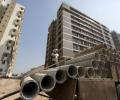
The past 18 months have seen a resurgence in the real estate industry, with developers regaining the ground lost to the Covid-19 pandemic. But it is once again adding inventory at a pace faster than sales. The industry's inventory rose by 28 per cent year-on-year (Y-o-Y) in H1FY24, com-pared to a 25.5 per cent year-on-year increase in net sales during the same period.

Equity benchmarks bounced back to end in the positive territory after trading lower for most part of the session on Thursday. The 30-share BSE Sensex climbed 223.60 points or 0.37 per cent to settle at 61,133.88. During the day, it had declined 431.22 points or 0.70 per cent to 60,479.06.

Delivering on his commitment to bring fresh parings this season, host Karan Johar welcomed yesteryear divas Zeenat Aman and Neetu Kapoor to Koffee With Karan.

RIL was among the top gainers in the Sensex pack, jumping over 3 per cent to hit its record closing high. Tech Mahindra, HCL Tech, Bharti Airtel, Infosys, HUL and ITC were also among the prominent gainers.

However, in 2020, gold demand in India -- the world's second biggest consumer after China -- could increase to 700-800 tonnes on hopes of increased acceptance of high price level and likely economic reforms boosting consumer confidence, World Gold Council said.

The Raveen Tandon we've seen on-screen happens to be as stunning off-screen as well.
Benchmark indices Sensex and Nifty pared early gains to close marginally lower in highly volatile trade on Thursday due to losses in Larsen & Toubro and cautious trading ahead of the release of domestic inflation data. The 30-share BSE Sensex declined 35.68 points or 0.06 per cent to settle at 61,904.52 after hitting the crucial 62,000 mark in opening deals. During the day, it hit a low of 61,823.07 and a high of 62,168.22.

M&M was the biggest loser in the Sensex chart, falling 6.39 per cent, followed by Tech Mahindra, Nestle India, Bajaj Finance, Axis Bank, ITC, JSW Steel, HDFC Bank and RIL. On the other hand, Sun Pharma, Tata Motors, Bharti Airtel, L&T and Infosys were among the winners, rising up to 2.10 per cent.

Market benchmarks ended lower for the second straight session on Friday, paring their initial gains amid a mixed trend in the global equities. The 30-share BSE Sensex declined 87.12 points or 0.14 per cent to settle at 61,663.48. During the day, it fell 413.17 points or 0.66 per cent to 61,337.43.

At a time when the market is betting on a 'higher for longer' global interest rate view, Accenture's (ACN) weak revenue forecast is a negative read-through for the Indian IT firms, according to analysts. The Dublin-based company sees its revenue growth at 2-5 per cent in constant currency (cc) for the financial year 2024 (FY24), below the pre-Covid levels of 5-8 per cent for FY17-20. The weak projection, thus, signals that slower demand is likely to persist this year, and any recovery is unlikely in the near-to-medium term, experts note.

It's simply heart-warming to watch Shefali Shah, Jaideep Ahlawat and Swanand Kirkire bring out the optimism in Three of Us, applauds Sukanya Verma.

Equity benchmarks pared initial gains to end lower on Friday, recording their third day of decline, amid weak trend in IT counters. The 30-share BSE Sensex tumbled 452.90 points or 0.75 per cent to settle at 59,900.37. During the day, it tanked 683.36 points or 1.13 per cent to 59,669.91.

Anu and Chikoo have landed in Paris just as temperatures have soared to 41 degrees Celsius.

Foreign portfolio investors (FPIs) are likely to get a reprieve from the Securities and Exchange Board of India (Sebi) in case of a passive or unintended breach of the thresholds that trigger additional disclosure norms. According to sources, FPIs whose single group exposure exceeds 50 per cent of their corpus will get 10 trading days to bring down their exposure below the prescribed level, without triggering the stricter disclosure norms. If total equity exposure of an overseas fund exceeds Rs 25,000 crore and it doesn't wish to provide additional disclosures, it will have three months to pare its exposure.

PowerGrid, Tech Mahindra, Infosys, Nestle India and HCL Tech too ended with losses.
Among the Sensex firms, ITC, SBI, Titan, Power Grid, Larsen & Toubro, Tata Motors, Hindustan Unilever and UltraTech Cement were the major laggards.

Shares of RIL ended 2.4% higher as it pips TCS to become most valued firm
Kotak Mahindra Bank was the biggest loser in the Sensex pack, sliding 2.68 per cent, followed by Tech Mahindra, Mahindra & Mahindra, Axis Bank, Hindustan Unilever, Tata Motors, Tata Consultancy Services, Bajaj Finserv, Bajaj Finance, Nestle and Titan. In contrast, NTPC, Power Grid, Larsen & Toubro, HDFC, Reliance and HDFC Bank were the gainers.

The rupee plunged 61 paise to decline below the 83-mark for the first time against the US dollar on Wednesday amid unabated foreign capital outflows and a strong dollar in the overseas markets.
