
In 2015, India was originally placed at 142nd position.

Historically, such large years are not followed by another huge year. So, strictly going by that, we should be less enthusiastic, says Pankaj Vaish, MD, Nomura Financial Advisory.

Interest rate on Public Provident Fund scheme was cut to 8.1%.

Sun Pharma's market capitalisation stood at Rs 100,050 crore on December 5, with its share price closing at Rs 417 a piece - lowest since March 2013.

In the manufacturing sector, output is expected to decline by about 70 per cent as only food-processing, and drugs and pharma industries are allowed to operate while other segments, such as engineering and metals, have shut operations.

The company, however, reiterates sunny outlook on struggling two-wheeler line. It says customer satisfaction high.

Bajaj Auto and TVS Motor are the largest exporters in the listed space with export revenues of Rs 12,000 crore and Rs 5,000 crore.
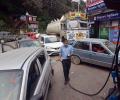
India's appetite for imported crude oil may wane in fiscal year (FY) 2023 from record levels in pre-pandemic 2019-20 fiscal as higher oil prices, a spillover from the conflict in Ukraine, and increasing use of biofuels affect domestic demand for petroleum products. Brent crude surged to a nine-year high, shy of a July 2008 record $147.50 a barrel, before declining to around $100 a barrel - but the volatility in commodity rates will slow global economic growth and use of fuels. Demand for all oil products may grow at only 2-3 per cent in FY23, slower than the current fiscal and nearly half the 5.5 per cent growth estimated by the petroleum ministry, according to industry officials.

A summary of major figures and facts at the Tokyo Games.
LIC owns 3.69 per cent of the total listed universe based on available disclosures, the lowest since at least June 2009.

RBI may go for a 25-basis point cut at its February policy meet.

The whole price index, used to measure rise in prices of a range of products in a consumer basket, stood at 9.06 per cent in May.

Election results on Friday will determine the strength of the ruling coalition party Congress which will also determine market direction.
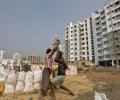
Nomura analysts said the Reserve Bank of India and the government would need to segregate the potential solvency issue at DHFL from liquidity issues at other larger wholesale NBFCs and HFCs.
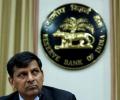
Here is some background on the candidates seen as potential successors to Rajan at the RBI

Nomura Group Study found that in 2019, out of the fifty-six companies which shifted their production out of China, only three of these invested in India; while 26 went to Vietnam, 11 to Taiwan, and 08 to Thailand. In April 2020, Nikkei noted that out of the 1,000 firms which were planning to leave China and invest in Asian countries, only 300 of them were seriously thinking of investing in India.

The markets were expecting the government to borrow around Rs 3 lakh crore (Rs 3 trillion) during April-September 2010, out of total Rs 4.57 lakh crore (Rs 4.57 trillion) pegged for the entire fiscal.

The brokerage said that the reform measures announced by the government will help growth only over the medium term and are not expected to have any benefit in the near-term.

The order, a "negative" overall, will be a short term positive for corporate focused state-run and private lenders because of the possibility of delaying incremental stressed asset recognition.

Axis Bank, HCL Technologies, Maruti Suzuki, NBCC and Union Bank are their top five stock picks.

Industrial production (IIP) grew to a three-year high of 6.4 per cent in August, up from 4.1 per cent in July.

Zomato's initial public offer (IPO) is scheduled to open for subscription on July 14 and is priced between Rs 72 - 74 per share. At the upper end of the price band of the offering, the company aims to raise Rs 9,350 crore. Most analysts have given a 'subscribe' rating to the issue for listing gains.

Though the number of Japanese foreign institutional investors in India is still negligible, it's significant that 8 of the 11 registered with Sebi entered in the past year and a half

The economy is expected to throw up better numbers in the September quarter with GDP contraction of 9.9 per cent, as against 24 per cent in Q1 at the onset of the pandemic, says a report. The government will release the Q2 GDP numbers later this month. In the first contraction since 1980, the economy shrank a full 23.9 per cent in the first quarter of the fiscal after the whole nation was put under a strict lockdown.
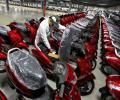
Retail sales of cars are back to January 2018 levels in August 2021. Two-wheeler retail sales are 22 per cent lower, nearly four years down the line.
Pradip Shah, managing director, IndOcean, feels that although gold has done reasonably well, it doesn't really create too much value in the long run.
The broad direction for the reform process will continue to be positive.

Rising prices of food items and industrial goods are likely to push inflation to eight per cent in the next six months, much above the RBI's projection of 5 per cent, global financial services firm Nomura has said.

India's electric mobility goal, which has so far been riding on two wheels, is all set to graduate to four wheels. At least, the journey has begun. Hyundai Motor India said it would invest Rs 4,000 crore till 2028 to launch half-a-dozen electric vehicles (EVs) in India. It would eventually straddle premium and mass segments. The first of these - the electrified version of an internal combustion engine (ICE)-powered model - will go on sale as early as next year.

Telecom and petchem businesses will drive growth for RIL.

'The news about the new virus strain in the UK provided them with an opportunity to take money off the table.'

The government is expected to dole out some populist policies, especially for the rural / farm sector while presenting the interim budget, given that the country is heading towards general elections over the next few months.
Thus far in FY21, BSE, NSE have rallied 70 per cent and 71 per cent, respectively.
The report noted that export volumes are likely to remain sluggish.

While Mukesh Ambani-led RIL posted a 108 per cent YoY rise in profit after tax for Q4FY21 at Rs 13,227 crore, it fell short of Bloomberg estimate of Rs 13,704 crore.

10 stocks which are most popular with brokerages right now and are expected to deliver maximum upside over the next 12 months.

The Reserve Bank of India's (RBI's) move to ban Mastercard from issuing new cards for not complying with the local data storage guidelines may hit five private banks, a non-bank lender, and a major card-issuing company. The impact is expected to be felt for a few months as these players transition to other card networks. According to Nomura Research, RBL Bank, YES Bank, and Bajaj Finserv are the ones most impacted by the ban as all their credit card schemes are allied to Mastercard. Among others, IndusInd Bank, Axis Bank and ICICI Bank have 35-40 per cent of their credit card schemes tied to Mastercard, the report said.

On the Sensex chart, losses were mainly driven by Hero MotoCorp, Tata Motors, Axis Bank, Tata Steel, Maruti and SBI -- falling as much as 6.19 per cent.
They believe that the key reason behind such a high growth rate could be "a steep downward revision" of the year-ago base period.

Japan on Friday extended a state of emergency in Tokyo and other areas by about three weeks to June 20 as the COVID-19 pandemic shows no signs of easing less than two months before the Summer Olympics open.
