
Prime Minister Narendra Modi on Friday said the Agnipath scheme is an example of necessary reforms undertaken by the Army and accused the opposition of playing politics over the recruitment process aimed at keeping the average age in armed forces young.

The prime minister was accompanied by Chief of Defence Staff (CDS) General Bipin Rawat and Army Chief General Manoj Mukund Naravane.

The puja is performed on the banks of river Sindhu (Indus).
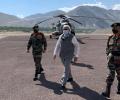
The prime minister is presently at one of the forward locations in Nimu and is interacting with personnel of the Army, Air Force and Indo-Tibetan Border Police, official sources said.

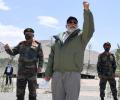
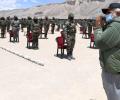
"Our country has never bowed down and will never bow down to any world power, and I am able to say this because of braves like you," Prime Minister Narendra Modi said on Friday while interacting with the soldiers, who were injured in the June 15 clash with the Chinese troops in eastern Ladakh's Galwan Valley.

Sibal asked Modi to stop doing the politics of "illusion and delusion" and showing "red eyes" to China, and protect Indian territory.

'We have to be prepared on the borders to withstand Chinese expansionist designs.'
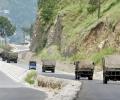
Sources said the work has already started on this project and the new road will connect Manali with Leh near Nimu where Prime Minister Narendra Modi had recently visited during the ongoing conflict with China.

"India and China are in communication and negotiations on lowering the temperatures through military and diplomatic channels. No party should engage in any action that may escalate the situation at this point," Chinese Foreign Ministry spokesperson Zhao Lijian said during a briefing when asked about the Prime Minister's visit.
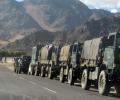
According to estimates, both India and China have deployed more than 50,000 troops in the Eastern Ladakh sector opposite each other despite the limited disengagement in the Pangong lake sector by both sides earlier this year.
In a fresh incident in eastern Ladakh, the Chinese PLA carried out "provocative military movements" to "unilaterally" change the status quo on the southern bank of Pangong Tso lake but the attempt was thwarted by the Indian troops, the Army said here.

The talks as part of the annual Permanent Indus Commission meeting are being held after a gap of over two years.
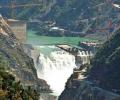
This will be the annual meeting of the Permanent Indus Commission. Under the provisions of the Indus Water Treaty, both the commissioners are required to meet at least once a year alternately in India and Pakistan.

Lauding the bravery displayed by the soldiers, the prime minister said: "The bravery that you and your compatriots showed, a message has gone to the world about India's strength."
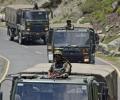
Looking into the current situation on the China boarder, IOC has stocked up enough winter-grade fuel for the region. With army movements increasing, the demand for this fuel is expected to increase multifold from the 350 metric tonnes last winter.
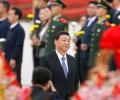
Wang Junzheng, Tibet's new Communist party boss, is on a number of sanctions lists by the US, Britain, the EU and Canada, for his tough role in Xinjiang, aimed at China's Uyghur ethnic minority, observes Jayadeva Ranade, the retired senior RA&W officer and distinguished China expert.
The opposition party also launched a scathing attack on Prime Minister Narendra Modi and asked why is he "so kind" to Chinese President Xi Jinping and "not showing loyalty towards the country".
As tensions between the armies of India and China at the LAC show no sign of ebbing, both sides have significantly ramped up the presence of their troops.

'China is constantly probing India's weaknesses.' 'The challenge is to implement a strategy that will allow India to buy time, gather its strength, and eventually counter China,' recommends Harsh V Pant and Vinay Kaura.
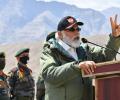
'We should not worry too much about Indian capabilities, both military and otherwise.'
The US has all along interfered in India-China issues. The objective is clear: Bring the Sino-Indian standoff to a flashpoint that would compel Modi government to take shelter under an American umbrella, argues Ambassador M K Bhadrakumar.

'Like Nehru, too, Modi has found dealing with Beijing more and more difficult and has adopted an increasingly assertive approach towards managing India's northern neighbour.'
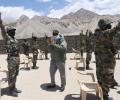
Only he, with his tremendous political capital and personal stature, can pull it off, observes B S Raghavan, the veteran civil servant.
 © 2026 Rediff.com - Advertise with us - Disclaimer - Privacy Policy - Sitemap - Feedback - About us - Terms of use - Grievances