
Information Technology sector grew by 19 per cent in 2011, clocking revenue of $76 billion

Information technology companies in smaller cities are forming regional associations to attract investments and get their demands fulfilled at the local level, as industry body Nasscom is unable to spread its wings in many such cities. Smaller companies in places such as Bhubaneswar, Coimbatore, Madurai, Kozhikode, Ahmedabad, Kochi and Thiruvananthapuram have created regional fora to sell their locations and also lobby state governments.

Although the number of resignations came down at Cognizant in April and continued to slow in May, the impact of attrition would play out in the second quarter also because of the longer notice period in India.

The software lobby Nasscom on Friday expressed concern over developments in Andhra Pradesh in the wake of Justice Srikrishna Committee report over Telangana issue and cautioned that prolonged unrest might hamper business and could lead to jobs being moved to other states.

Buoyed by steady recovery in demand for technology services, the Indian IT-BPO sector is estimated to grow 19 per cent in 2010-11 to $76 billion in revenues, software industry body Nasscom said.

India is in dire need of cybersecurity professionals. With several recent incidents of data breach, India's cybersecurity journey so far proves this demand. But is the country ready to meet this demand and is it preparing a cybersecurity workforce for the unforeseen cyber future? A report titled "India Cybersecurity Services Landscape" by Nasscom-Data Security Council of India (DSCI) predicts that the Indian cybersecurity services industry would grow at a compound annual growth rate (CAGR) of about 21 per cent to touch $13.6 billion by 2025. And by 2022, the industry, which generated a cumulative revenue of about $4.3 billion in 2019, is expected to grow to $7.6 billion. However, around 3.5 million jobs in the cybersecurity space will remain unfilled by the end of 2021.

HCL BPO, ICICI OneSource and IBM Daksh are the next three.
HCL BPO, ICICI OneSource and IBM Daksh are the next three.
HCL BPO, ICICI OneSource and IBM Daksh are the next three.

The US government should not only look at salary, but also focus on skills while making immigration reforms

US President Barack Obama's just concluded visit has helped in breaking myths and stereotyping of India as "stealing jobs", apex IT industry body Nasscom said.

Given the sharp differences that the Democratic and Republican lawmakers and the White House has on various aspects of immigration reform including H-1B, the Congressional passage of the bill and its becoming a law as of now appears to be a tall order.
Software and services exports from India grew 33 per cent year on year in 2005-06 to $23.6 billion according to industry body Nasscom.

"I think we have just started touching the IT space in Gujarat. In the wake of demand, we see business growing in 44 cities of the country, out of which Ahmedabad, Vadodara and Surat have clearly emerged on the top," Nasscom President Som Mittal said, while speaking at IT Summit-2010 organised in Ahmedabad.
India is gearing up to tap the huge engineering outsourcing opportunity and position itself as the world's hub for high value design and manufacturing destination, a top Nasscom official said on Monday.

'We are anticipating that the hiring trend will continue to see double-digit growth at least for the current financial year.'

A specialised force with 1,000 personnel to be formed in the state for the same.

Both are designed for safety of women.
'Indians are merely going for software programming: it is like a car mechanic repairing cars, which is a tremendous ability. But though we can repair cars we cannot design them!' says Nasscom president Kiran Karnik.

Indian firms selling SAAS products have got a bonanza as companies meet, manage and sell remotely. The top five firms - Zoho, Freshworks HighRadius, Druva, and Icertis - account for 33 per cent of the market share. Chennai, India's SAAS centre, alone generates $1 billion in annual revenue. Yuvraj Malik explains how these companies are planning their next phase of growth.

The move will hit American companies more than India's $60-billion IT and outsourcing industry.

"People would come to India because they need to leverage talent wherever it is available. By 2025, the Asia Pacific economies will cross that of Europe."

Nasscom president Som Mittal shares his view on issues such as the rise in value of the rupee against the dollar, hiring trends and the role of IT in e-governance.

From $10 billion deployed in Indian start-ups in 2017, $6 billion went to unicorns
The DST has accepted a proposal of National Association of Software and Service Companies in this regard.
N R Narayana Murthy, chairman and chief mentor of Infosys Technologies, is considered to have set new benchmarks in corporate governance through the firm he founded. Last fortnight, he was chosen to head Nasscom's sub-committee on corporate governance.

The recent ruling by the Authority of Advance Rulings making back-office services provided by a company to global firms taxable under GST, has sent shockwaves through the information technology and business process outsourcing industry.

'You have to move from one skill to another skill.' 'An employee can't say this job is my right and even if you train me, I refuse to get trained.' 'Those who participate in re-skilling will remain in the industry.' 'Those who refuse to get re-skilled will have to go.'

With automation taking place at a much faster pace across industries especially in the tech space, domestic software firms that employee over 16 million are set to slash headcounts by a massive 3 million by 2022, which will help them save a whopping $100 billion mostly in salaries annually, says a report. The domestic IT sector employs around 16 million, of them around 9 million are employed in low-skilled services and BPO roles, according to Nasscom. Of these 9 million low-skilled services and BPO roles, 30 per cent or around 3 million will be lost by 2022, principally driven by the impact of robot process automation or RPA. Roughly 0.7 million roles are expected to be replaced by RPA alone and the rest due to other technological upgrades and upskilling by the domestic IT players, while it the RPA will have the worst impact in the US with a loss of almost 1 million jobs, according to a Bank of America report on Wednesday.
The US move to reduce the number of H1B visas to 65,000 from 195,000 will affect the Indian information technology industry in the long run, Kiran Karnik
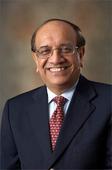
The IT sector's highest industry body also named the nation's top BPO companies and the top IT services firms in India.

The future of cryptocurrencies in India appears uncertain but that has not deterred young Indians from embracing the so-called 'fourth industrial revolution' world, where interconnectivity and smart automation, much of it relying on blockchain technology, drive human civilisation. Reserve Bank of India (RBI) Governor Shaktikanta Das has repeatedly warned of macroeconomic instability and even "serious consequences" if cryptocurrencies turn mainstream. The country's monetary authority wants a China-like total ban on crypto, not even allowing these currencies to be treated as investments. Though Parliament's website had listed the Cryptocurrency and Regulation of Official Digital Currency Bill as one seeking a total ban of cryptocurrencies in the country, it was not presented in the Winter Session. India now has the highest number of cryptocurrency investors in the world.
In its Strategic Review 2009 report, Nasscom said that in the current fiscal, the exports could touch $47 billion, without giving estimates for 2010.
Nasscom wants the Union govt to create a mission with initial seed capital of Rs 500 cr to promote entrepreneurship.
IT industry association Nasscom on Tuesday said the export revenue target of $50 billion by 2010 will be delayed by 3-4 quarters due to the global economic downturn, and warned of uncertainties in the near future.

Last year, there was almost 16 per cent increase in hiring by the Global Capability Centres in India.

Squeezing growth prospects in IT services firms and higher compensation in technology centres run by global companies are the two factors driving this trend.

To cement India's position as a preferred global outsourcing destination, the government on Wednesday liberalised guidelines for voice-based BPOs removing the distinction between domestic and international units as well as permitting interconnectivity between all types of OSP centres. Broadly, the rules would allow global companies, say an airline, with a voice-based centre in India to now serve global and domestic customers with common telecom resources, something that required dedicated, separate infrastructure previously. Moreover, the restrictions on data interconnectivity between any BPO (business process outsourcing) centre of the same company, a group company or any unrelated company has been done away with, allowing for massive flexibility in resource management for BPO operations.
IDG Ventures India on Thursday announced that Kiran Karnik, former president of National Association of Software and Service Companies (Nasscom) and a recipient of the Padma Shri has joined the company, on their global advisory board. IDG Ventures India's advisory board includes icons like N Balasubramanian, K B Chandrashekar, Arjun Malhotra, Sridhar Mitta, Jagdish Sheth and V Sumantran. Kiran Karnik was president of Nasscom till January 2008.
