
India-US ties may be strained, but abandoning the relationship is not the answer; India must deal with Washington firmly without becoming either servile or hostile, asserts Ambassador T P Sreenivasan.

'We were in a heavily nuclearised environment. China had tested for Pakistan in the 1980s and helped their missile programme stay just one step behind us.'

'Iran cannot trust the USA because it considers the USA to be Israel-controlled. And no, the IRGC is not going to accept anything else but major US concessions.'

A Russian intelligence agency has claimed that the UK and France are covertly planning to transfer nuclear weapons to Ukraine, alleging a violation of international law.

Satat Sampada, the organisation of climate activist Harjeet Singh and his wife, said the allegations made by the Enforcement Directorate against the firm and its founder were baseless, biased and misleading.
The Uttar Pradesh excise department arrested climate activist Harjeet Singh for allegedly possessing excess liquor after the ED searched his premises in connection with a foreign exchange violation case. The ED is investigating the misuse of funds received from abroad and Singh's visits to Pakistan and Bangladesh.

Iran was the chance to arrange a concert of nations, to actually be a Vishwaguru. Instead, we are watching from the sidelines as Pakistan, the same country that is apparently still at war with Afghanistan, hosts talks between US-Israel and Iran. The irony is hard to miss, points out Amberish K Diwanji.

'India's ties with Israel have to do with defence and general technology.' 'The war changes nothing in what India and Israel hope to get from the relationship.' 'It's not as though India will get significantly more benefits from Iran if India abandons Israel at this time.'
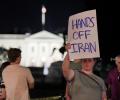
Following attacks on Iranian nuclear sites, including Fordow, Isfahan, and Natanz, the Atomic Energy Organisation of Iran (AEOI) has stated that the attacks are a violation of international law and that Iran's nuclear industry will continue its development.
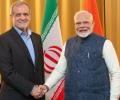
'Within minutes, my mobile began ringing. It was National Security Adviser Brajesh Mishra, asking why the Iranians were complaining.' 'I explained that we had only restated our position in the light of the conclusion reached by the IAEA, but will remain helpful to Iran to reach a consensus.' 'Then came a call from Foreign Secretary Kamal Sibal, repeating what Mishra said about the Iranian complaint.' 'I was very impressed that Iran was able to reach two top officials in India to intervene at short notice,' recalls Ambassador T P Sreenivasan.
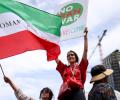
China and Russia on Sunday strongly condemned the United States air strikes on Iranian nuclear facilities, with China calling it a serious violation of the United Nations Charter that heightens tensions in West Asia, and Russia terming the strikes 'irresponsible' and asserting that they grossly violate international law, the UN Charter, and UN Security Council resolutions.
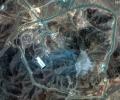
Iran on Sunday vowed to avenge the United States bombing of three of its major nuclear facilities saying the American strikes will have 'everlasting consequences'.

India-US relations, like Rome, were not built in a day, nor can they be demolished in a day.
All said and done, when the new global order emerges, India can only remain with the democracies, asserts Ambassador T P Sreenivasan.

The new UN Security Council resolution on nuclear non-proliferation and disarmament makes it difficult for the NPT signatory countries to withdraw from the regime and calls upon nations to enter into safeguard agreements with the International Atomic Energy Agency.

India on Friday rejected China's contention that it must sign the Non-Proliferation Treaty to get membership of the Nuclear Suppliers Group.
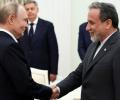
Will Russia's entry deter Trump on his warpath?, asks Ambassador M K Bhadrakumar.
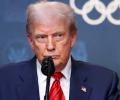
India and the US have collaborated through the past one month on launching a powerful satellite; are commencing joint production of GE Aerospace's F414 jet engines in India; India is participating in a massive three week-long military exercise in the Western Pacific, observes Ambassador M K Bhadrakumar.

Asked about India blaming 'one country' of blocking the entry of new members into the NSG by raising procedural objections, Hong said at the plenary meeting in Seoul 'many countries had expressed their views on the accession of non-NPT countries into the group'.
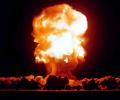
Beijing's latest weapon, 15 times more powerful than TNT, signals a new frontier in high-impact, non-nuclear military technology.
An international commission on disarmament has recognised that India will not sign Non Proliferation Treaty, but has disappointed it by clubbing it with Pakistan and Israel in terms of non-proliferation and disarmament obligations.
The conference on NPT review will kick off on Tuesday and the Iran-West showdown over Tehran's nuclear programme is likely to dominate the proceedings. India, which is not a signatory to the NPT has decided to stay out of the conference.
The United Nations Security Council on Thursday unanimously adopted a resolution asking all non-Non Proliferation Treaty states to join the treaty at an unprecedented summit chaired by United States President Barack Obama who signalled that these countries, which include India, must come on board.
Ahead of the Non Proliferation Treaty review conference, the United States on Friday said the Indo-US civil nuclear deal has not weakened the Nuclear Non-Proliferation Treaty as the pact comes with a number of 'transparency mechanisms.'

India has voted against the provisions of draft resolutions that would have required it to accede to the Nuclear Non-Proliferation Treaty, saying there is "no question" of it joining the treaty as a non-nuclear weapon state.
In a departure from tradition of not singling out countries by name, the United Nations has asked India, Pakistan and Israel to join the Nuclear non-Proliferation Treaty and the Comprehensive Test Ban Treaty without further delay and pre-conditions.
"Universal adherence to the NPT itself -- including by India, Israel, Pakistan and North Korea -- remains a fundamental objective of the US," Rose Gottemoeller, Assistant Secretary of State said in her opening remarks at the Third Session of the Preparatory Committee for the 2010 NPT Review Conference being held at the UN headquarters in New York.
Shortly after the United Nations Security Council unanimously passed a resolution asking the non-Non Proliferation Treaty countries to sign the NPT, India on Thursday ruled out signing the agreement saying, "It cannot support a discriminatory" pact.
"Non-proliferation is an issue that the US and India can work together on," US Ambassador Timothy J Roemer said on Thursday, when asked about his views on India keeping away from NPT.
For the first time, representatives from India and Pakistan have been invited to the meeting of the newly constituted International Nuclear Disarmament Commission, which is working towards rectifying the NPT to make it more acceptable.

The crises of the 21st century, 9/11, the economic meltdown, COVID-19, Russia-Iran war and the Hamas-Israel war seem to be never ending. In this situation, Iran might be contemplating a nuclear deterrent to defend itself, observes Ambassador T P Sreenivasan, the distinguished long-time Rediff contributor who turns 80 on June 17..
The reported affirmative reply of Prime Minister Manmohan Singh to Fareed Zakaria's question whether India would be willing to sign the NPT (Nuclear Non Proliferation Treaty) as a nuclear weapon state (NWS) has evoked some debate amongst the Indian security analyst community about the wisdom of such a move.
With the US President Barack Obama presiding over a key session of UN Security Council on nuclear non-proliferation and disarmament on Friday, America has asked all countries to join the Non Proliferation Treaty and hoped that the powerful body of the UN would endorse its call for world without nuclear weapons.
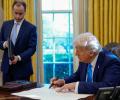
The stage may be set for a recalibrated US-Iran relationship, suggests Ambassador M K Bhadrakumar.
International Atomic Energy Agency Director General Mohammad ElBaradei has said that he does not expect India to sign the Nuclear non-Proliferation Treaty, but feels the Comprehensive Test Ban Treaty could be more "acceptable".

Reports (not denied by India) that the USA had 'for the first time provided real-time details to their Indian counterparts on the Chinese positions and force strength in advance of a PLA incursion' into Tawang at the LAC in December 2022, helping India thwart China's expansionist designs, show how operationally effective the USA-India friendship has become on the ground. A engaging excerpt from Sreeram Chaulia's must-read new book, Friends: India's Closest Strategic Partners.
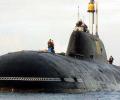
China on Tuesday angrily denounced the nuclear-powered submarine deal announced by the US, UK and Australia, saying the pact violates the Non-Proliferation Treaty (NPT) and the three countries are travelling "further down the dangerous and wrong path."
Although the credit for acquiring the technological skill must be given to India's outstanding nuclear scientists, the decision to go nuclear was a political one that entailed clarity of vision, courage and resolve, points out Rup Narayan Das.

China, while blocking India's entry into the NSG previously, has called for a two-step plan that stipulates the need for the NSG members to arrive at a set of principles for the entry non-NPT states and then move forward discussions of specific cases.
