
These items will remain under essential commodities segment till June-end, a move aimed at ensuring availability at reasonable prices and cracking down on hoarders/black marketeers.
.jpg)
The move is expected to delay the introduction of low-priced medicines in the market.

The government on Tuesday said the steps taken by the national pharmaceutical pricing authority for enforcement of prices fixed by it had resulted in recovery of an overcharged amount of Rs 80.08 crore (Rs 800.8 million) till October this year.

A probe finds several pharma majors in breach of the law; and in turn they blame the government.

Unlike India, the US is a free-pricing market.
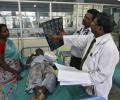
According to a senior government official, the plan is to do "collective bargaining" for certain medical devices and implants by assuring a bulk requirement to the manufacturers. "The requirement for these devices runs into millions. We assure them that the requirement is going to be in bulk. In return, they should offer us better rates," he said.

The government regulates prices of all other medicines.

Indian government has extended price caps to 39 more medicines ranging from commonly used diabetes drugs to antibiotics.
Department of Pharmaceuticals asks NPPA to review Eli Lilly product prices.
Now, the companies need to get National Pharmaceutical Pricing Authority's nod for changing medicine composition. If they flout norms, government will take penal action.
This move is expected to benefit 22 lakh cancer patients in the country.

To keep price control to a minimum, the government can act in two areas where it has not done so far.
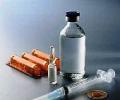
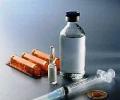
Another cap for imported insulin; domestic manufacturers cry foul.
Povidone iodine ointment and solutions are available in the market under various popular brands such as Betadine and Wokadine.
Some of the proposals (for example trade margin calculation for imported medical devices) were not approved by the PMO and were sent back for revisions.
The National Pharmaceutical Pricing Authority (NPPA) on Thursday said it has increased prices of 62 drugs, which are mainly based on indigenously manufactured insulin, giving a filip to domestic firms.

India has capped the prices of 36 drugs, including those used to treat infections and diabetes, in its latest move to make essential medicines more affordable, a senior official of the country's drug pricing authority told Reuters on Friday.
The Union ministry of chemicals and fertilisers has initiated a move to bring all essential medicines sold in the country under a price cap.
Facing a steep rise in raw material and interest costs, pharmaceutical companies have sought an increase in prices of regulated medicines, saying otherwise they may be forced to curtail production of certain medicines that have become unprofitable.
The government is actively considering bringing 355 life saving drugs under price control and take a few additional measures to help the poor and below poverty line (BPL) families, once the Union Cabinet approves National Pharmaceutical Policy.
The medicines whose prices have been reduced belong to therapeutic categories, like dexametozone, betamethazone, ampicillin and ranitidine. The prices of some multi-vitamins and antibiotics would rise a bit.
The move is in line with the NPPA's recent policy of putting a cap on prices.
.jpg)
Firms are mandated to change prices of medicines within 45 days of NPPA's notification.
In a decision that would impact the entire pharmaceutical industry, the National Pharmaceutical Pricing Authority (NPPA) has fixed the prices of 130 common drugs and antibiotics.
The move brings an additional 15 per cent of the retail medicine market worth over Rs 4,000 crore (Rs 40 billion) under direct price control. All domestic companies, including drug majors like Ranbaxy, Cipla, Lupin and Dr Reddy's, have syrups and tonics in their product portfolio.
The price regulatory pharma body has set limits to the extent pharma companies can increase the price of medicines in a year.
The National Pharmaceutical Pricing Authority has asked Cipla, the second biggest domestic drug maker, to pay Rs 748.27 crore (Rs 7.48 billion) as fine towards overcharging of controlled drugs.
Pharmaceutical companies which increase prices of their medicines beyond 10 per cent in a year will face regulatory action.

Top officers across various ministries participate in the meeting that started at 8 pm on Saturday. The meeting is currently underway. The country is currently witnessing a second and more severe wave of the pandemic.

The latest price revision includes mostly cardiovascular drugs, anti-bacterials, anti-herpes, contraceptives and gastrointestinal medicines

According to industry estimates, the sector's revenue would increase eight-10 per cent in 2013-14, against 12 per cent in 2012-13.

Here is some interesting information released by the government in response to questions posed by MPs in Parliament on Tuesday.

MicroPort entered the market on Feb 15 and its stent was used in a Mumbai hospital.

The National Pharmaceutical Pricing Authority will soon notify prices of as many as 150 packs of essential medicines in line with the new pharma pricing policy, according to official sources.
.jpg)
The Drug (Prices Control) Order implemented in May last year brought into its purview 652 packs of 348 formulations.

GSKAP takes care of all non-nutrition products whereas GSK Consumer Healthcare is a listed entity which deals only in nutritional products.

The year gone by saw the high and mighty of the corporate world face the music in the Delhi High Court which held that the telecom majors are amenable to CAG audit and Mukesh Ambani's RIL struggling hard to get rid of an FIR lodged on gas pricing by the 49-day-old AAP regime.

The impact from NELM on the Indian pharmaceutical sector is estimated to be around Rs 6,000 crore.
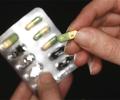
There may be shortage of drugs till pharmaceutical companies supply new batches with revised MRPs.
Infosys, Wipro and HUL among the top losers for the day.
