
Indian banks are projected to achieve healthy profit growth in the second quarter of financial year 2027 (Q2FY27), driven by lower credit costs, robust advance growth, and fee income. However, net interest margins (NIMs) are expected to face pressure due to significant mobilisation of foreign currency non-resident (bank) FCNR(B) deposits.

Telangana's Anti-Corruption Bureau (ACB) has registered a Disproportionate Assets (DA) case against N Lakshmi Bhasker, an Additional Medical Superintendent at NIMS, Hyderabad. Searches at his properties and associates' places revealed assets worth over Rs 6.13 crore, including apartments, plots, bank deposits, and gold, acquired through alleged corrupt practices. The investigation is ongoing.

Nirmal Purja, the Nepali-British climber famous for scaling all 14 of the world's 8,000-metre peaks in record time, has been confirmed dead after an avalanche on Broad Peak, located in Pakistan-occupied Kashmir's Gilgit-Baltistan.

The Nizam's Institute of Medical Sciences (NIMS) in Hyderabad has achieved a significant milestone by completing 2,000 kidney transplants, making it one of the leading institutions in India for this procedure. The majority of these transplants were performed free of cost under government schemes.

Leading private banks in India, including HDFC Bank, ICICI Bank, and Axis Bank, experienced a decline in net interest margins (NIMs) during the second quarter of the financial year due to significant deposit mobilisation under the Foreign Currency Non-Resident (Bank), or FCNR (B), scheme. However, banks anticipate a recovery in margins in the coming quarters as these funds are deployed and the interest-rate cycle supports lending yields.

Veteran Nepalese mountaineer Nirmal Purja, 43, has died in an avalanche on Broad Peak in Pakistan-occupied Kashmir's Gilgit Baltistan. He was part of a 10-member climbing team caught in the avalanche at 7,000 metres. Three bodies have been identified, and six others located, with Purja's death confirmed by Elite Expedition.

India's Shaurya Sharma shot a five-under 67 on Thursday to take a one-shot lead at the PGTI Qualifying School in Ahmedabad. He is now at four-under 212, with Md Siddikur Rahman and Arin Ahuja tied for second. Nim Dorji Tamang made history as the first Bhutanese player to make the cut.
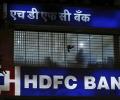
HDFC Bank reported a 5.55 per cent increase in consolidated net profit to Rs 20,700 crore for the September quarter, with incoming MD and CEO Anup Bagchi indicating a focus on strengthening the balance sheet and addressing retail vertical concerns post-merger.

Tata Capital remains confident in its 23-25 per cent growth guidance, driven by strong momentum in Retail and SME segments, despite facing pressures from rising funding costs and potential impacts from new RBI regulations on revolving credit.
A report by IIT-Bombay professors recommends reducing the Merchant Discount Rate (MDR) on UPI transactions from 0.40 per cent to 0.08 per cent. It suggests that banks should fund the UPI ecosystem using their net interest margins from CASA deposits, rather than relying on MDR. The report also addresses transaction costs, credit card MDR, and ATM withdrawal allowances, aiming to ensure UPI's long-term sustainability and public trust by proposing remuneration only from large merchants.
Shares of major private lenders, including HDFC Bank, Axis Bank, and Kotak Mahindra Bank, experienced a sharp selloff after their June-quarter results indicated persistent pressure on net interest margins (NIMs), despite healthy credit growth. This decline overshadowed gains in ICICI Bank and Punjab National Bank (PNB), which reported resilient or stronger-than-expected earnings.
HDFC Bank shares plummeted over 5 per cent, wiping out Rs 64,685 crore from its market valuation, after its June quarter earnings disappointed investors, particularly on the net interest margin (NIM) front.

L&T Finance reported a robust Q1FY27 with net profit growing 29% year-on-year to 900 crore, driven by strong asset growth and strategic initiatives including accelerating cross-selling, improving productivity, and fostering a technology-first, AI-led culture, alongside significant expansion in gold loans.

'The sales pressure on the ground, a board and CEO not fully aligned, and a senior team that isn't pulling together -- that's when these things surface.'

Indian benchmark indices Sensex and Nifty experienced a significant tumble in early trade, primarily driven by heavy selling in HDFC Bank following its quarterly earnings and a sharp spike in Brent crude oil prices due to escalating tensions between the US and Iran. Track Sensex, Nifty

Bajaj Finance reported a strong Q1 FY27 performance with 24 per cent year-on-year AUM growth and a 28 per cent rise in consolidated profit after tax, driven by significant increases in consumer financing, gold loans, and commercial vehicle loans, alongside a strategic focus on digital transformation and AI.
Private banks in India are aggressively mobilising Foreign Currency Non-Resident (Bank), or FCNR(B), deposits by raising interest rates and using website countdowns, as the Reserve Bank of India's swap window is set to close on August 31, earlier than initially planned.

Non-banking financial companies (NBFCs) reported encouraging results for Q4FY26 with improved asset quality and earnings, but analysts maintain a cautious near-term outlook due to geopolitical tensions, monsoon risks, and specific portfolio concerns.

The asymmetry in deposit and credit growth is the biggest challenge before the Indian banking industry. For every 100 deposit that a bank mobilises, it needs to keep 3 with the banking regulator in the form of cash reserve ratio on which it doesn't earn any interest. Another 18 is used for buying government bonds (statutory liquidity ratio). This means, a bank is left with 79 for giving credit. Add to this, its capital which can be used for giving loans. Most banks are facing a fund crunch. They need to find ways to attract deposits if they want to sustain credit growth, explains Tamal Bandyopadhyay.
The body of renowned Nepalese-British mountaineer Nirmal Purja was recovered on Broad Peak, three days after he and nine other climbers were swept away in a devastating avalanche. Rescue efforts are ongoing to locate the remaining five climbers amidst challenging terrain and weather conditions.
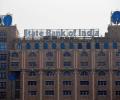
State Bank of India (SBI) reported a 13.73 per cent increase in its June quarter consolidated net profit, reaching Rs 24,113 crore, primarily due to improved core income and a decline in provisions for non-performing assets.

Veteran Nepali mountaineer Nirmal Purja and nine other climbers are missing after an avalanche struck their expedition on Pakistan's Broad Peak. Rescue efforts are underway but are being hampered by adverse weather conditions, raising concerns for the safety of the renowned climber and his team.

State-owned Bank of Baroda (BoB) reported a 72 per cent year-on-year (Y-o-Y) drop in net profit to 1,278 crore for Q1FY27 due to a $600 million out-of-court settlement related to NMC Health Plc. In contrast, Bank of India (BoI) saw its net profit rise by 36.23 per cent Y-o-Y to 3,068 crore for the same quarter, driven by healthy loan growth and improved asset quality.

'Banking is the only sector that can see double-digit growth in FY27.'
Indian benchmark indices, Sensex and Nifty, closed lower due to significant selling in HDFC Bank and Axis Bank shares, driven by margin-related concerns and escalating US-Iran tensions, which also pushed crude oil prices higher.

Analysts have largely maintained a bullish outlook on HDFC Bank and ICICI Bank following their Q4FY26 results, though their perspectives on future growth drivers differ. HDFC Bank's near-term performance is tied to accelerating loan growth, while ICICI Bank is seen as a strong candidate for a valuation rerating.

Net profit of 19 listed banks is likely to decline by 4 per cent year-on-year (Y-o-Y) for the quarter ended March (Q4FY25) mainly due to pressure on net interest margins (NIM) as a result of rate cut by the Reserve Bank of India (RBI), according to analysts' estimates. Additionally, loan growth is expected to further slowdown amid low demand in certain secured products, stress in the unsecured segment, and a high cost to deposit (CD) ratio across the system.

'Afterwards, some improvement is expected.'

'We are staying away from making forward-looking statements on when we will reach 1 trillion, etc. But growth will be rapid; it's only a matter of time.'

The contraction in total reserves was driven by a fall in gold reserves, which dropped $13.49 billion to $117.19 billion during the reported week.

'There has been a change in the advances mix, with the share of corporate loans decreasing.'

The Indian rupee weakened against the US dollar due to rising crude oil prices, geopolitical tensions in the Middle East, and foreign fund outflows.

Investors shunned shares of Bajaj Finance on Friday, a day after the non-banking financial company (NBFC) reported a sharp contraction in its net interest margin (NIM) for the March quarter of the financial year 2023-24 (Q4FY24). The losses accounted for a fifth of the benchmark S&P BSE Sensex's 609-point loss. Most brokerages have tamed their earnings expectations for the next couple of quarters, after the management said it expected the pressure on NIMs to continue in the near term.

'Given that India underperformed emerging markets by 28 per cent in 2025, the worst performance in over 30 years, the timing of the sharp STT hike could have been better.'

Private sector lender IDFC First Bank has lowered its savings account rates and introduced new slabs for small and medium balance categories, effective January 9, 2025, as per its website. The interest slabs and rates for higher balance accounts remain unchanged. Despite the revision, the bank continues to offer one of the highest savings account interest rates in the industry among mid-sized banks.

'Bank has a robust capital adequacy base. Along with balance sheet preparation, the bank is focusing on strengthening risk management for the new regime.'
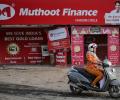
Shares of gold finance companies Muthoot Finance and Manappuram Finance hit their respective all-time highs, gaining on the BSE during Wednesday on expectation of healthy earnings. In comparison, the benchmark BSE Sensex was down 0.14 per cent, closing at 85,408.

The banking sector could see better loan growth in the third quarter of financial year 2026 (Q3FY26) with improved net interest margins (NIMs), though the full impact of latest rate cuts will be largely felt in the fourth quarter. There may be lower slippage in unsecured loans and microfinance institutions (MFIs) along with steady recovery trends, which should lower credit cost.

Some public sector banks, including State Bank of India (SBI), Union Bank of India, Canara Bank, and Bank of India, are increasing the spread on home loans for new customers to protect margins.

The Indian banking sector could be due for a rise in profitability after several quarters of net interest margin (NIM) compression. The Q2FY26 results suggest NIMs have bottomed out.
