
The Oppo K14 Lite combines a large display, a capable camera setup and a sizeable 7,000 mAh battery in a sturdy design.

The brand-new OPPO F33 Pro 5G is is offered in a range of unique stylish finishes including Misty Forest, Starry Blue, Passion Red, Forest Green and Pearl White.

Xiaomi has unveiled the Redmi A7 Pro 5G in India. The handset begins at 11,499 and comes equipped with an impressive 6,300 mAh battery.

A better, faster, more efficient 2-in-1 gaming tablet with 1TB storage

Realme has rolled out its latest premium offerings in the Indian market with the debut of the Realme 16 Pro and Realme 16 Pro+.

Marking a global first, this 16-inch twin-display gaming laptop delivers a striking visual experience through two 3K, 120Hz ROG Nebula HDR OLED touch panels.

'We hope we will be able to at least end crashes that involve collisions with stationary vehicles as there will be an automatic warning.'

Reliance Jio's decision to acquire 700 MHz in combination with the possible use of an advanced standalone (SA) 5G network could give it an edge over its rivals, according to most analysts. The dissenters argue that the stiff price tag touching Rs 40,000 crore to grab 10 MHz of spectrum in 700 to provide coverage for its SA 5G network which offers ultra-low latency (unlike non-standalone or NSA), has a long way to go in India in terms of finding use cases that can be monetised. Globally, 700 MHz is a pivotal band which provides huge coverage, indoor penetration (especially useful in India where walls are thick) and is already considered by the European Union to be the 'pioneer band' for 5G, with 3.5 GHz and 26 GHz, both of which were auctioned in India recently.

Telecom Commission approves high base price of Rs 11,485 cr per Mhz for 700-Mhz frequency; no decision taken on proposed standard spectrum usage charges of 4.5%

In a statement on Tuesday, DoT said, "1,800 and 900 MHz bands were to be auctioned simultaneously, starting March 11, and the 800 MHz band auction was to commence two days after the conclusion of the auction of the 1,800 and 900 MHz spectrum.

With the Telecom Regulatory Authority of India (Trai) refusing to reserve 900-MHz spectrum for incumbent telcos, asking them to vacate the quantity held and win back through bidding, GSM operators, led by the Cellular Operators Association of India (COAI), have decided to propose a compromise formula.

The auction of radio waves used for mobile services saw a muted opening on Tuesday, with five rounds attracting bids worth about Rs 11,000 crore from telecom companies. The government has put over 10,500 Mhz spectrum in eight frequency bands -- 800 MHz, 900 MHz, 1,800 MHz, 2,100 MHz, 2,300 MHz, 2,500 MHz, 3,300 MHz and 26 GHz, valued at Rs 96,238 crore at base price, for auction.
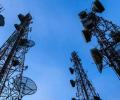
Spectrum auction for mobile radiowaves services worth Rs 96,000 crore ended with bids worth about Rs 11,000 crore, according to sources. The government has put over 10,500 Mhz spectrum in eight frequency bands -- 800 MHz, 900 MHz, 1,800 MHz, 2,100 MHz, 2,300 MHz, 2,500 MHz, 3,300 MHz and 26 GHz, valued at Rs 96,238 crore at base price, for auction.

The Cabinet in January 2015, resolved the spectrum tussle between DoT and the Defence by approving a harmonisation plan.

Telcos likely to get to switch from 2,300-MHz band for 4G services.

Will help the government expand mobile and broadband penetration in the country
The Department of Telecom (DoT) on Tuesday postponed the spectrum auction by 19 days to June 25, as per information available on its website. According to amendments made in the notice inviting applications for bids on Tuesday, the new date for "start of the live auction" has been changed to June 25 from June 6. The government will auction eight spectrum bands for mobile phone services at a base price of about Rs 96,317 crore.

Analysts at rating agency ICRA say the debt level of the telecom companies is very high and the ecosystem for the premium band is not in place.

Though reserve for CDMA, there were no bidders for the spectrum in the recent auction. GSM operators could buy it to launch 4G and 3G services.

Bharti Airtel may end up cumulatively bidding for more spectrum than market leader Reliance Jio in the upcoming auctions. This is owing to its need for spectrum renewal, and a requirement for 900 MHz in a few circles, analysts have said. Despite the muted bidding expected in the upcoming auctions, Airtel may end up making more bids than Jio, they added.

7 rounds have been completed with bidding in all 4 bands


The 700-Mhz spectrum band ranges from 698 Mhz to 806 Mhz and has been identified by the International Telecommunication Union for telecom services.

At Rs 2,685 crore for 1MHz pan-Indian spectrum, reserve price would be 52% higher than that of 1,800MHz band

Demand for 1,800-MHz weak but govt secures a combined Rs 42k cr on Day-1
State-run MTNL has received the highest amount of spectrum in Delhi and Mumbai at 12.4 Mhz as on March 2009, while private GSM operators Bharti and Vodafone are not far behind at 10 Mhz each in the same period.
CDMA-based telecom operators have got a shot in the arm with a parliamentary committee recommending that the government allot the crucial 1,900 Mhz spectrum to players using this technology for expansion of services.

The recommendations of the commission will now be put before the empowered group of ministers headed by Finance Minister P Chidambaram for a final decision.

Vodafone had in December last year sought extension of its licence period for Delhi, Mumbai and Kolkata circles, which are coming up for renewal in November 2014.
Communications Minister A Raja on Monday told Parliament that there was no "contractual agreement" between government and telecom operators to allot spectrum beyond 6.2 MHz, a move that could hurt GSM players like Bharti, Vodafone and Idea Cellular. Raja also ruled out auctioning of spectrum saying this was not feasible based on previous experiences, especially in 1993 when operators were not able to fulfill their roll out obligations.
"There is no contractual agreement to give spectrum beyond 6.2 MHz. We are releasing more spectrum based on subscriber base as suggested by telecom regulator Trai," Raja said in the House while replying to a question. Spectrum is radio frequency used for offering wireless telecom services. Currently, spectrum allocation norms, which were revised in August 2007, are being followed while the Teleconm Enginering Centre report is awaited.

After refarming, over 142.5 MHz of spectrum is expected to be available for auctioning next year.

This is the spectrum held by incumbent GSM operators whose licences are coming up for renewal in November 2014

The ministry wanted to use spectrum in the 700-MHz band for mobile TV services.

The group also said that the companies will have to pay a market price if they merge or acquire another company, which was allocated spectrum at old price of Rs 1,658 crore.

It expects Rs 39,895 crore from it.
The next spectrum auction will be held in late February 2024 and the reserve price for most bands will remain the same as the 2022 auction, department of telecommunications (DoT) officials have said. The government expects operators to go for low bands beginning in 600 megahertz (MHz), licences for many of which are lapsing soon. Back in September 2021, the government had decided that spectrum auctions should be held annually.

The EGoM decided to auction a minimum of eight blocks in all service areas after reserving spectrum for refarming against the allocation of 900 MHz for incumbent operators whose licences will expire during 2014-2016.

Telcos have stopped bidding for the 900-MHz spectrum since Monday.
