
The Finance Ministry, which is under immense pressure to meet the fiscal deficit target during the current financial year, has also written a letter to the department of telecommunication to auction spectrum to earn additional revenues.

The vacation of additional 2G and 3G spectrum may generate additional revenue of about Rs 80,000 crore (Rs 800 billion) on the basis of prices according to spectrum auctioned last year, DoT said in a note for the empowered group of ministers.

'We have informed the government multiple times that the situation in the US and India are different.' 'Here, there will be a 500 MHz gap in the frequencies which will safely allow aviation without interference.'

Telecom service providers have doubled down on their demands for a proposed fair-share charge (FSC) to be levied on major over-the-top (OTT) service providers, opening up the 6 GHz spectrum band and increasing the number of testing labs for telecommunication products. Telecom industry body Cellular Operators Association of India (COAI) on Wednesday said these were the topmost demands for Prime Minister Narendra Modi-led National Democratic Alliance (NDA) government. The industry body wants this additional capital expenditure to be borne by these Large Traffic Generator (LTGs) OTTs as a proposed fair-share charge.

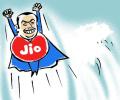
A record over Rs 1.5 lakh crore worth of 5G telecom spectrum was sold in a seven-day auction ending on Monday, which saw billionaire Mukesh Ambani's Jio emerging as the top bidder to consolidate its leadership position. Sources with direct knowledge of the matter said provisional data puts the total bids at Rs 150,173 crore. The mop-up from the 5G spectrum, capable of offering ultra-high speed mobile internet connectivity, is almost double at Rs 77,815 crore worth 4G airwaves sold last year and triple of Rs 50,968.37 crore garnered from a 3G auction in 2010.

Telecom regulator Trai on Monday recommended about 39 per cent reduction in the reserve or floor price for the sale of spectrum for mobile services, including the latest 5G offering, as it looked to match revenue expectations with the industry's paying capacity. With large swathes of spectrum remaining unsold in the last two auctions, the Telecom Regulatory Authority of India (Trai) recommended to the government for selling airwaves in all existing bands of 700 MHz, 800 MHz, 900 MHz, 1800 MHz, 2100 MHz, 2300 MHz, 2500 MHz and new slots of 600 MHz, 3300-3670 MHz and 24.25-28.5 GHz. It has suggested a lower reserve price for all bands, compared to the prices proposed in the previous recommendations in 2018.

India's first auction of 5G spectrum, that powers ultra-high data speeds, is currently underway with a total of 72 GHz (gigahertz) of radiowaves worth at least Rs 4.3 lakh crore up for bidding. Billionaire Mukesh Ambani's Reliance Jio, Sunil Mittal-led Bharti Airtel, Vodafone Idea and a unit of billionaire Gautam Adani's flagship Adani Enterprises are in the race to bid for 5G spectrum, that offers speeds about 10 times faster than 4G, lag-free connectivity, and can enable billions of connected devices to share data in real-time. In addition to powering ultra-low latency connections, which allow downloading full-length high-quality video or movie to a mobile device in a matter of seconds (even in crowded areas), Fifth Generation or 5G would enable solutions such as e-health, connected vehicles, more-immersive augmented reality and metaverse experiences, life-saving use cases, and advanced mobile cloud gaming among others.

With better than expected Rs 1.45 lakh crore bids coming in on the first day, the auction of 5G spectrum entered the second day on Wednesday with the opening of the fifth round. Firms run by tycoons Mukesh Ambani, Sunil Bharti Mittal and Gautam Adani as well as Vodafone Idea are participating in the e-auction to buy fifth-generation (5G) airwaves. The government received confirmed spectrum bids worth Rs 1.45 lakh crore after the completion of four rounds of spectrum bidding on the opening day on Tuesday.
Apex telecom industry body COAI has asserted that spectrum pricing should be kept conducive to market conditions as 5G entails upfront capital investments with monetisation spread over a long-haul, and pricing radiowaves high will only push the players up against the wall. The stage is set for Telecom Regulatory Authority of India (TRAI) to come out with its recommendations on 5G spectrum pricing and other modalities for upcoming auctions, and the announcement from the sector watchdog is expected anytime now. Norms will also be worked out for new frequencies such as 526-698 MHz and millimetre band, that is 24.25 - 28.5 GHz, in addition to bands such as 700 MHz, 800 MHz, 900 MHz, 1800 MHz, 2100 MHz, 2300 MHz, 2500 MHz, 3300-3670 MHz.
With the Adanis submitting an earnest money deposit (EMD) of just Rs 100 crore on Monday for the upcoming 5G spectrum auction, the apprehension among the rivals that the group is nursing ambitions of being an all-India mobile player has been allayed at least for now. Based on its EMD, analysts say it can buy spectrum worth just Rs 900 crore, whose use will be limited to enterprises and captive networks -- that too is likely only in a few circles where it has its infrastructure like ports, airports, and power stations. While getting all-India millimetre band spectrum of 400 MHz (which costs Rs 2,800 crore) is ruled out, it might choose circles like Gujarat and Mumbai to start with.

The merits and demerits of the telcos' 5G strategy however is clearly dependent on the financial muscle of players, reports Surajeet Das Gupta.

It came as a surprise to all stakeholders - competing telecom companies (telcos), most analysts and even the government's internal projections on revenues from the 5G auctions. Reliance Jio disrupted all calculations by paying a stiff Rs 40,000 crore to buy 10 MHz of spectrum in the 700-MHz band, globally considered a key band for efficient 5G service coverage, along with the default 3.5 GHz band and the ultra-high speed and low-latency millimetre band of 26 GHz band. So what made Jio pay almost 45 per cent of its total spend in this auction for the 700 MHz band - much more than what it rustled up even for the 3.5 GHz band?
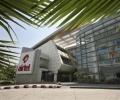
Telecom operator Bharti Airtel will start rolling out 5G services later this month as it signed requisite agreements with Ericsson, Nokia and Samsung. At the recently held much-awaited spectrum auction for 5G services by the Department of Telecom, Airtel bid for and acquired 19867.8 MHZ spectrum in 900 MHz, 1800 MHz, 2100 MHz, 3300 MHz, and 26 GHz frequencies. "We are delighted to announce that Airtel will commence roll out of 5G services in August.

Telecom regulator TRAI on Tuesday released a detailed consultation paper to discuss threadbare the modalities for auction of spectrum across multiple bands, including pricing, quantum and other conditions -- preparing the groundwork for 5G auctions slated for next year. Trai's comprehensive consultation paper runs into 207 pages and throws up 74 questions for industry-wide discussion, touching on crucial aspects like valuation and reserve price of spectrum, including 5G, quantum of spectrum, block size, eligibility conditions for participation in auction, roll-out obligations, spectrum cap, and surrender of spectrum. Norms will also be worked out for new frequencies such as 526-698 MHz and millimetre band, that is 24.25 - 28.5 GHz, in addition to bands such as 700 MHz, 800 MHz, 900 MHz, 1800 MHz, 2100 MHz, 2300 MHz, 2500 MHz, 3300-3670 MHz.

Billionaire Gautam Adani's group is said to be planning a surprise entry into the race to acquire telecom spectrum, which will pitch it directly against Mukesh Ambani's Reliance Jio and telecom czar Sunil Bharti Mittal's Airtel, sources said. Applications for participating in the July 26 auction of airwaves, including those capable of providing fifth-generation or 5G telecom services such as ultra-high-speed internet connectivity, closed on Friday with at least four applications. Jio, Airtel and Vodafone Idea -- the three private players in the telecom sector -- applied, three sources with knowledge of the matter said.

The Indian Navy has expressed reservations in vacating 100 Mhz of the spectrum, proposed to be sold in the tender expected next year, sources said. This could delay the Centre's plans to proceed with the 5G auctions in 2022. A department of telecom (DoT) official said, "The Indian Navy is showing reluctance in vacating the spectrum from the 3.3 GHz-3.4 GHz band that it is using. "Unless there is some traction with them on this issue, we can't seek consultation from TRAI." The 3300 MHz-3600 MHz (or 3.3GHz-3.6GHz) will be auctioned for the first time in the proposed 5G auctions, likely next year.
The Union Cabinet has approved the modalities for holding 5G spectrum auctions, and 72097.85 MHz of radio waves will be put on the block by July-end, an official release said on Wednesday.
The Ministry of Information and Broadcasting (I&B ministry) may launch its review of the government's plan to potentially reserve the crucial C-band of radio frequencies for 5G and 6G telecommunication (telecom) use, said officials. While the incumbent broadcasting operators have warned that the plan will leave "precious little spectrum" for broadcasting services, telecom service providers (TSPs) have pressed hard for getting access to the C-band. In multiple letters to the I&B ministry over the past month, the News Broadcasters & Digital Association (NBDA) has said the industry would be left with precious little spectrum for broadcasting services if the Department of Telecommunications (DoT) further allocates the scant C-band for 5G.
Bharti Airtel on Friday announced the closure of its agreement with Reliance Jio Infocomm to transfer the 'Right to Use' of Airtel's 800 MHz spectrum in three circles to Jio. Airtel said it has received Rs 1,004.8 crore (net of tax) from Jio for the proposed transfer.

Telecom operators Bharti Airtel, Reliance Jio and Vodafone Idea on Tuesday submitted applications to participate in the Rs 3.92 lakh crore spectrum auction scheduled to start from March 1, according to official sources. This round of auction will be held for 2,251.25 Megahertz (MHz) in seven frequency bands -- 700 Mhz, 800 Mhz, 900 Mhz, 1800 Mhz 2100 Mhz, 2300 Mhz and 2500 Mhz -- at a cumulative base price of Rs 3.92 lakh crore. "Bharti Airtel, Reliance Jio and Vodafone Idea have submitted applications (for the spectrum auction)," an official source told PTI.
Jio's spectrum trading pact with Airtel has enabled India's largest telco to top-up its holding in three key circles and yielded potential savings of about $400 million, according to a report. It is pertinent to mention here that Reliance Jio has signed an agreement with Bharti Airtel to acquire a portion of spectrum in 800 MHz band for Andhra Pradesh, Delhi and Mumbai circles at an aggregate value of Rs 1,497 crore -- marking the first such deal between the two telecom giants that otherwise compete fiercely in the market. Market analysts have termed the deal "mutually beneficial" and "win-win for both". UBS in a note cited Jio's spectrum buys in the 800 MHz band in Andhra Pradesh, Delhi and Mumbai in the recently-concluded auctions.

'We are targeting the 5G tender around January-March 2023.'

Bidding for the sixth round of spectrum auction for radiowaves worth Rs 3.92 lakh crore will start from March 1, according to a notice issued by the Department of Telecom on Wednesday. The long-awaited spectrum auction is being held after a gap of four years and over two years after the Telecom Regulatory Authority of India (Trai) calculated and recommended base price for the radiowaves. The DoT has fixed January 12 for the pre-bid conference and January 28 as the last date for seeking clarification to the notice.
India's first auction of spectrum in five years attracted Rs 77,146 crore of bids on the opening day on Monday with Reliance Jio, Bharti Airtel, and Vodafone Idea participating in the bidding process - a response that the government said was better than expected. There were, however, no takers for spectrum in 700 MHz and 2500 MHz bands on the first day, and the auctions will continue and conclude on Tuesday. About 2,308.80 MHz of spectrum, that carry telecom signals, in seven bands worth nearly Rs 4 lakh crore at the reserve or start price, was offered for bidding in the auction that began on Monday. Communications Minister Ravi Shankar Prasad said Rs 77,146 crore worth of spectrum was bid on the first day but there were no takers for the airwaves in the premium 700 MHz as also 2500 MHz bands.
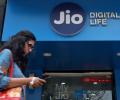
India's first auction of telecom spectrum in five years ended on Tuesday with Rs 77,814.80 crore of airwaves being bought, mostly by billionaire Mukesh Ambani's Reliance Jio. Over 2,250 MHz of spectrum, that carry telecom signals, in seven bands worth nearly Rs 4 lakh crore at the reserve or start price, was offered for bidding in the auction that began on Monday. Telecom secretary Anshu Prakash said 855.60 MHz of spectrum was bought for Rs 77,814.80 crore in the two-day auction.
Telecom operator Bharti Airtel will start rolling out 5G services this month and cover all towns and key rural areas of the country by March 2024, a senior company official said on Tuesday. Bharti Airtel managing director and CEO Gopal Vittal also said that the price of mobile services in India is very low and needs to go up. "We intend to launch 5G starting August and extend to a Pan India roll out very soon.

Sector experts have, however, indicated that a large part of the airwaves in the upcoming auction will remain unsold.

Telcos participating in the upcoming auctions at the end of July say they expect only a fourth of the value of spectrum on offer to be sold. The government has put Rs 4.3 trillion of spectrum up for sale at the base price across seven bands including for 5G. An executive of a leading telco said he estimates that mobile operators collectively would buy spectrum of only around Rs 1.1 trillion.

A rare bonhomie among three private telecom companies in raising tariffs coming on the back of a bailout package by the government may have helped the telecom sector avert a crisis but the challenges haven't ceased to exist as the industry faces a cash-guzzling task of rolling out 5G networks in the coming months. The sector that provides direct and indirect employment to millions is projected to see Rs 1.3 lakh crore to Rs 2.3 lakh crore of investments in the coming years in creating robust infrastructure and building telecom and network products that have been incentivised by the government through PLI and other initiatives. After years of cut-throat competition and the apex court ruling on payment of past statutory dues left some players in the lurch, billionaire Sunil Mittal's Bharti Airtel and struggling Vodafone Idea almost in tandem raised tariffs, taking the plunge they had long been talking about.
The auction for the 5G spectrum is likely to take place around April-May next year, Communications Minister Ashwini Vaishnaw said on Thursday. While relief measures announced in September this year for telecom operators marked the first set of reforms, the government will bring out a series of further reforms and "telecom regulatory structure should change in coming 2-3 years", Vaishnaw said. Speaking at the 'Times Now Summit 2021', the minister said India's telecom sector regulation has to be benchmarked with the global best, and added that "so, we will come with a series of reforms in this, such that the global benchmark of regulations is achieved in India".
Bharti Airtel has quietly narrowed its adjusted gross revenue (AGR) market share gap with Reliance Jio, the country's largest player in the game, in the last three years. Despite Jio's aggressive entry into 4G and now into 5G, Airtel's gap with Jio, which was 6.4 percentage points in Q1 of FY21 and went up to 7.2 percentage points in Q1 of FY22, has fallen to only 4.4 percentage points in Q1 of FY24. Currently, Reliance Jio's AGR market share is 41.6 per cent while Airtel's is at 37.2 per cent.

Adani group opened a $1.2 billion copper plant, bought a port in Odisha, raised stakes in a cement company and stitched an alliance with rival Mukesh Ambani's Reliance Industries, all in a matter of one week in signs that the apples-to-airport conglomerate has shrugged off the Hindenburg effect and is back to rapid expansion spree. In the last one week, Adani group has through regulatory filings and press statements announced expansions and investments in its mainstay ports business, diversification into metal refining, fund infusion into a two-year-old cement foray and continuing progress in the commissioning of its mega solar project.
It is learnt that the defence ministry is refusing to let go of its 100 MHz spectrum, which was allotted earlier. In that case, the department of telecommunications (DoT) will be left with only 175 MW of 5G spectrum of the total 300 MHz.
Country's largest telecom player Jio has completed 5G coverage planning in top 1,000 cities and conducted field trials of its home-grown 5G telecom gears, Reliance Industries said in its annual report. In the report, RIL (Reliance Industries Limited) said that Jio took major steps during 2021-22 in getting ready for 5G with its 100 per cent indigenous technology. The company was the biggest bidder in the recently-concluded 5G spectrum auction.
Successful bidders will have to pay 25 per cent of the amount upfront for sub 1 GHz, and 50 per cent upfront for higher frequency bands.

The figure is based on the base price of spectrum for the upcoming auction fixed by the TRAI and on the assumption that there will be no bidding war.

5G ambulances will not just allow remote consultation, but would also be able to transit data and video to hospitals in real time, saving precious time for critical patients. 5G technology would also support the development of new educational applications, improve agriculture productivity, and aid search and rescue missions with high resolution cameras in disaster recovery zones.

Although the industry is disappointed with the government decision not to lower spectrum prices at a time telcos are saddled with over Rs 4-trillion debt and an estimated Rs 1.43-trillion licence fee dues, the DCC has relaxed the payment structure to offer some relief to the financially stressed sector.
The Department of Telecommunications (DOT) on Wednesday received over Rs 17,873 crore from companies towards 5G spectrum dues. Nearly half the amount (Rs 8312.4 crore) was paid by Bharti Airtel, which made advance payments for four years to free up cash for future investments. Reliance Jio and Vodafone Idea paid Rs 7,864 crore and Rs 1,680 crore, respectively.
