
A team of experts has, in fact, tracked the enzyme in Britain, India, Pakistan and Bangladesh and believes it to be more widespread than first thought. It is said to be resistant even to a class of antibiotics known as carbapenems, which are reserved for use in emergencies and used when bacteria are found to be resistant to more commonly prescribed antibiotics.
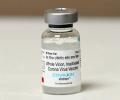
Results of an interim study recently published in The Lancet showed that two doses of Covaxin, also known as BBV152, had 77.8 per cent efficacy against symptomatic disease and present no serious safety concerns.
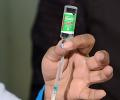
The researchers from King's College London in the United Kingdom also found that most systemic side effects -- meaning side effects excluding where the injection took place -- peaked within the first 24 hours following vaccination and usually lasted 1-2 days.
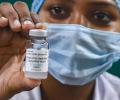
The decline in the effectiveness of Covaxin, India's indigenous COVID-19 vaccine, from 77.8 per cent to 50 per cent during a Delta-driven case surge in April and May this year is neither bad nor surprising, say scientists.
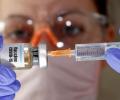
Until now, it has been unclear what effects hypervaccination such as this would have on the immune system. Some scientists were of the opinion that immune cells would become less effective after becoming used to the antigens.

More than 100 medical experts, academia and scientists on Friday have called for the Rio Olympic Games to be postponed or moved because of fears that the event could speed up the spread of the Zika virus around the world. Their assessment counters the view of some leading experts of infectious disease who say that as long as the necessary precautions are taken there is no reason to cancel the Games. On Thursday, Dr. Tom Frieden, director of the U.S. Centers for Disease Control and Prevention, declared there was no public health reason to cancel or delay this summer's Games. In a public letter posted online, the group of 150 leading public health experts, many of them bioethicists, said the risk of infection from the Zika virus is too high. The letter was sent to Dr. Margaret Chan, director-general of the World Health Organization, and urged that the Games, due to be held in Rio de Janeiro in August, be moved to another location or delayed.

The phase 3 trial findings indicate that Covaxin induces a robust antibody response with no severe vaccine-related adverse events or deaths reported among the trial participants, the authors of the study said.

According to the findings of the phase 1/2 randomised clinical trial, published in The Lancet Infectious Diseases journal, the vaccine candidate could induce an antibody response in participants within 28 days of the first immunisation, by giving two doses 14 days apart.

The vaccination drive was only one important part of India's globally recognised pandemic management and response strategy, observes Dr Vinod K Paul.

High travel volumes from the disease affected areas in the America, presence of mosquitoes capable of transmitting the virus and limited health resources can lead to Zika virus.
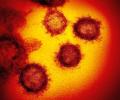
The study also shows that levels of these antibodies that are able to recognise and fight the virus are lower with increasing age, and that levels decline over time, providing additional evidence in support of plans to deliver a booster dose to vulnerable people.

'A good 30 per cent of people will still get infected after getting the Covishield vaccine.'

'Serial testing is much more valuable than a single test which reflects just a point in time.'
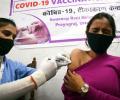
'Scientific data has proven that masks can reduce COVID-91 transmission by 53 per cent...A booster dose of vaccine, even if it works, is just a temporary fix'

Her appointment as World Health Organisation's deputy director offers an opportunity to push for improving the medical research environment in India.
Recent studies in China and Europe observed that the infection might relapse in those people who have already recovered from earlier phases.

'Between its natural immunity with Delta, in so many populations, and then getting on top of the vaccination (situation), I do not think India is going to have another bad wave.'

'There is more likelihood of dying from lightning than from vaccine induced blood clots.'

'...Where there is clearly no evidence of community transmission, letting life return to normal in those districts while continuing to rigorously control the spread of the infection.'

'The lockdown was for both: To flatten the curve or more correctly, delay the rapid spread of COVID outbreak, and to create healthcare infrastructure.'

'People are just putting the mask below their nose.' 'They are only protecting the mouth, but not the nose.' 'People need to understand that it is the nose which has to be protected.'
 © 2026 Rediff.com - Advertise with us - Disclaimer - Privacy Policy - Sitemap - Feedback - About us - Terms of use - Grievances