
The virtual talks took place under the framework of Working Mechanism for Consultation and Coordination on India-China Border Affairs.

But there is a bigger issue that both of us have brought forces close up and in that sense there is a militarisation of the border, he said.
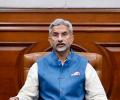
The Indian Army will not let China change the status quo along the Line of Actual Control (LAC) "unilaterally" and its current deployment along the frontier was not seen before, External Affairs Minister S Jaishankar said on Monday, rejecting Congress leader Rahul Gandhi's criticism of the government's handling of the border row.

Ask rediffGURU and PF expert Milind Vadjikar your insurance, stocks, mutual fund and personal finance-related questions.

Ask rediffGURU and PF and MF expert Janak Patel your mutual fund and personal finance-related questions.

The transgression took place on August 30, and the Chinese troops returned from the area after spending few hours, they said.

The exchange took place at five Border Personnel Meeting points along the LAC, the sources added.

The Indian Army began patrolling at Demchok on Friday, days after Indian and Chinese troops completed disengagement at the two friction points in eastern Ladakh, Army sources said.

The Indian Army has commenced a verification patrolling at Depsang, the second friction point in eastern Ladakh, the government said on Saturday.

The stand by China spelt out by its foreign ministry insisting that it takes the 1959 line on perception of the LAC amid a nearly five-month-long border standoff in eastern Ladakh triggered a strong reaction from India.

This is Gen Pande's first visit to the sector after taking over as the chief of the Indian Army on April 30.

Chief of defence staff Bipin Rawat on Thursday said the controversy about the Chinese coming into the Indian territory and building a new village is 'not true,' and that the villages were well within the Chinese side of the Line of Actual Control.
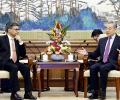
India and China held diplomatic talks in Beijing, focusing on effective border management and the resumption of cross-border cooperation and exchanges, including on trans-border rivers and the Kailash-Mansarovar Yatra. The meeting explored measures and proposals to implement decisions made during the Special Representatives (SR) dialogue in December. Both sides agreed to work together for the next SR meeting in India later this year.
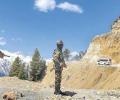
The meeting primarily focused on implementation of certain decisions taken at the fifth round of talks between Corps Commanders of the two armies last week on the disengagement process as well as to bring down prevailing tension in the region, sources said.
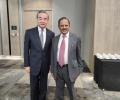
National Security Advisor Ajit Doval held a meeting with top Chinese diplomat Wang Yi during which he emphasised the need for continuing efforts to restore peace and tranquillity in the border areas to remove the 'impediments' to normalcy in bilateral relations.

Sources had earlier said that the areas and patrolling status were expected to be moved back to pre-April 2020 level.
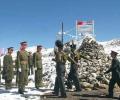
China on Wednesday said the latest round of the border talks with India was held in a "candid and pragmatic atmosphere" and the two sides had a "positive, constructive and in-depth discussion" on the resolution of the remaining issues along the Line of Actual Control in the Western Sector.
The Chinese aircraft have been regularly flying close to the LAC in the last three to four weeks which is seen as an attempt to probe the Indian defence mechanism in the area.

Xi asked about their condition and whether they were able to "receive fresh vegetables" in the inhospitable terrain.
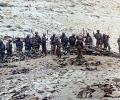
Jaishankar said India had agreements with China not to mass force in the border areas.
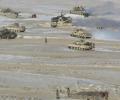
The MEA said there has not been any change in India's position on the LAC and the mutual redeployment as a result of the disengagement process should not be misrepresented.

Air Chief Marshal Bhadauria asked the air warriors to maintain a very high-level of alertness considering the evolving situation in Pangong lake region in eastern Ladakh following China's unsuccessful attempts to occupy certain strategic points in the area, the officials said on Thursday.

Anjaw MLA and state's women and child development minister Dasanglu Pul confirmed that the duo went missing along the border with China while looking for medicinal herbs.
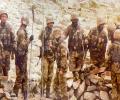
Jaishankar said China, in violation of the 1993 and 1996 agreements not to mass troops on the Line of Actual Control, chose to do so, and added that its attempt was obviously to unilaterally change the LAC.

Lt Gen Dwivedi, who was referring to the clash between the Indian soldiers and Chinese troops in the Galwan Valley in June 2020, also said that PLA's aggression in eastern Ladakh was met with "swift mobilisation and appropriate force posturing".
Ask rediffGURU and PF and MF expert Janak Patel your mutual fund and personal finance-related questions.
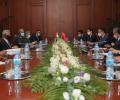
In a meeting on the sidelines of the summit of the Shanghai Cooperation Organisation (SCO) in Dushanbe on Thursday, the two foreign ministers exchanged views on the current situation in the region and agreed that military and diplomatic officials of both sides should meet again and discuss resolving the remaining issues at the earliest.
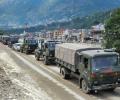
Indian Army planners find themselves contemplating the possibility of more Chinese intrusions along the contested 3,488-km border. That could lead to the army having to man a 'hardened LAC' round the year, like the LoC with Pakistan, reports Ajai Shukla.

External Affairs Minister S Jaishankar on Tuesday took a strong stance on the Indo-China border issue by saying that any unilateral attempt to change the Line of Actual Control (LAC) will not be 'countenanced' by India.

Ask rediffGURU and PF expert Nitin Narkhede your mutual fund and personal finance-related questions.
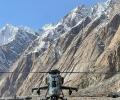
Defence sources stated that the disengagement involves removing infrastructure and withdrawing troops from both sides. The process is expected to be completed by Tuesday.
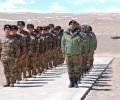
The Working Mechanism for Consultation and Coordination on India-China Border Affairs (WMCC) was established in 2012 as an institutional mechanism for consultation and coordination for the maintenance of peace and tranquillity in the border areas.
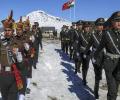
The 16th round of military talks between India and China on the lingering border standoff in eastern Ladakh will be held on July 17 on the Indian side of the Line of Actual Control (LAC) in the region, official sources said on Friday.

"India exercises with whomever it chooses to and it does not give a veto to third countries on these issues," the External Affairs Ministry spokesperson said.

India's External Affairs Minister S Jaishankar has stated that peace and tranquility in border areas are essential for the development of bilateral ties with China. He said India will be discussing de-escalation and effective management of activities in border areas with China in the coming days, following the completion of troop disengagement in eastern Ladakh. Jaishankar emphasized the importance of respecting the Line of Actual Control (LAC), maintaining the status quo, and adhering to past agreements. The disengagement phase allows for discussions on other aspects of bilateral engagement, with national security interests prioritized. However, the statement sparked an uproar in the Rajya Sabha, with Opposition MPs demanding clarifications that were disallowed by the Chair, leading to a walkout.

China on Wednesday said the Chinese and Indian militaries are implementing the resolutions concerning the disengagement in eastern Ladakh along the Line of Actual Control (LAC) in an 'orderly' manner.

The shelters were installed in locations near Tashigong, Manza, Hot Springs and Churup among others, in reflection of simmering tensions between the two sides in the region.
Jaishankar made these comments against the backdrop of the over five-month-long border standoff between India and China in eastern Ladakh where each side has deployed over 50,000 troops.
At an online media briefing, External Affairs Ministry Spokesperson Anurag Srivastava gave a run down of the events along the LAC in the eastern Ladakh region and held China responsible for the Galwan Valley clashes off June 15.
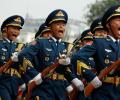
Since the June 15 clash, the PLA has inducted large numbers of troops, armoured vehicles and artillery along the LAC, from Depsang and Galwan in northern Ladakh to Hot Springs, Pangong Tso, and Chushul in central Ladakh, to Demchok and Chumar in southern Ladakh.
