
He said the global toy industry is over Rs 7 lakh crore but India's share is very small, as he stressed on the need to work to increase it.
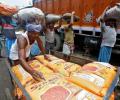
Progress on monsoons along with favourable base effect in 2HFY2017 continues to point towards RBI achieving its near 5 per cent inflation target by the year-end
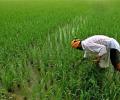
A pick-up in farmer income could have a cascading impact on the rural economy, though agriculture is becoming a smaller part of India's overall rural incomes.

NCIPM's awareness-cum-surveillance project helped reduce the pest-infected area in Maharashtra by 67 per cent.

The impact of weak monsoon so far this year on India's farm production and economy is likely to be limited, the central bank said, as rainfall levels have improved considerably over the past one month.

Skymet lowered its full season monsoon forecast to 'below normal' from 'normal', while the IMD is sticking to its earlier forecast that rains in June to September of 2018 would be 'normal' at 97 per cent of the LPA with a model error of +/-5 per cent.

If more commodities which have seen a sharp rise in MSP are to be procured, such as pulses, oilseed and cereals, there could be a storage problem. Also, if state-owned Cotton Corporation of India joins in, this problem will aggravate.

55% of cultivable land still doesn't come under irrigation.

Allegations abound that traders milked the scheme to artificially keep prices down, while a significant amount of growers didn't even register owing to multiple difficulties in registration and were deprived of the payout.
Mayurbhanj district has been the worst hit where a total of 2442 villages under 18 blocks have reported a crop loss of more than 50 per cent. Next is Sundergarh district where 1656 villages under 17 blocks have suffered a crop loss of more than 50 per cent.

According to the GDP data released by the Central Statistical Organisation on Tuesday, the country's farm sector grew by 2.5 per cent and 4.4 per cent each in the first two quarters of the current fiscal, against 1.9 per cent and 0.9 per cent, respectively, in the same period last year.

The prime minister's Economic Advisory Council had said inflation would be at 7-8 per cent by the year-end, compared with 10.55 per cent in June.
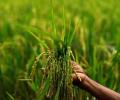
The new MSP would worsen, rather than rectify, the two most pressing problems of Indian agriculture: Wastage of water from all sources and a tendency towards monocropping, says Shreekant Sambrani. On the other hand, a simple-minded recourse to them without a host of supporting measures could well exacerbate not just agriculture, but the overall economy as well, says Shreekant Sambrani.

This is the second consecutive week when food inflation has declined. On annual basis, potato prices eased by 49.69 per cent and onions became cheaper by 6.93 per cent.

The lockdown has taught companies a lesson or two on running business with fewer human resources. These lessons are unlikely to be forgotten, observes Mahesh Vyas.

According to the first advance estimate released by the ministry last month, rice production was projected to rise to 80.41 million tonnes in Kharif season of 2010-11 crop year (July-June) against 75.91 million tonnes in the last Kharif.

The El Nino risks for this year is rising in India and it could result in sub-par rains, says a report.
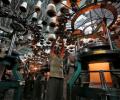
The wholesale price index inflation is projected at 6.4 per cent for 2017-18.

Bajaj Auto was the top gainer in the Sensex pack, surging 3.95 per cent followed by Maruti Suzuki at 2.69 per cent.

The evolution of Bt created additional value worth Rs 40,000 crore until 2008.

Twelve of the 36 meteorological subdivisions recorded deficient rainfall, while the rest witnessed normal to excess rain. In total, 38 per cent of the 662 districts received below-normal rain.

Prime Minister Dr Manmohan Singh will meet the chief secretaries of all states in New Delhi on Saturday to discuss the drought-like situation in the country.The meeting will be attended by Agriculture Minister Sharad Pawar and Cabinet Secretary K M Chandrasekhar. Issues like the status of monsoon, the sowing operation in the ongoing kharif season and the availability of vital farm inputs like seeds, fertilisers, water and electricity will be reviewed.

A closer look at the data reveals that a lot of the items are not part of this calculation. The notable ones include buffalo meat, marine exports, raw cotton, and plantation crops such as tea, coffee, rubber, etc.

Planning Commission Member Abhijit Sen on Wednesday said food inflation is expected to decline to 4 to 5 per cent by November from the current over 16 per cent after the arrival of Kharif (summer) crops.

Kerala, Andhra, Tamil Nadu and Kerala are facing a severe drought this year, affecting livelihoods as well as lives.

Food inflation, which has declined 7 weeks in a row, was at 10.15 per cent for the week ended November 13.
The overall deficiency in the cumulative monsoon rainfall since the beginning of the season has shrunk from about 46 per cent in the end of June to 24 per cent by July 16. The key agricultural belt of north-western India is still facing about 44 per cent rainfall deficiency, though there have been some welcome showers throughout the region in the past couple of weeks. The north-eastern region is also facing about 40 per cent rain deficieny.

Rajan said that demand needs to be reduced without having severe effects on investment and supply.
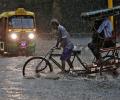
Monsoon is likely to be 96 per cent of the long period average
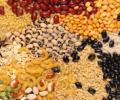
India's foodgrain production is estimated to decline by 7.51 per cent to 216.85 million tonnes in the 2009-10 season mainly due to a fall in summer output owing to the worst drought in 30 years.
The Election Commission on Monday issued a notice to Union Agriculture Minister and Nationalist Congress Party supremo Sharad Pawar for alleged violation of the Model Code of Conduct for the October 13 assembly elections in Maharshtra.

Food grains production in the country would go down by 10-15 per cent in the current fiscal due to deficient rainfall, an Agriculture Ministry official said.

Cabinet sub-committee to review the situation and take necessary steps.
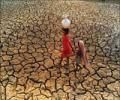
The government's decision to downplay the monsoon's failure has only worsened its credibility and will lead to a worse panic

The committee would submit its report in the next two weeks.
These decisions were announced by food and agriculture minister Sharad Pawar in the Rajya Sabha on Friday, a day after Prime Minister Manmohan Singh and his cabinet colleagues were briefed on the monsoon situation and Kharif sowing. Allaying fears of shortage of foodgrain, Pawar said, "Stock position is quite comfortable. We have sufficient stock position for 13 months in our kitty".

Higher prices of onion and other vegetables and fruits pushed up inflation to 6.46 per cent in September.
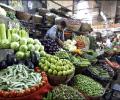
The southwest monsoon season was deficient by 16 per cent.

The total water stock in the country's 81 major reservoirs is still 57 per cent of their live storage capacity, falling 12 per cent short of the normal level for this time. This is a cause for concern for both irrigation and hydro power production.

The outlook of a negative growth in agriculture comes on the back of the Indian Meteorological Department's revised rainfall forecast and uncertain impact of mitigants such as ground water harvesting and modification of cropping patterns.
