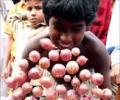
Shortage of seeds, threat of El Nino expected to restrict sowing.

As the kharif sowing season exceeds two months, no crop has managed to reach the normal area of cultivation (average of the past five years), except for sugarcane, cotton and jute.
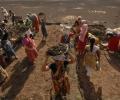
Around 40 per cent of the country is staring at drought-like conditions ahead of the monsoon as water levels have receded sharply.

As of now, monsoon rains are deficient by 21 per cent across India, affecting sowing of kharif crops. Karnataka, Maharashtra, Gujarat, Haryana, Punjab and West Rajasthan have been the worst-hit regions this year.
Prices of essential commodities, including foodgrains, have surged 8-10 per cent in just three days, because of deficient rains and on concerns that the farm output this kharif season would be hit badly.

The Reserve Bank of India (RBI) on Friday decided to leave the benchmark interest rate unchanged at 4 per cent but maintained an accommodative stance, implying rate cuts in the future if need arises to support the economy hit by the Covid-19 pandemic.

As the southwest monsoon continues to narrow its overall deficit, the India Meteorological Department (IMD) on Wednesday exuded confidence that the dreaded El Nino weather pattern was unlikely to affect monsoon rains this year.
On one hand Karnataka Agriculture Minister Umesh Katti, Water Resources Minister Basavaraj Bommai and Rural Development Minister Jagadish Shettar are plotting the fall of Chief Minister Sadananda Gowda, while on the other hand the state continues to reel under drought with 123 taluks declared as drought hit.
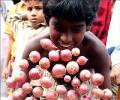
Because of late monsoon, arrival of kharif (summer) onion crops would be delayed by a month in key growing areas of Maharashtra, Rajasthan and Madhya Pradesh, threatening to push up prices in the late September and October.

'I would want people to have food on their tables and their wages to rise.' 'Will that happen or not is the question that we need to ask and answer.'

"Manmohan Singh Ji (former Prime Minister) tried many times but could not do. Today when it is implemented, propaganda is being spread," Tomar said.

According to the Indian Council of Agricultural Research Director General Trilochan Mohapatra, the insects have attacked about 40,000 hectares of land.
The rains in August have also led to speculation that if the trend continues, rains in September, the terminal month of the four-month monsoon season, could be better, thus aiding production of paddy and other kharif crops.

Centre releases Rs1,712cr to TN, Rs 1,234cr to Karnataka for drought.

El Nino refers to abnormal warming of surface ocean waters in the Pacific that disrupts weather pattern causing drought and floods in many regions of the world.

Though monsoon risks to overall economic growth could be limited due to small share of agriculture output in GDP, the impact may be significant because it affects the poor through inflation and income, RBI noted in its 'First Quarter Review of Monetary Policy 2012-13'.

The regulator has doubled the deposit money that a trader is required to keep with exchanges for trading in turmeric following unusual price movement.

On reforms in pipeline, she said the government is for universal right to minimum wages and wants to remove regional disparity through a national floor wage.
The southwest monsoon has picked up pace, and is now on the verge of covering almost the entire country.

The wider NSE Nifty too fell by 20.15 points or 0.19 per cent to end at 10,749.75.
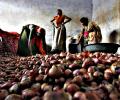
The cost of production of onion is around 800-900 per quintal, while prices are hovering around 500 per quintal across major wholesale markets.

Consumer goods companies remain hopeful of good rainfall this year despite the prediction of a possible drought-causing El Nino weather phenomenon in August-September.

Benchmark policy rate unchanged at 6.75 per cent.
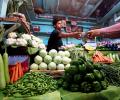
This could be the reason why Prime Minister Narendra Modi mentioned tomato, onion, and potato as his government's 'TOP' priority, in an election rally on February 5 in poll-bound Karnataka.
Total area sown till last Friday was 16.56 mn hectares, up 23%.

The monsoon rains have been 31 per cent below average up to July 2, Pawar told reporters in New Delhi.

Scenario is precarious for urad with almost half the crop damaged in major growing states, tur quota of 400,000 tonnes already exhausted.

These five stocks, which have lagged the markets over the last two years, have doubled in value since March 23.
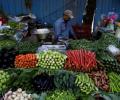
Vegetable arrivals at mandis, especially in Maharashtra, have declined by more than 50 per cent since the beginning of the month.
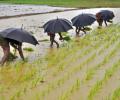
Skymet said the monsoon this year could be 100 per cent of the long period average (LPA) with a model error of plus and minus 5 per cent.
Pranab Mukherjee on Thursday said that though the exact impact of the drought on the Kharif crop would be known only when the harvesting begins, there is every possibility of a shortfall of 15-20 percent.
Diseases caused by unseasonal rains have ruined almost 70 per cent of the kharif onion crop in Maharashtra this year, which is responsible for the nationwide shortage of the commodity, a senior ICAR official said on Thursday.
FCI's suspension of tur under MSP is likely to force farmers to undergo distress sales of the commodity.

The government is committed to taking all initiatives needed for the development of the agriculture sector and farmers' welfare, he said.

Home Minister Rajnath Singh said that the decision could cost the government roughly Rs 15,000 crore.

The decision, taken by the Cabinet Committee on Economic Affairs headed by Prime Minister Narendra Modi, comes less than a year before next general election.

The monsoon this year in India was likely to be 'below normal' at 95% of LPA: Skymet
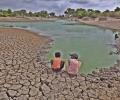
The well-irrigated states of Punjab, Haryana, Karnataka, western Uttar Pradesh and coastal states such as Odisha are, for the first time, feeling the effects of a poor monsoon.

If you are bullish on the consumption theme, consider specialised mutual funds that focus on this theme. Remember that such sectoral mutual funds should not make up more than 5% to 10% of your equity portfolio.

Price of ladies finger shot up staggering 236% at Vashi wholesale market last month.
