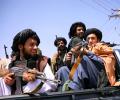
India is worried about Pakistan getting the Taliban to ignite trouble in Kashmir, observes Ramesh Menon.

Seeking to wriggle out of the FATF's grey list, Pakistan has imposed tough financial sanctions on 88 banned terror groups and their leaders, including Hafiz Saeed, Masood Azhar and Dawood Ibrahim, by ordering the seizure of all of their properties and freezing of bank accounts, a media report said.

Former Inter-Services Intelligence chief Ahmed Shuja Pasha has admitted that the deadly Haqqani network was created by it and America's Central Intelligence Agency and claimed that the insurgent group's chief Jalaluddin Haqqani had "in fact been invited to the White House by President (Ronald) Reagan".

Dawood Ibrahim is wanted in India to face the law of the land for carrying out serial blasts in Mumbai in 1993 in which scores of people were killed and injured.

The madrassa in Akora Khattak in Nowshera district of the province is known for having several top Afghan Taliban leaders among its alumni, including former Taliban chief Mullah Omar who received an honorary doctorate from the seminary.

Over two months after 74 people were killed in a building collapse, the police on Monday filed a charge sheet against 27 accused, which included real estate developers, civic officials and a local corporator.

Darbhanga was for long the operations command centre for Indian Mujahideen. But now, details have emerged about how Kolkata has been a preferred destination for the terror outfit.
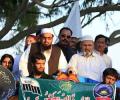
In a paradigm shift in its policy against terrorism, Pakistan has included Jamaat-ud-Dawa led by the 2008 Mumbai attack mastermind Hafiz Saeed and the dreaded Haqqani network in the list of proscribed organisations after the US mounted pressure on the country.

Pakistan plans to ban 10 terror outfits, including 26/11 mastermind Hafiz Saeed-led Jamaat-ud-Dawa and the dreaded Afghan-based Haqqani Network, a move seen by experts as a "paradigm shift" in the country's security policy in the wake of Peshawar school massacre.

Sukanya Verma celebrates its grandeur and grandiloquence in 25 glorious frames on its diamond anniversary.
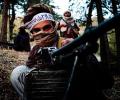
The United States has announced a bounty of $30 million for information leading to the location of five key leaders of the Haqqani militant network, held responsible for several attacks on civilians and NATO forces in Afghanistan.

It was Soni Somarajan's biggest dream -- to see himself as a proud member of the Indian Armed Forces. When Life brutally shattered that dream, he wove a new one.
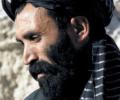
Top Taliban leader Mullah Omar was sheltered by Pakistan's powerful spy agency Inter-Services intelligence after the outfit's leadership fled from Afghanistan in 2001, according to an email received by former secretary of state Hillary Clinton during her tenure.

Pakistan, which has propped up the new Taliban leadership, would be keen to use its influence over the group to neutralise India's presence in the region.

Canadian-Bangladeshi Tamim Ahmed Chowdhury and his two associates were killed during an encounter at the militants' hideout.
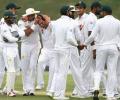
Pakistan women cricket team's head coach New Zealander Mark Coles has resigned on Thursday, months before the ICC World T20 in Australia.

Support for the dreaded Haqqani network across the militant group's historical stronghold in eastern Afghanistan is gradually turning into "resentment" as local leaders say the Haqqani supremo's war is for "Pakistani rupees and power" and they cannot follow him "blindly".

'In a relationship that does not permit cricket, how can the prime ministers embrace and send a false message,' asks Ambassador T P Sreenivasan.

Job creation was mentioned 13 times in the BJP's 2014 election manifesto, yoga only twice. Has yoga taken precedence over jobs for the Modi Sarkar, asks Syed Firdaus Ashraf.

'US counter-terrorism policy was encouraging and emboldening the Indians to deal with the problem of Pakistani-supported terrorism once and for all.' 'The US had been trying to browbeat Pakistan into doing what it wants, with very limited success.'

'It was a mission undertaken in darkness in every sense -- literally, because Afghanistan had no electricity at that time; and, metaphorically because Delhi historically dealt only with the Pashtuns of Afghanistan and the foreign ministry's vast archives had nothing to offer on the culture and politics of the northern tribes in the Hindu Kush.'
