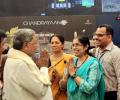
Even as the scientists and staff at Mission Operations Complex broke into applause, the core team members thanked all those who had worked on the mission. Quietly and without jingoistic boasting of their stupendous achievement. And that is the most remarkable aspect of ISRO -- they let their work do the talking, notes Minnie Vaid, author of Those Magnificent Women And Their Flying Machines, ISRO's Mission to Mars.

A mysterious flying object has reportedly been sighted by shepherds over Indian Space Research Organisation's Mahendragiri centre and neighbouring forest areas.

The first Trajectory Correction Manoeuvre of India's maiden mission to Mars was on Wednesday carried out successfully by Indian Space Research Organisation scientists on the spacecraft, which is presently travelling some 2.9 million km away from Earth.

The Lagrange point 1 (L1) of the Sun-Earth system is about 1.5 million km from the Earth. It is about one per cent of the total distance between the Earth and the Sun.

The space agency had earlier announced that the launch is tentatively scheduled at 09:28 hrs IST on November 25, subject to weather conditions.

Indian Space Research Organisation has built a supercomputer, which is to be India's fastest in terms of theoretical peak performance of 220 TeraFLOPS (220 Trillion Floating Point Operations per second).

It also carries equipment for meteorological data relay and satellite based search and rescue services being provided by earlier INSAT satellites.
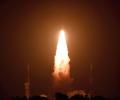
A S Kiran Kumar, chief of ISRO, said the mission was unsuccessful because the satellite housed within the heat sink could not be injected.
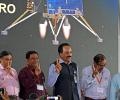
While the historic success of Chandrayaan-3 is celebrated by Indians across the world, two untrumpeted engineering colleges in Kerala are basking in the glory of the key role played by some of their alumni in the crucial Moon mission.

When asked if it would be possible to achieve the Gaganyaan mission with the given time frame, Sivan said, "Yes, we are not doing this for the first time, and we are also not starting the mission from the scratch. We are already on the job," adding that several important procedures, like the crew module, crew escape systems, environment control and life support systems, had already been completed.
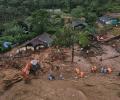
'The larger story of systematic destruction, which can and has been quantified, goes mysteriously missing from any political and/or public discourse about the ongoing devastation in the Ghats,' notes Prem Panicker.

Scientists also expressed the hope that any technical problem will be sorted out by ISRO, and the mission will be launched successfully.
This is the third time that Tamil Nadu has supplied the necessary soil to the Bengaluru headquartered space agency for performing the tests for its ambitious Moon missions.

The initial assessment of the first-ever measurements of the near-surface lunar plasma environment over the south pole region by RAMBHA-LP payload onboard Chandrayaan-3 lander indicates that plasma there is relatively sparse, ISRO said on Thursday.

Nail-biting moments gave way to celebratory mood at the command centre of Indian Space Research Organisation in Bangalore on Wednesday, as its Mars Orbiter Mission or Mangalyaan entered the red planet's orbit.

The move is part of recommendations made by a task force on the use of space technology in improving border management which have been accepted by Union Home Minister Rajnath Singh.

After PLSV-C8, PLSV-C10 carrying Polaris satellite would also be launched either in June or July, officials added.

A truly 'made in India' satellite that will empower a digital India.
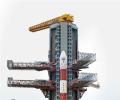
A 48-hour countdown began on Monday for the launch of record 20 satellites, including India's latest earth observation Cartosat-2 Series Satellite, onboard PSLV C-34 from Sriharikota on June 22.

ISRO is focusing on more launches including that of a communication satellite from French Guiana next month.

The weight of the space station is likely to be 20 tonnes.
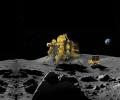
This eagerly anticipated event will be broadcast live on August 23, starting from 17:27 Hrs IST on multiple platforms, including the ISRO Website, its YouTube channel, ISRO's Facebook page, and DD National TV channel.

ISRO said on Saturday the Aditya-L1 spacecraft has travelled beyond a distance of 9.2 lakh km from Earth, successfully escaping the sphere of Earth's influence.

Except Pakistan, seven SAARC countries are a part of the project.
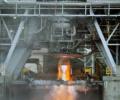
India's first indigenously designed and developed high-thrust cryogenic rocket engine generating a nominal thrust of 19 tonnes was successfully endurance hot-tested for 800 seconds.

Chandrayaan-3 is now in an orbit, which when closest to Earth is at 173 km and farthest from Earth is at 41,762 km, the space agency said.
The Indian Space Research Organisation is trying to track down Chandrayaan-1 with which it lost radio links on Saturday.
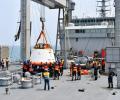
Nerves gave way to smiles at the spaceport in Sriharikota as delays and an anomaly-triggered 'hold' forced Indian Space Research Organisation (ISRO) scientists to revise the launch schedule of a test vehicle carrying payloads related to the country's ambitious human space flight mission, Gaganyaan which soared into skies after initial hiccups.
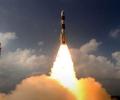
Research and markets estimated in May that the global opportunity for small and mini satellites would grow nearly one and half times to $5.32 billion by 2021

Indian Space Research Organisation plans to undertake next month the first developmental flight of a "game-changer" rocket capable of launching four-ton class of satellites from Sriharikota spaceport, says its Chairman A S Kiran Kumar.

'ISRO's style is a terrific example of being able to survive, acknowledge failures, and then most importantly of all, learn from them to ensure that subsequent missions are successful.'
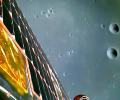
Taking to X (formerly Twitter), ISRO said, "Chandrayaan-3 Mission. Chandrayaan-3 Rover to MOX, ISTRAC, Moon walk begins!"

Only three countries (United States, Russia and China) have successfully landed spacecraft on the airless lunar surface.
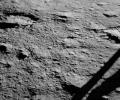
The lessons learned from the failure of Chandrayaan-2 contributed to the success of India's third lunar mission, former space scientist with the Indian Space Research Organisation (ISRO) Nambi Narayanan said, after the successful touchdown of the 'Vikram' lander on the lunar South Pole.

Scientists of the Indian Space and Research Organisation have proved their mettle once again with the successful launch of India's very own space observatory , Astrosat.

India's ambitious third Moon mission's spacecraft Chandrayaan-3 after the launch on July 14, had entered into lunar orbit or the Moon's orbit on August 5.
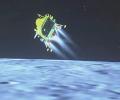
After Chandrayaan-3 touched down on the Moon, the Congress on Wednesday said it is a collective success of every Indian and ISRO's achievement reflects a saga of continuity and is truly fantastic.

If the April launch of the Chandrayaan-2, the country's second mission to the Moon, is not possible, then the ISRO will aim for a launch by October.

Congratulate ISRO and its brilliant scientists for positioning the country in an elite group of nations exploring outer space.
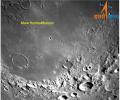
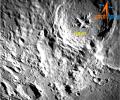
This camera that assists in locating a safe landing area -- without boulders or deep trenches -- during the descent is developed by Ahmedabad-based Space Applications Centre (SAC), a major research and development centre of ISRO.
