Ramalingam Kalirajan offers some easy steps to reactivate your accounts with banks like SBI, HDFC Bank, IDFC First Bank and PNB just so that you can start availing all the benefits linked to your account.

IDFC is merging its Portfolio Management Services business with the newly-acquired Standard Chartered Mutual Fund to sell MF products targeting high net worth individuals. The company is also planning products that offer infrastructure as an asset to investors.
.jpg)
Most infra projects have hit a road block due to high cost of funds.

V Vaidyanathan, former executive director at ICICI Bank who turned entrepreneur to run Capital First, an NBFC that caters to smaller businesses, tells Pavan Lall in an exclusive interview that his new entity post the merger of Capital First and IDFC Bank which will be called IDFC First will launch by January and cater to a new India with value services.
Infrastructure Development Finance Company is planning to hit the capital markets by June end to fund its capital requirements.

'The finance minister has done as much as she can when you look into the fiscal constraints she had.'

The Indian rupee is likely to depreciate further against the US dollar through the end of 2024. This is due to the continued strengthening of the greenback, combined with the weakening of the Chinese yuan, which is expected to keep pressure on the Indian currency.

Wedding planner WedMeGood estimates that the average wedding budget has surged to Rs 36.5 lakh this year, with destination weddings averaging Rs 51 lakh.
Ending days of suspense, the Reserve Bank on Wednesday granted banking licences to infrastructure financing firm IDFC and microfinance institution Bandhan from among 25 applicants that included corporate heavyweights ADAG Group, Aditya Birla Group and Bajaj Group.

The government may save over Rs 70,000 crore (Rs 700 billion) on capital and revenue expenditure allocated towards new schemes in the FY25 Budget that are yet to be implemented.

The need for a manufacturing policy, reining in food inflation and raising investment in the country were among key suggestions given by economists who met Finance Minister Nirmala Sitharaman and senior ministry officials in the first round of pre-Budget consultations on Friday.

The Reserve Bank of India (RBI) is expected to cut interest rates for the first time in nearly five years in Governor Sanjay Malhotra's first monetary policy committee (MPC) meeting on Wednesday. The meeting of the six-member MPC, which will culminate on Friday, aims to boost sluggish economic growth, which is seen falling to a four-year low. Malhotra took charge as the 26th RBI governor in December last year.

Privately, many bankers admit their immediate goal is not growth but slowing the erosion of Casa deposits, reveals Tamal Bandyopadhyay.
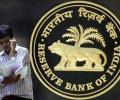
The Reserve Bank of India (RBI) was a net seller of the US dollar in August, reversing its net buying position from July. During the current financial year up to August, the central bank had sold a net $1.11 billion. The RBI sold a net total of $6.49 billion worth of the foreign currency in August, according to the central bank's monthly bulletin.
While liquidity in the banking system has turned surplus in the last few weeks, it could go back to deficit again, mainly due to corporate advance tax outflows. The net liquidity surplus of the banking system rose to touch Rs 1 trillion on Tuesday on the back of government spending, according to the data released by the Reserve Bank of India.

The national selectors on Sunday retained the Indian team, which hammered Bangladesh by 280 runs in the opening Test here, for the second and final match in Kanpur.

Despite gross domestic product (GDP) growth being lower-than-expected for the July-September quarter, the six-member Monetary Policy Committee (MPC) may not cut the policy repo rate in the review meeting scheduled for next week due to high inflation in October, according to experts. "Consumer Price Index (CPI) inflation breaching the upper limit of the RBI's tolerance band in October (6.2 per cent year-on-year) is not a favourable backdrop for the MPC to commence the easing cycle, even as the growth outcome disappointed the MPC's expectations," said Shreya Sodhani, regional economist at Barclays, who expects the policy repo rate to be kept unchanged in the December meeting.

Shares of state-owned bank stocks were under pressure on Monday due to muted deposit and credit growth numbers reported by these lenders in the October-December quarter (Q3) of 2024-25 (FY25). The Nifty PSU Bank index was down 4 per cent, with Union Bank of India emerging as the biggest loser as its shares fell 7.5 per cent to close at Rs 114.7, followed by a 5.7 per cent drop in shares of Bank of Baroda (BoB) to Rs 228 and a 4.7 per cent slide in shares of Bank of India to Rs 99.8 on the National Stock Exchange.

After depreciating 0.32 per cent against the dollar in October so far, the rupee is expected to hold ground against the greenback in the current quarter on the back of robust inflows. According to the median of a Business Standard poll of 10 respondents, the rupee is seen trading around 84 per dollar till the end of December. "In India's case, at least the bond and cash related inflows will continue.

'Challenge is basically near-term growth as the outlook has turned a bit adverse.'
Opposing the government's move to merge the country's oldest financial institution with Punjab National Bank, IFCI's employees union on Wednesday proposed a mega merger of IFCI, IDBI, IIBI and IDFC.
Infrastructure Development Finance Company Ltd managing director and chief executive officer Rajiv B Lall has sold 4.50 lakh (450,000) shares of the company for over Rs 6.3 crore (Rs 63 million) in an open market transaction.

Mumbai's young batting star Musheer Khan has been ruled out of the upcoming Irani Cup match after suffering a fracture in the neck, in a road accident on the Yamuna Expressway, on Friday.

The rupee remains overvalued against the currencies of India's trading partners, even as it hit record lows against the dollar in August and September. According to the Reserve Bank of India's (RBI) real effective exchange rate (REER) index, the rupee stood at 5.5 per cent above its fair value in August, down from 7.7 per cent in July. This slight easing followed fears of a US recession and the unwinding of yen carry trades, which exerted pressure on the Indian currency.

As the fight for deposits intensifies, the cost of money will rise and the margin will be under further pressure, points out Tamal Bandyopadhyay.

Even as the high inflation figure for October has ruled out any possibility of a rate cut by the Reserve Bank of India's (RBI's) monetary policy committee (MPC) in December, a rate cut in February also looks uncertain due to global uncertainties. Economists told Business Standard that unless domestic growth slows markedly, the outlook on rate cut remains unclear. India's headline inflation touched a 14-month high of 6.2 per cent in October, breaching the MPC's upper tolerance band of 6 per cent.

The arrival of the New Year will see an exciting white-ball showdown with England visiting India for five T20Is and three ODIs.

Gautam Adani-owned Adani Ports and Special Economic Zone (APSEZ) will replace IT major Wipro in the 30-share BSE Sensex from June 24, according to an official announcement on Friday. This marks the first inclusion of any Adani Group firm in Sensex. The group has 10 listed firms with a combined market valuation surpassing Rs 17 lakh crore.
