
Barring coal and fertiliser, all sectors -- crude oil, natural gas, refinery products, steel, cement and electricity -- recorded negative growth in August.

A sharp sell-off in the Indian equities markets after a spike in crude oil prices should not be surprising. Historically there is a negative correlation between stock valuations in India and the price of Brent crude oil, which is the benchmark for the Indian crude oil basket. Between 2011 and 2014, crude oil traded above $100 a barrel for an extended period, the Sensex-trailing price/earnings (P/E) was 18X, on average, during the period, nearly 22 per cent lower than the current index P/E of 23X.

Since January 2021, the inflation rate in health has stood in the range of 6.08-8.44 per cent.

The output of eight core sectors grew by 16.8 per cent in May, mainly due to a low base effect and uptick in production of natural gas, refinery products, steel, cement and electricity, official data released on Wednesday showed. The eight infrastructure sectors of coal, crude oil, natural gas, refinery products, fertilisers, steel, cement and electricity had contracted by 21.4 per cent in May 2020 due to the lockdown restrictions imposed to control the spread of the COVID-19 infections. In March this year, these key sectors had recorded a growth of 11.4 per cent, and 60.9 per cent in April.

Life insurers' new business premium (NBP) reported stellar performance in November after a poor showing in October, on the back of strong growth in group single premiums for both private insurers and Life Insurance Corporation (LIC) of India. In November, 24 life insurers, including LIC, reported NBP to the tune of Rs 27,177 crore, up 42 per cent year-on-year (YoY) from the year-ago period. Private insurers' NBP rose 58.63 per cent YoY to Rs 11,209.75 crore as group single premiums more than doubled during this period.

Lenders can now initiate recovery proceedings since the SC has lifted the standstill on asset classification, which protected stressed accounts from slipping into NPAs.

While the tax-to-GDP ratio of 9.88 per cent has been assumed for FY21, the same as last year, when it touched a decadal low, for FY22 a ratio of 10.7 per cent has been assumed, an average of the last five years.
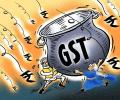
India's GST collection remained above Rs 1 lakh crore for the third month in a row at over Rs 1.17 lakh crore in September, raising expectations that second half of the year will post higher revenues. The tax collections in September on goods sold and services rendered was 23 per cent higher than Rs 95,480 crore collected in September 2020, and 27 per cent higher than Rs 91,916 crore collected in September 2019. The collection in September is the highest in five months since April, when revenue was at record high of Rs 1.41 lakh crore.

Defying trends, the country's largest private sector lender, HDFC Bank, has shifted its asset mix significantly towards high-rated segments. As a result, its wholesale-to-retail mix has tilted heavily in favour of wholesale, even at the cost of margins. Further, it is even looking to ramp up its branch network, with an aim to service clients within a 1-2 km radius rather than the current 5-6 km radius.

However, it may still not change its stance on the policy rate as inflationary pressures are coming from high commodity prices.

Sectors which recorded positive growth were coal, refinery products and fertiliser.
.jpg)
Declining prices of food items like vegetables pulled down retail inflation to 5.59 per cent in July, bringing it back within the RBI's comfort zone after two months, official data showed on Thursday. The retail inflation based on the Consumer Price Index (CPI) had remained above 6 per cent during May and June. The government has mandated the RBI to maintain retail inflation at 4 per cent, with a margin of 2 per cent on either side. The CPI based inflation stood at 6.26 per cent in June 2021 and 6.73 per cent in July 2020.
After the RBI surprised the Centre with a record Rs 99,122 crore in surplus transfer for FY21, analysts said this will help the government tide over the revenue losses from lockdowns and extend more support to the pandemic hit industries and to the poor people. In fiscal 2020, the RBI had paid only Rs 57,128 crore in dividend to the government and the finance minister had budgeted only Rs 45,000 crore from the central bank. The higher payout followed the Bimal Jalan panel report that had set a new economic framework capital buffer for the central bank along with the contingency risk buffer at 5.5 per cent.

Retail inflation slowed to 4.29 per cent in April from 5.52 per cent in March, mainly due to easing food prices, government data showed on Wednesday. The Reserve Bank mainly factors in the retail inflation based on Consumer Price Index (CPI) while arriving at its monetary policy. As per the data released by Ministry of Statistics and Programme Implementation, inflation in the food basket was 2.02 per cent in April, down from 4.87 per cent in the preceding month.

India plans to keep its fiscal deficit within 3.9% of GDP.

The government on Thursday more than doubled the price of natural gas that is used to produce electricity, make fertilisers, turned into CNG and piped to household kitchens for cooking, on the back of a spike in global energy prices. The price of gas produced from old regulated fields, such as the nation's largest gas field of Bassein of ONGC, will rise to a record high of $6.10 per million British thermal unit (mmBtu) from the current $2.90 per mmBtu, according to the oil ministry's Petroleum Planning and Analysis Cell (PPAC). The new price, which is likely to result in a hike in CNG and piped cooking gas rates, will be for six months beginning April 1.

Experts warn of over-interpreting the numbers and said their sustainability needed to be watched beyond November, says Indivjal Dhasmana.

Growing for the third consecutive month, the country's exports rose marginally by 0.67 per cent year-on-year to $27.93 billion in February even as trade deficit widened to $12.62 billion, according to official data released on Monday.

Barring fertiliser, all seven sectors - coal, crude oil, natural gas, refinery products, steel, cement, and electricity - had recorded negative growth in May.

Scanty rainfall, last year's lockdown, growing competition from Nepal and the disaster of the 2017 Gorkhaland agitation are steadily weakening exports and sales of Darjeeling tea.

Barring fertiliser, all seven sectors -- coal, crude oil, natural gas, refinery products, steel, cement and electricity -- recorded negative growth in July.

The demand has gradually shifted from 16-tonners to 25-tonners and is further shifting in favour of 31-t and 37-t trucks.

Growth has been under pressure since the lockdowns related to Covid-19 started and fresh prescription generations slowed.

As India builds its data centre capabilities, it is imperative that it is supported by green energy. This is because data centres are guzzlers of energy.

Over the past several months, the airline has struggled to pay vendors and staff salaries on time.

The Index of Industrial Production (IIP) grew by 1.4 per cent in November as most components like manufacturing, electricity, mining, primary goods, and consumer durables witnessed a slowdown, according to data released by the National Statistical Office (NSO) on Wednesday. This is on the base of a decline of 1.7 per cent in November 2020 and before the new Covid variant started impacting economic activity. IIP growth was lower than the 4 per cent expansion recorded in the previous month but was better than a 1.6 per cent contraction seen in November 2020. Separately, rising prices of kitchen staples pushed retail inflation, or rate of price increase, to 5.59 per cent in December 2021, bringing it close to the upper band of Reserve Bank's comfort zone.

India may see a structural shift in supplies of crude oil with Russia emerging as a key source of fuels, a development that reduces New Delhi's dependence on West Asian oil, gives Indian refiners better bargaining power with price-setter Saudi Arabia, and improves overall energy security. The unexpected surge in supplies of Russian crude in the last few months, unthinkable until the war in Ukraine, may also deliver other unforeseen gains such as boosting exports of refined fuels to Europe, which historically has counted on Russian shipments. India has jumped on to the bandwagon of opportunistic buying of Russian crude but if calibrated carefully, Urals crude can be a long-term asset for India refiners.

The financials of six privately held companies associated with Siddhartha show an increase in debt and falling ability to meet short-term obligations.

Owing to the risk perception attached with the segment by banks, the residential realty segment has been increasingly relying on non-banking financial companies and housing finance companies to raise debt financing, reports Abhijit Lele.

Combined sales at top four manufacturers - Tata Motors, Ashok Leyland, Volvo Eicher Commercial Vehicles, and Mahindra and Mahindra - dropped 20 per cent to 20,324 units in November

S&P Global Ratings on Thursday cut India's growth forecast for the current fiscal to 9.5 per cent, from 11 per cent earlier, and warned of risk to the outlook from further waves of COVID pandemic. The agency lowered the growth outlook saying that a severe second COVID-19 outbreak in April and May led to lockdowns imposed by states and sharp contraction in economic activity. "We forecast growth of 9.5 per cent this fiscal year from our March forecast of 11 per cent," S&P said.

Fitch Ratings has cut India's economic growth forecast to 8.7 per cent for the current fiscal but raised GDP growth projection for FY23 to 10 per cent, saying the second COVID-19 wave delayed rather than derail the economic recovery. In its APAC Sovereign Credit Overview, Fitch Ratings said India's 'BBB-/Negative' sovereign rating "balances a still-strong medium-term growth outlook and external resilience from solid foreign- reserve buffers, against high public debt, a weak financial sector and some lagging structural factors". The 'Negative' outlook, it said, reflects uncertainty over the debt trajectory following the sharp deterioration in India's public finances due to the pandemic shock.

'Some of the launches may get deferred due to the semiconductor shortage, which is unlikely to get resolved before the second half of 2022.'

The demand environment is expected to improve over the next three quarters, aided by a recovery in demand from the construction sector, following release of payments to contractors after elections.

In December 2016, RBI had granted additional 60 days for repayment of certain loans

Last year, major tea companies performed well on the back of higher prices. However, a drop in prices over the past month and a half, is threatening to put a spanner in a repeat performance. Tea prices started on a strong note this year with prices ruling higher than last year on the back of crop loss due to adverse weather conditions. After mid-June, however, prices started dropping, though they are still higher than 2019-levels for north Indian teas (which account for more than 80 per cent of total production).

Data released earlier by CAG shows capital expenditure by the Centre had contracted 9.2 per cent in Q2

The retail inflation rate breached the 6 per cent upper tolerance limit of the RBI for the first time in seven months in January, while the wholesale price index stayed in double-digits for the 10th month in a row, showed two sets of data released by the government on Monday. Retail inflation, the key input for the RBI while reviewing the repo rate every two months, soared during the month mainly because of a spike in certain food items. The previous high for retail inflation was 6.26 per cent in June 2021.

Sugarcane dues accruing to farmers rose to almost Rs 21,321 crore as of May 2021. Of that Rs 18,820 crore is for the cane supplied in the current season, which will end in September, while the remaining Rs 2,501 crore is from previous years. Of the pending sugarcane dues of 2020-21, almost 63 per cent accrues to the poll-bound state of Uttar Pradesh. The remaining are from Maharashtra and others.

Russia's war on Ukraine has sent steel prices soaring to its highest levels in the domestic market since November 2021. But there is little cheer in the industry. That's because input costs are spiralling out of control, leaving the big boys nearly as high and dry as the small, medium and secondary steel producers. Russia and Ukraine are major providers of steel and raw materials to the world.
