The Supreme Court of India has reserved its interim orders on three key issues related to the Waqf (Amendment) Act, 2025, including the power to denotify waqf properties, the composition of waqf boards, and the provision regarding government land. The court heard arguments from both the petitioners, who challenged the validity of the amended law, and the Centre, which defended the Act as a secular concept. The petitioners sought interim orders to prevent the implementation of certain provisions while the court considers the legal challenges.

Every word uttered by a minister has to be with a sense of responsibility at a time the country is undergoing "such a situation", the Supreme Court said on Thursday as it reprimanded Madhya Pradesh's Vijay Shah who is facing an FIR for his remarks targeting Col Sofiya Qureshi.

The verdict will have far-reaching implications for judicial service aspirants.
The Supreme Court of India has repeatedly criticized the Enforcement Directorate (ED) for exceeding its authority and misusing its powers. The latest rebuke came on Thursday, when the court accused the agency of 'crossing all limits' in a money laundering probe against a Tamil Nadu state-run liquor retailer. This follows a string of similar observations by the Supreme Court and high courts across India, raising concerns about the ED's investigative practices and the potential for misuse of its powers.

The Supreme Court of India dismissed a plea seeking directions on crowd management at the New Delhi railway station, following a stampede that resulted in the deaths of at least 18 people. The court questioned the claim of 200 deaths and suggested the petitioner approach the Delhi High Court.
The Supreme Court of India will examine the jurisdiction of the Lokpal, India's anti-corruption ombudsman, in entertaining complaints against sitting high court judges. The court is considering a suo motu proceeding initiated over the Lokpal's January 27 order on the issue. The case involves two complaints filed against a sitting additional judge of a high court, alleging that he influenced a judge of the subordinate judiciary and a judge of the same high court set to deal with a suit filed against the complainant by a private company.
BJP and RSS leaders are once again pushing to remove the words 'secular' and 'socialist' from the Constitution's Preamble, showing a deeper effort to change India's identity from a diverse, multi-religious republic to a Hindu-first nation, even though they don't have the numbers in Parliament to officially change the Constitution, observes N Sathiya Moorthy.
The Supreme Court of India expressed its disapproval of "scurrilous and unfounded allegations" made against judges in a petition challenging the conferment of senior designations to lawyers. The court found the plea's averments, which insinuated that judges favor their relatives in bestowing senior advocate titles, to be unacceptable. The bench offered the petitioners four weeks to amend the petition, warning that it may take further action if the offensive allegations are not removed.
The Indian government defended the Waqf (Amendment) Act, 2025 in the Supreme Court, arguing that waqf, while an Islamic concept, is not an essential part of Islam. Solicitor General Tushar Mehta stated that waqf is essentially charity, which is recognized across religions, and cannot be considered a fundamental tenet of any faith. He also argued that the amended law addresses secular aspects of waqf and activities unrelated to Islam, and that "waqf by user" does not grant ownership of public land. Mehta highlighted the extensive consultations involved in the bill's creation, including feedback from various stakeholders. The hearing will continue on Thursday.

A court in Sonipat on Tuesday remanded in judicial custody till May 27 Ali Khan Mahmudabad, the head of Ashoka University's political science department who was arrested for his social media posts related to Operation Sindoor, his lawyer said.
The Supreme Court on Monday directed uniform pension benefits for all retired high court judges, irrespective of their mode of appointment or tenure, saying "one rank one pension has to be the norm in respect of a constitutional office".

The Supreme Court of India has directed the governments of Punjab and Haryana to cooperate with the Centre in finding an amicable solution to the long-standing dispute over the Sutlej-Yamuna Link (SYL) canal. The court deemed the de-notification of land acquired for the canal in Punjab an "act of high-handedness" and emphasized the need to consider "wider ramifications" beyond legal considerations. The court has set August 13 for a further hearing if an amicable solution is not reached.
Underscoring the 'presumption of constitutionality in favour of law', the Supreme Court on Tuesday said petitioners challenging the waqf law needed a 'strong and glaring' case for interim relief.

The Supreme Court has refused to hear a plea by the Shiromani Gurdwara Parbandhak Committee (SGPC) challenging the temporary release of Dera Sacha Sauda chief Gurmeet Ram Rahim Singh. The court noted that Singh's counsel objected to the maintainability of the PIL before the high court, which was disposed of on the ground that it was filed against a single person, Singh. The bench said it was not inclined to consider the present petition. Singh is serving a 20-year jail term for raping two of his disciples.
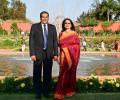
Some of his directives had the Supreme Court judges disclose their assets whereas the row over the discovery of cash from a sitting judge's official residence paved way for inquiry.

The Supreme Court has directed a Maharashtra authority to respond to a man's plea for initiating contempt action against it after his properties were demolished for allegedly raising anti-India slogans during a cricket match. The petitioner, who hails from Sindhudurg district in the state, claims his house and shop were demolished on February 24 following an FIR against him, his wife, and his 14-year-old son for allegedly raising anti-India slogans during the India-Pakistan Champions Trophy match. The plea argues that the demolition violated the Supreme Court's November 13, 2024 verdict on demolition of properties, which barred demolition without a prior showcause notice and 15 days' time for the aggrieved party to respond. The petitioner seeks directions for initiating contempt proceedings against the chief officer and administrator of the Malvan Municipal Council.

President Droupadi Murmu has exercised powers under Article 143(1) used in rarity to know from the Supreme Court whether timelines could be imposed by judicial orders for exercise of discretion by President while dealing with the bills passed by state assemblies.

Legal experts had deplored the observation of the Allahabad high xourt on what constitutes a rape charge, calling for a restraint by judges and underlining the drop in public confidence in the judiciary due to such statements.

The Chief Justice of India (CJI) Sanjiv Khanna has assured bar leaders that he will consider their demand for withdrawal of the collegium's recommendation to transfer Delhi High Court's Justice Yashwant Varma. The decision came after representatives of six bar associations of different high courts met with the CJI and other collegium members. The bar associations are protesting the proposed repatriation of Justice Varma to his parent high court, alleging that the evidence in a fire incident at his residence was tampered with. The bar associations have also raised concerns about the non-registration of an FIR in the incident.
A bench of Justices B R Gavai and Augustine George Masih issued notices to the Centre and others seeking their responses on a plea filed by the Delhi government against the December 24 2024 direction of the Delhi high court.

The trial incineration of 10 tonnes of waste from the Union Carbide plant in Bhopal, responsible for the 1984 gas tragedy, began on Friday afternoon in Pithampur, Madhya Pradesh. The process, ordered by the Madhya Pradesh High Court, is expected to take 72 hours to complete. The waste includes soil, reactor residues, pesticide residues, and other materials. The State Pollution Control Board says the chemicals in the waste have become "almost negligible" and there is no presence of methyl isocyanate gas. The incineration process is being monitored by the Pollution Control Board and broadcast live.

The first round of trial incineration of 10 tonnes of waste connected to the 1984 Bhopal Gas Tragedy has begun in Pithampur, Madhya Pradesh, amid tight security. The Supreme Court refused to intervene in the MP High Court's order directing the transfer and disposal of waste at a private company-operated plant in Pithampur. The trial incineration is being conducted in the presence of scientists from the central and state pollution control boards. Protesters have expressed apprehensions about harm to the human population and environment due to the disposal of this waste, but the state government has rejected these concerns, saying that solid arrangements are in place for safe disposal.
The Supreme Court of India has directed Uttar Pradesh authorities to respond to contempt proceedings for allegedly razing a portion of a mosque in Kushinagar, defying a previous court order. The court has also ordered a halt to any further demolition of the structure. The demolition was carried out despite a November 2024 Supreme Court ruling that barred demolition without a prior show cause notice and a 15-day response period. The petitioners allege the demolition was carried out in violation of legal process and the Supreme Court's guidelines, as well as without providing an opportunity for a hearing.

The Supreme Court of India has directed the President to consider the mercy petition of Balwant Singh Rajoana, a death row convict in the 1995 assassination case of former Punjab Chief Minister Beant Singh. The court gave the President two weeks to decide on the plea. Rajoana was sentenced to death in July 2007 for his role in the bombing that killed Beant Singh and 16 others. The Shiromani Gurdwara Parbandhak Committee (SGPC) filed a mercy petition on his behalf in 2012.

'Digital courts will alleviate congestion in traditional courts.'

The Supreme Court of India has dismissed a plea seeking directions to states to take immediate action against mob lynching and cow vigilantism, particularly against Muslims. The court stated that it was not feasible to "micro-manage" such incidents from Delhi and referred to its 2018 verdict, which issued guidelines to address mob violence and cow vigilantism. The court also noted that the new Bharatiya Nyaya Sanhita (BNS) criminalizes mob lynching as a separate offence. The plea argued that there was "gross non-compliance" with the 2018 directions, but the court maintained that authorities were bound by its previous rulings.
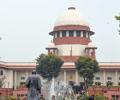
Swamy Shraddananda, jailed for 30 years for killing his wife, has moved the Supreme Court seeking authorities to decide his mercy plea before the President in December, 2023.

A five-judge bench of the Supreme Court will consider review pleas challenging the October 2023 verdict that declined legal sanction to same-sex marriage. The review pleas will be heard in chambers on January 9, with Justice P S Narasimha being the only member of the original bench that delivered the verdict.
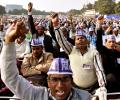
The Union Cabinet, at a meeting chaired by Prime Minister Narendra Modi, held a detailed discussion on the Supreme Court judgement on the sub-categorisation of reservation for SCs and STs as granted in the Constitution.

Equating 'bulldozer justice' with a lawless state of affairs where might is right, the Supreme Court on Wednesday laid down pan-India guidelines and said no property should be demolished without a prior show cause notice and the affected must be given 15 days to respond.
The Supreme Court on Thursday dismissed a batch of pleas seeking to review its October 2023 verdict declining legal sanction to same-sex marriage.
The Supreme Court on Friday junked a public interest litigation (PIL) seeking a Central Bureau of Investigation (CBI) probe into alleged use of animal fat in making Tirupati laddus under the previous Y S Jagan Mohan Reddy-led regime.

A bench comprising Justices BR Gavai and KV Viswanathan warned the probe agency and remarked it had moved a "frivolous petition" only because one of the accused was a high-profile person.
The Supreme Court on Tuesday admonished the Gujarat Police over its officials publicly flogging five people belonging to the Muslim community at a village in Kheda district in 2022, asking angrily from where did they draw the authority to tie people to poles and beat them up.

The Supreme Court on Thursday refused to entertain a plea alleging contempt of its order on demolition of properties by the authorities in Uttarakhand, Rajasthan and Uttar Pradesh.

In a significant verdict, the Supreme Court on Tuesday upheld the validity of land acquisition for the integrated development of the Yamuna Expressway and its adjoining areas in Gautam Budh Nagar, Uttar Pradesh.
While agreeing to hear his petition on September 27 last year, the top court stayed the proceeding against Murugan that was pending in a special court in Chennai.

In a jolt to telecom firms, the Supreme Court has dismissed a batch of pleas filed by companies, including Vodafone Idea and Bharti Airtel, seeking correction of alleged errors in the Adjusted Gross Revenue. A bench comprising Chief Justice D Y Chandrachud and Justices Sanjiv Khanna and B R Gavai also rejected the plea of telcos seeking to list the curative petitions for open court hearing.

The apex court said when a particular structure is chosen all of a sudden for demolition and the rest of similarly situated structures in the same vicinity are not even being touched, "mala fide may loom large".

The bench said it would be a travesty of justice to relegate Sisodia to the trial court for seeking bail in these cases.
