
'War is not an answer. War is not a solution.' 'Deterrence is a solution. We should have the stick with us with which we can beat Pakistan.'
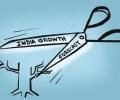
India's real GDP growth will decline marginally to 6.3 per cent in 2024 from the 6.4 per cent estimated for 2023, an American brokerage firm said on Monday. The next calendar year will be of two halves, wherein the government spending before the upcoming General Elections will be the key driver for growth, while after the elections, it will be the re-acceleration in investment growth, especially from the private sector, Goldman Sachs said in a report. From a fiscal year perspective, the brokerage said it expects growth to accelerate to 6.5 per cent for FY25 from the 6.2 per cent it has projected for the ongoing FY24, it added.
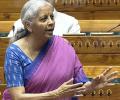
The Lok Sabha on Tuesday passed the Finance Bill 2025, along with 35 government amendments, including one that abolishes a 6 per cent digital tax on online advertisements.

'Militarily, it risks escalating tensions with Pakistan, potentially triggering conflict due to Pakistan's heavy reliance on the Indus.'
Fitch Ratings on Monday said India's steady GDP growth outlook, improved banking sector's financial health and expected interest-rate cuts in 2025 will support credit access for corporates in FY26.

India's largest IT services firm Tata Consultancy Services on Thursday reported a 1.68 per cent dip in its consolidated net profit to Rs 12,224 crore for the March 2025 quarter. Tata Consultancy Services (TCS) - whose earnings marked the official start of IT results season - reported a total revenue of Rs 64,479 crore in Q4 FY25, up 5.3 per cent over the year-ago period.

The Indian economy is projected to grow at 6.2 per cent in 2025-26, slower than earlier estimated rate of 6.5 per cent, due to escalated trade tensions and global uncertainty, the International Monetary Fund (IMF) said on Tuesday. "For India, the growth outlook is relatively more stable at 6.2 per cent in 2025, supported by private consumption, particularly in rural areas," IMF said in its World Economic Outlook (WEO).

Investors would track a host of macroeconomic data announcements scheduled this week, including inflation numbers, and also monitor global market trends, and trading activity of foreign institutional investors, analysts said. The ongoing quarterly earnings announcements and the rupee-dollar trend would also influence the markets.

India Inc's net profit as a percentage of the country's gross domestic product (GDP) is just shy of reaching 5 per cent, bolstered by strong earnings growth in the second quarter of 2023-24. Analysts interpret this as an indication that a corporate profit upcycle is in progress, with projections suggesting that this share could exceed 8 per cent within the next five years, driven by bullish earnings growth expectations. "We believe we are only halfway through a profit cycle, with the profit share in GDP rising from a low of 2 per cent in 2020 to about 5 per cent currently, and likely heading to 8 per cent in the coming four to five years. "This implies about 20 per cent compounding of earnings growth. "Underscoring this forecast is the start of a new private capex cycle, under-geared balance sheets, a healthy banking system, lower corporate tax rates, improving terms of trade, and structural consumption demand outlook albeit somewhat offset by likely consolidation in government deficit," said Ridham Desai, managing director, head of research, Morgan Stanley India in a note.

The Centre's fiscal deficit at the end of the eighth month of financial year 2024-25 touched 52.5 per cent of the full-year target, government data showed on Tuesday. In absolute terms, the fiscal deficit -- the gap between the government's expenditure and revenue -- was about Rs 8.47 lakh crore during the April-November period, according to the data released by the Controller General of Accounts (CGA).

One fact is irrefutable: Nepal's recent political history tells us that the route to a return of monarchy cannot go through India despite friends in high places, asserts Aditi Phadnis.

'The finance minister has done as much as she can when you look into the fiscal constraints she had.'

'The bull market cycle ran for five years. It's the end of that cycle.' 'The next cycle is a down cycle, and in that down cycle, you will see the Sensex falling from their highs of around 68,000 to maybe 40,000-50,000 at the bottom of the cycle.'

The Indian economy will grow at around 6.5 per cent in the current fiscal, notwithstanding high crude oil prices and increased uncertainty due climate changes, NITI Aayog member Arvind Virmani said on Thursday. Virmani also asserted that the gross household savings ratio in India has consistently gone up. In an interview with PTI, he said: "My growth projection (of India's GDP growth) is 6.5 per cent plus minus 0.5 per cent... because my experience is that the fluctuations in global GDP more or less has balanced out for us, assuming normal changes."

The Indian economy is recovering from the slowdown in momentum witnessed in the September quarter, driven by strong festival activity and a sustained upswing in rural demand, according to a Reserve Bank of India (RBI) bulletin released on Tuesday. An article on the 'State of the Economy' in the December bulletin noted that the global economy continues to exhibit resilience with steady growth and moderating inflation.

States are mandated to develop and implement 'heat HAPs' for prevention of heat-induced diseases. But most do not go beyond standard advisory on heat prevention.
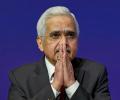
The highlights of RBI's bi-monthly monetary policy announced by Governor Shaktikanta Das:

Despite gross domestic product (GDP) growth being lower-than-expected for the July-September quarter, the six-member Monetary Policy Committee (MPC) may not cut the policy repo rate in the review meeting scheduled for next week due to high inflation in October, according to experts. "Consumer Price Index (CPI) inflation breaching the upper limit of the RBI's tolerance band in October (6.2 per cent year-on-year) is not a favourable backdrop for the MPC to commence the easing cycle, even as the growth outcome disappointed the MPC's expectations," said Shreya Sodhani, regional economist at Barclays, who expects the policy repo rate to be kept unchanged in the December meeting.

In response to the panic triggered by Trump's trade policies, the RBI net sold approximately $43 billion in the second half of FY25 to curb volatility, as the rupee plunged to a low of 87.95 per dollar in February this year.

Neither the BJP, nor the Congress before it, made any manifesto commitments on defence spending, even though allocations have plummeted from 4 per cent of gross domestic product (GDP) in the late 1980s to less than 2 per cent today, points out Ajai Shukla.

In an eventful week ahead, stock markets may face volatile trends before the RBI's interest rate decision and the US inflation data announcements, as investors continue to assess the broader implications of US tariffs on global economy and inflation, analysts said. Investors fear that a full-blown trade war will impact global trade and economic growth, according to market experts.

India's economic growth prospects should remain strong over the medium term, with GDP expanding 6-7.1 per cent annually in fiscal years 2024-2026, S&P Global Ratings said on Thursday. In a report titled 'Global Banks Country-By-Country Outlook 2024', S&P said the banking sector's weak loans will decline to 3-3.5 per cent of gross advances by March 31, 2025, on the back of structural improvement, including healthy corporate balance sheets, tighter underwriting standards and improved risk-management practices. Interest rates in India are unlikely to rise materially, and this should limit the risk for the banking industry, it added.

While the capital spending is being maintained at 3.1 per cent of the GDP, a little more would have boosted economic growth even further, suggests Rajiv Memani.

The paper said that the taxation proposal needs to be accompanied by explicit redistributive policies to support the poor, lower castes, and middle classes.

The government's indirect tax collection is expected to increase by 8.3 pc in the financial year 2025-26 (FY26), according to a report by ICICI Bank. The report also noted that this growth is higher than the 7.1 per cent increase seen in FY25 and is mainly driven by rise in GST revenue from strong urban consumption. It said "The increase is driven by higher goods and services tax collections which in-turn is explained by boost to urban consumption".

The Reserve Bank of India (RBI) on Friday cut the repo rate by 25 basis points to 6.25 percent, marking the first reduction in five years. The central bank also projected GDP growth for fiscal year 2026 at 6.7 percent and inflation to come down to 4.2 percent in FY26 from 4.8 percent in FY25. The RBI said the global economic backdrop remains challenging but the Indian economy continues to remain strong and resilient.

Samajwadi Party MLA Abu Asim Azmi, suspended from the Maharashtra assembly over his remarks praising Mughal emperor Aurangzeb, will be '100 per cent' put in jail, Chief Minister Minister Devendra Fadnavis said in the legislative council.

'If the US stagnates and falls into a recession, the dollar will weaken, oil prices will also dip. This augurs well for India.'

India needs another shot of difficult reform, of the kind only possible at gunpoint. Mr Trump holds that gun to our heads now. A drastic reduction in tariff protection, other elements of sarkari wet-nursing will force entrepreneurial India to become competitive again, argues Shekhar Gupta.

Global trends, trading activity of foreign investors and news flow on tariffs are expected to influence movement in the equity market in a holiday-shortened week ahead, analysts said. Equity markets would remain closed on Wednesday for 'Mahashivratri'.

Trump may temper his approach from time to time, but to think that he will change his basic philosophy is delusional, asserts T T Ram Mohan.
India's GDP growth rate will rise to 7 per cent by 2026 compared to 4.6 per cent for China, S&P Global Ratings said on Tuesday. In a report titled 'China Slows India Grows', S&P said it expects Asia-Pacific's growth engine to shift from China to South and Southeast Asia. "We project China's GDP growth to slow to 4.6 per cent in 2024 (2023: 5.4 per cent), edge up to 4.8 per cent in 2025, and return to 4.6 per cent in 2026.

The government resolution does not spell out what action would be taken, if any, against those writing and publishing 'negative' news. Nor does it define 'negative news and "misinformation', explains Jyoti Punwani.

Prime Minister Narendra Modi has emphasized dialogue over discord in India's relationship with China, acknowledging natural differences between the two countries but stressing that stronger cooperation is essential for their mutual interests and global stability. In a podcast with Lex Fridman, Modi highlighted the ongoing efforts to restore normalcy along the border following the 2020 clashes, emphasizing the importance of a stable and cooperative relationship.

Samajwadi Party MLA Abu Asim Azmi was on Wednesday suspended from the Maharashtra legislative assembly till the ongoing budget session ends on March 26, over his remarks eulogizing Mughal emperor Aurangzeb.

Retail inflation dipped marginally to a nearly six-year low of 3.34 per cent in March due to a decline in prices of vegetables and protein-rich items. The Consumer Price Index (CPI) based inflation was 3.61 per cent in February and 4.85 per cent in March last year.

Samajwadi Party MLA Abu Asim Azmi's remarks praising Mughal emperor Aurangzeb sparked outrage in the Maharashtra legislature, leading to calls for his suspension and accusations of treason. The issue, which was politicized by both the ruling coalition and opposition parties, led to the adjournment of both Houses of the state legislature. Azmi later retracted his statements, saying they were twisted and that he had not made any derogatory remarks against Shivaji Maharaj or Sambhaji Maharaj. The BJP, however, seized the opportunity to slam the Congress and other opposition parties, accusing them of trying to "eradicate" Sanatan Dharma. The Mumbai police have initiated a probe into the matter, registering a case against Azmi for his remarks.

India's manufacturing sector growth fell to a 14-month low in February amid softer increase in new orders and production, a monthly survey said on Monday. The seasonally adjusted HSBC India Manufacturing Purchasing Managers' Index (PMI) registered 56.3 in February, down from 57.7 in January, but remained firmly within the 'expansionary' territory. In PMI parlance, a print above 50 means expansion, while a score below 50 denotes contraction.

'Not paying workers enough will end up being self-destructive or harmful for the corporate sector itself.'
 © 2026 Rediff.com - Advertise with us - Disclaimer - Privacy Policy - Sitemap - Feedback - About us - Terms of use - Grievances