
In the mid-1990s, when the shares of listed companies first began to be held in electronic form, they accounted for less than 1 per cent of the stocks bought and sold on the stock exchanges. This climbed to 99.5 per cent by 2001.

The Securities and Exchange Board of India (Sebi) has granted a no-objection certificate (NOC) to the National Stock Exchange of India (NSE), paving the way for the country's biggest exchange - currently valued at 5 trillion in the unlisted market - to file draft documents for its long-awaited initial public offering (IPO).

Two-wheeler exports from India fell by 17.8 per cent to 3.65 million units in 2022-23 (FY23), according to data released by the Society of Indian Automobile Manufacturers (Siam) on Thursday. This decline is due to a rise in global inflation and the weakening of economies and currencies in key export markets of Africa, Latin America (LatAm), and South Asia. In contrast to FY23, two-wheeler exports from India jumped 35.4 per cent to 4.44 million units in 2021-22 (FY22).

Maharashtra has pipped Tamil Nadu in NITI Aayog's latest Export Preparedness Index (EPI) for 2024. While Gujarat, Uttar Pradesh and Andhra Pradesh gained ground, Karnataka and Haryana slipped out of the top five, the central government think tank said in its report released on Wednesday.

Tata Consultancy Services (TCS), the group's biggest cash generator, overtook Vedanta to become the highest dividend payer in India in FY23. The IT services major paid Rs 42,090 crore for FY23, up 167.4 per cent from Rs 15,738 crore for FY22. The 10 biggest payers together shelled out Rs 2.06 trillion for FY23, more than double the Rs 98,371 crore for FY22.

Corporate India's net profit as a percentage of gross domestic product (GDP) dipped in the 2022-23 financial year (FY23) -- after rebounding sharply in FY22 -- amid a decline in global commodity prices. Top 500 companies' combined net profit stood at 4.1 per cent of the GDP for FY23, down from 4.3 per cent in the previous financial year when it had gone up from just 3.5 per cent in FY21. "The year-on-year (YoY) decline was led by global commodities, which contributed adversely to the ratio, while the financial sector contributed positively.

As India's biggest Unified Payments Interface (UPI) app PhonePe prepares to list, the updated draft red herring prospectus (DRHP) shows the impact of regulations on the business, and concentration of payments-linked revenue even as UPI lacks MDR (merchant discount rate).

'In FY23, PV sales are expected to end the year at a record 3.8 million units, up 26 per cent. In FY24, however, the industry is expecting 5-7 per cent volume growth'

Tata Motors, Mahindra & Mahindra and Kia India on the other hand witnessed an increase in their market share based on the retail sales last fiscal. As per the Federation of Automobile Dealers Associations (FADA), the retail sales of country's largest carmaker Maruti Suzuki India rose to 14,79,221 units in 2022-23 fiscal, attaining a market share of 40.86 per cent. It had retailed 12,39,688 units in 2021-22 and grabbed a market share of 42.13 per cent.

The government is set to earn an equity dividend of nearly Rs 13,800 crore from the listed public-sector banks (PSBs), all 12 of them, for FY23, up 50 per cent from Rs 9,210 crore in FY22. This will be the highest ever dividend for the government from PSBs. The 12 PSBs in our sample are paying an equity dividend of nearly Rs 21,000 crore for FY23, up 53 per cent from Rs 13,710 crore for FY22.

Thanks to a big payout by the group's cash cow, Tata Consultancy Services (TCS), Tata Sons is set to earn a record-high equity dividend worth nearly Rs 33,350 crore from the group's listed companies for FY23, up 130 per cent from Rs 14,529 crore in FY22. Nearly 90 per cent of this, or around Rs 30,500 crore, is estimated to accrue to Tata Sons while the rest will show up in its profit & loss account for FY24. This is because nearly 80 per cent of the dividend payout by TCS for FY23 was done before the end of the financial year through three quarterly interim instalments and a special one in January this year.
The earnings of India Inc hit a record high in the 2022-23 (FY23) January-March quarter (fourth quarter, or Q4), compared with their poor showing in the previous two quarters of the financial year. The rise in earnings, however, is exclusively led by banking, financial services, and insurance (BFSI) companies. A better-than-expected showing by banks and non-bank lenders in Q4FY23 more than compensated for the earnings contraction in the non-BFSI space.

Tier-II, Tier-III, and rural regions accounted for 62 per cent of all new health insurance policies sold by insurers so far in 2025-26 (FY26), according to a Policybazaar report. These regions are also witnessing a rise in the sum assured opted by customers.

Recent years have been turbulent for the insurance industry due to direct and indirect tax reforms, regulatory overhaul and other external pressures. The events cumulatively slowed growth rate to single digits from the high teens seen earlier.

This is despite the fact that total FDI into India has fallen by 22 per cent from $58 billion in FY22 to $46 billion in FY23, according to the Reserve Bank of India.

Market concentration in the country's telecom sector continues to scale new heights despite government bailouts of public-sector Bharat Sanchar Nigam Ltd (BSNL) and Mahanagar Telephone Nigam Ltd (MTNL), and private-sector Vodafone Idea. The combined revenue (or net sales) share of the country's top two telecom operators - Bharti Airtel and Reliance Jio - in the sector's total reached an all-time high of nearly 72 per cent in FY23 from 70.4 per cent in FY22 and around 60 per cent in FY20. The net sales of Reliance Jio and Bharti Airtel India were Rs 1.67 trillion in FY23, up 18.6 per cent from the Rs 1.4 trillion a year earlier.

At a time when the finance ministry is focusing on addressing employee grievances, the number of employees in most public-sector banks (PSBs) has declined over the last three financial years.

Coforge's planned $2.35 billion all-stock acquisition of US-based Encora has divided the Street, with a few brokerages terming it a "strategically positive" but execution-heavy bet while others raising valuation concerns.

Mutual funds (MFs) invested a record Rs 1.73 trillion in equities in the financial year 2022-23 (FY23), providing strong support to the Indian markets at a time when foreign investors were redeeming their holdings. They exceeded the previous high of nearly Rs 1.72 trillion investment in equities in FY22. The data from the Securities and Exchange Board of India (Sebi) shows MFs were net buyers in the equity market in eleven of the twelve months last financial year.

The power sector presents a puzzle. A fast-growing economy should be aligned to higher power demand but that hasn't been the case in the financial year 2026 till date (FY26TD).

After completion of its mandatory tender offer in Fortis Healthcare and Fortis Malar Hospitals, Malaysian health care giant IHH Healthcare is aiming to add 2,000 beds in a bid to double down on value creation in India. IHH, which is Asia's largest multinational private healthcare provider, currently has over 5,000 beds across a combined network of 35 hospitals and 11 states.

The Centre is staring at a combined shortfall of up to Rs 1 trillion in excise and Customs revenues in the current financial year (FY23) compared to the Budget estimates (BE), mainly because of duty cuts on edible oil and petroleum products. The government set a target of Rs 3.35 trillion for excise and Rs 2.13 trillion for Customs mop-up for FY23 while presenting the Budget in February. "As excise duty collection is mainly driven by diesel volumes, we might see a clear gap in the level budgeted for FY23, following the reduction in cesses on petrol and diesel in May. We are expecting somewhere between Rs 80,000 crore and Rs 1 trillion dip in excise and customs duty collections," a senior government official told Business Standard.

Outward remittances under the Reserve Bank of India's (RBI's) liberalised remittance scheme (LRS) made a strong comeback in the first quarter of FY23 as Indians increased spending on international travel, maintenance of close relatives, and gifts. The latest data for Q1FY23 released by the RBI shows that remittance by Indians under the scheme jumped 64.75 per cent to over $6.04 billion from $3.67 billion in Q1FY22. The amount remitted in Q1FY23 is even higher than that in Q4FY22, where outward remittance under LRS was to the tune of $5.8 billion. In April, about $2.02 billion was remitted, followed by $2.03 billion in May, and $1.98 billion in June, data released by RBI in the August bulletin shows.

Gold burnished its image as the go-to asset class during turbulent times. However, investors seemed to have missed the bus. Net inflows into gold exchange-traded funds (ETFs) plunged to a four-year low of Rs 653 crore in 2022-23 (FY23), even as gold emerged as the top-performing asset class.

The mid-and small-cap segments at the bourses have outperformed their larger peers thus far in fiscal 2023-24 (FY24). While the S&P BSE Small-cap index has surged around 5.7 per cent in FY24, the S&P BSE Midcap index has gained 4 per cent during this period. In comparison, the S&P BSE Sensex has moved up around 2.2 per cent.

Indian carriers transported 12.8 million domestic passengers in March 2023, a year-on-year growth of 21.41 per cent. India's largest carrier IndiGo shored up its domestic market share from 53.8 per cent in Q4 of FY22 to 55.7 per cent in Q4 of FY23, according to the Directorate General of Civil Aviation (DGCA) data released on Monday.

The government may be staring at a modest slippage in fiscal deficit for 2022-23 (FY23), with the Ministry of Finance seeking parliamentary approval for additional spending through a second and final tranche of supplementary demands for grants. On Monday, as the Budget session of Parliament resumed, Finance Minister Nirmala Sitharaman sought Parliament approval for additional gross spending of Rs 2.7 trillion in FY23 (which ends on March 31). While net cash outgo is pegged at Rs 1.48 trillion, the rest will be matched by savings or enhanced receipts, the finance ministry said.

Automotive retail sales saw a 14 per cent rise in March on a year-on-year (YoY) basis, according to data released by the Federation of Automobile Dealers Associations (FADA). For the whole of financial year 2022-23 (FY23), sales grew 21 per cent YoY. For both March and the financial year, all categories, except for tractors, and including two-wheelers, three-wheelers, passenger vehicles (PVs), and commercial vehicles (CVs), posted double-digit growth. However, the total retail sales of 22.1 million for the financial year were still 12 per cent lower than the pre-Covid (FY20) level of 25 million, owing to an 18 per cent dip in the two-wheeler segment.

The information technology services sector will see a sharp fall in revenue growth to 12-13 per cent in FY23 from 19 per cent in FY22, ratings agency Crisil said on Thursday. However, the current depreciation in the rupee, strong demand for new age technologies like artificial intelligence, cloud computing and Internet of Things will help the over $220-billion sector maintain a double digit growth, it said in a report. The moderation from 19 per cent to 12-13 per cent will be the highest in the last eight years, it said and attributed the decline to expected tightening of IT expenditure by corporates amid the inflationary headwinds in the United States and European Union (EU), which together contribute almost 85 per cent to the sector's revenue.

After four failed reform drives, a new plan aims to rescue India's debt-laden power discoms through privatisation, accountability and long-term financial fixes.
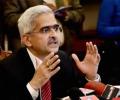
Following are the highlights of the RBI's first monetary policy statement of 2022-23 unveiled by Governor Shaktikanta Das: Policy repo rate unchanged at 4%; marginal standing facility rate & bank rate too remain unchanged at 4.25%. Monetary stance to be accommodative with focus on withdrawal of accommodation to keep inflation within target. GDP growth projection for FY'23 slashed to 7.2% from 7.8%; growth projections based on assumption of crude oil (Indian basket) price at $100 a barrel during FY'23. Inflation forecast hiked to 5.7% for FY'23 from 4.5%.

Each employee is generating more business than before -- driven by cost rationalisation, digital adoption, and better resource utilisation -- signalling a stronger foundation for sustainable growth and profitability.

All nine Adani stocks saw a rise in their share price in H1FY23, ranging from 6.1% in case of Adani Ports to 102% in case of Adani Power.

A string of welfare schemes and promises tests the state's budget, which is already heavily dependent on central support and spends little as capital outlay.

Stocks of the country's bigger tile and ceramic makers were major gainers over the past week. The leaders in this space -- Kajaria Ceramics and Cera Sanitaryware -- were up 7 per cent each. In the past three months, Kajaria Ceramics and Somany Ceramics were up 29-32 per cent, while Cera Sanitaryware gained 22 per cent.

Edtech unicorn PhysicsWallah on Thursday fixed a price band of Rs 103-109 per share for its upcoming initial public offering (IPO), aiming for a valuation of over Rs 31,500 crore at the upper end. The company's Rs 3,480-crore maiden public offering will open on November 11 and conclude on November 13 and anchor investors will be allocated shares on November 10, according to its public announcement.

With revenue growth impacted and uncertainty deepening in major markets, India's second largest IT services firm, Infosys, saw a net reduction in its headcount in the fourth quarter of financial year 2022-23 (Q4FY23). Infosys' workforce saw a net reduction of 3,611 employees, bringing its total headcount to 343,234. This was also the first time in many years that the company did not provide a hiring target for the next fiscal.

The Asian Development Bank (ADB) on Wednesday slashed India's GDP growth forecast for FY23 to 7 per cent from the earlier estimate of 7.2 per cent mainly on account of higher inflation and a tight monetary policy. India's economy grew 13.5 per cent year-on-year in the first quarter of 2022-23, reflecting strong growth in services, ADB said in its second supplement to Asian Development Outlook Report 2022 (ADO 2022). "However, GDP growth is revised down from ADO 2022's forecasts to 7 per cent for FY2022 (ending March 2023) and 7.2 per cent for FY2023 (ending March 2024) as price pressures are expected to adversely impact domestic consumption, and sluggish global demand and elevated oil prices will likely be a drag on net exports," ADB said.

A record amount of pension money may be finding its way into the stock market, if buying figures in the National Stock Exchange (NSE) data are any indication. Category inflows touched Rs 37,409 crore for the three months ending September 2025, shows an analysis of NSE data.

SBI Research has projected the Indian economy to grow at 7.5 per cent in 2022-23, an upward revision of 20 basis points from its earlier estimate. As per official data, the economy grew by 8.7 per cent in FY22, net adding Rs 11.8 lakh crore in the year to Rs 147 lakh crore, the report said, adding this was however only 1.5 per cent higher than the pre-pandemic year of FY20. "Given the high inflation and the subsequent upcoming rate hikes, we believe that real GDP will incrementally increase by Rs 11.1 lakh crore in FY23. "This still translates into a real GDP growth of 7.5 per cent for FY23, up by 20 basis points over our previous forecast," SBI chief economist Soumyakanti Ghosh said in a note on Thursday.
