
This innovation works by stimulating our natural organs so that it can produce and maintain the insulin balance.

High-street rentals continue to outpace those of malls, as retailers focus on prime locations and are willing to pay a premium for visibility. Between 2021 and 2025, rental values on prime high street have grown 7-15 per cent annually, driven by strong consumption density and limited new supply, even outpacing grade A malls, which grew by 5-8 per cent, according to Anarock.

The Adani group, which operates across multiple infrastructure sectors, with 12 listed entities in India and a combined market capitalisation of about $200 billion, remains "anchored by strong assets and robust cash flows", according to a Bank of America (BofA) report.

Non-banking financial company (NBFC) Tata Capital is set to launch its much-anticipated $2 billion (Rs 17,200 crore) initial public offering (IPO) in the week beginning September 22, market sources familiar with the matter said on Sunday. The issue is expected to value the company around $11 billion, they added. Tata Capital is likely to make its stock market debut by September 30.

Fitch Ratings on Thursday slashed India's GDP growth projection for FY23 to 7 per cent, saying the economy is expected to slow against the backdrop of global economy, elevated inflation and high interest rate. In June, it had forecast 7.8 per cent growth for India. "We expect the economy to slow given the global economic backdrop, elevated inflation and tighter monetary policy. "We now expect the economy to grow 7 per cent in the financial year to end-March 2023 (FY23) from 7.8 per cent previously, with FY24 also slowing to 6.7 per cent from 7.4 per cent before," Fitch said in its September edition of the Global Economic Outlook.

The share of low-cost money in total deposits continued to take a knock at the close of FY23 as banks engaged in intense competition by offering higher interest rates on term money to garner funds amid tight liquidity conditions. The share of current accounts and saving accounts (CASA) in total deposits declined by 2-4 per cent by end of March 2023 from March 2022 figure, according to BSE filings by private banks. The ease of movement of funds on digital platforms and the deployment of money by businesses from current accounts also played a role in dwindling the share of CASA money.

'It will support our growth aspirations. It's very positive as it helps expand the market in a segment that really needs it.'

Sales of Mercedes-Benz in the country have jumped by 36.67 per cent to 16,497 units in 2022-23 amid high demand for its top-end vehicles, according to its India MD & CEO Santosh Iyer. "This is the highest-ever sales recorded by the company in any financial year," he stated. In the luxury car segment of India, Mercedes-Benz is the market leader with about a 42 per cent share.

Indian GDP will grow at 8.5 per cent in 2021-22, and the rate will accelerate further to 9.8 per cent in 2022-23, a foreign brokerage said on Tuesday. The GDP had contracted by 7.3 per cent in the pandemic-hit FY21, and is widely expected to grow at a faster pace due to the base effect in 2021-22. The Reserve Bank of India (RBI) expects a 9.5 per cent growth in 2021-22, and the same to slow down to 7.8 per cent as things normalise.
The International Monetary Fund (IMF), in its latest World Economic Outlook report, has slashed its forecast for India's FY23 gross domestic product growth to 8.2 per cent from 9 per cent, saying that higher commodity prices will weigh on private consumption and investment. This was one of the steepest cuts for emerging economies compared to the IMF's January WEO forecasts. Saying that global economic prospects have worsened significantly due to commodity price volatility and disruption of supply chains caused by the war in Europe, IMF cut its global growth outlook for calendar year 2022 to 3.6 per cent from 4.4 per cent, and said both Russia and Ukraine could experience large GDP contractions.

Shiv Nadar and family donated Rs 2,708 crore (Rs 27.08 billion) in 2024-2025.

India has nearly 490 million online gamers, and an estimated Rs 10,000 crore is spent every month on online gaming transactions.

Reliance Industries' refining earnings will remain steady, supported by its position as India's largest importer of Russian crude and favourable global supplies, according to analysts at JM Financial and Goldman Sachs. Reliance imported more Russian barrels than any other Indian refiner in the past eight months, according to data from Bloomberg/Kpler.

American brokerage firm Morgan Stanley on Thursday sharply cut its India FY23 real GDP growth estimate to 7.9 per cent, mainly due to the impact of the Russia-Ukraine conflict on oil prices. Analysts at the brokerage also raised their inflation forecast to 6 per cent - the upper end of the tolerance band for the RBI - and flagged stagflation risks because of the ongoing events. "We believe that the ongoing geopolitical tensions exacerbate external risks and impart a stagflationary impulse to the economy," they said. It can be noted that stagflation involves a stagnancy in output or growth, coupled with high inflation.

While commercial vehicles are expected to benefit from strong replacement demand, the two-wheeler and tractor segments are expected to gain from a recovery in the rural economy.

'The frenzy for gold is primarily due to the uncertainty surrounding the tariff war.'

Australia increased its student visa application fee from 1,600 to 2,000 Australian dollars. This is now the highest such visa fee in the world.

The Parliamentary Standing Committee on Commerce has observed that a massive shortfall in the budgetary allocation of over Rs 1,900 crore by the finance ministry to the industry department may have an adverse impact on the implementation of infrastructure (infra) projects in 2022-23 (FY23). While the Department for Promotion of Industry and Internal Trade (DPIIT) had sought Rs 10,267 crore from the finance ministry for FY23, it received Rs 8,348-crore allocation. For the National Industrial Corridor Development & Implementation Trust (NICDIT), the finance ministry has allocated Rs 1,500 crore instead of Rs 2,400 crore demanded for the project.

A quick look at the Q1FY23 performance of top-tier IT services players shows that they are still far away from getting a grip on managing attrition. Talent retention has eroded not only their margins but also any gains they may have made from rupee depreciation. Despite robust growth numbers and strong deal pipelines, margins for all the players -- TCS, Infosys, HCL Technologies and Wipro -- have continued to shrink at a pace that has had the street surprised.

Maruti Suzuki, Hyundai and Tata Motors reported their highest-ever dispatches to dealers last fiscal, enabling the domestic passenger vehicle industry to log in best-ever performance to date. The country's largest carmaker Maruti Suzuki India reported its highest wholesales to date at 19,66,164 units, up 19 per cent from 16,52,653 units in 2021-22. Its domestic dispatches rose to 17,06,831 units in 2022-23, up 21 per cent from 14,14,277 units in 2021-22 fiscal.Hyundai Motor India said its overall wholesales last fiscal were the highest ever since commencing operations in the country.
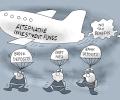
Alternative investment funds (AIFs) - pooled investment vehicles catering to high net worth individuals (HNIs) - saw a 30 per cent increase in investment commitments during financial year 2022-23 (FY23). At the end of March 2023, the total investment commitments raised stood at Rs 8.33 trillion, up Rs 1.92 trillion from Rs 6.41 trillion at the end of March 2022. A commitment is the money clients are willing to put into AIFs.

Tata Sons, now debt-free, has asked the RBI to drop its 'upper-layer NBFC' tag and allow it to stay private.

A student allegedly threatened a PhysicsWallah teacher with a slipper during an online class in 2023 -- one of the several safety-related incidents revealed by the edtech unicorn in its updated draft papers filed ahead of its initial public offering (IPO).

Passenger vehicle sales in India could hit a record of over 38 lakh units in FY23 but the strong growth momentum is not expected to carry over to 2023-24 with pent-up demand already been released, according to Tata Motors Passenger Vehicles managing director Shailesh Chandra.

Indian Institute of Technology Madras (IIT Madras) said on Monday that it had raised the highest-ever corpus of annual funds for the institution, garnering Rs 231 crore from alumni, industry and individual donors for 2022-23 (FY23). Its funding increased 76 per cent year-on-year (YoY) compared to Rs 131 crore in FY22, according to data shared by the institute. The number of donors contributing more than Rs 1 crore increased 64 per cent YoY.

Singapore's state investor Temasek Holdings, which recently picked up 10 per cent stake in Haldiram, has been consistently expanding its footprint in India while slowly withdrawing from China over the last three years amid growing geopolitical risks and economic headwinds. India has become Temasek's third-largest market, after Singapore (27 per cent) and China (18 per cent), with its exposure to the country higher than the rest of Asia Pacific excluding the three (11 per cent), according to Temasek's annual review.

India's economy grew 6.1 per cent in the fourth quarter of 2022-23, pushing up the annual growth rate to 7.2 per cent, official data showed on Wednesday.

'We remain positive on technology, private sector financials, gas, infrastructure, and export-oriented plays.'

Between FY09 and FY25, 101 IAF fighter jets have crashed, costing the lives of 28 pilots.

The ratio of MF assets under management to total bank deposits has more than doubled in 10 years.

India's GDP is estimated to grow at 7.4 per cent in the financial year 2022-23 with rising prices triggered by the Russia-Ukraine conflict posing as the biggest challenge to the global economic recovery, Ficci's Economic Outlook Survey released on Sunday said. According to the survey, the Reserve Bank of India (RBI) is likely to start a rate hike cycle in the second half of 2022, while a repo rate hike of 50-75 bps is expected by the end of the current fiscal. The RBI is expected to continue supporting the ongoing economic recovery by keeping the repo rate unchanged in its April policy review, the survey said.

After withdrawing record funds in 2021-22, foreign portfolio investors (FPIs) continued their sell-off in the last fiscal too and pulled out Rs 37,631 crore from Indian equities amid aggressive rate hikes by central banks globally. The outflow trend is likely to reverse in the current financial year since India has the best growth potential in the financial year 2023-24 (FY24), VK Vijayakumar, chief investment strategist at Geojit Financial Services, said. Market analysts believe that FPI flows in the current financial year would be decided by a host of factors, such as the US Federal Reserve's policy stance, oil prices movement and development in the geopolitical situation.

The exit of Larsen & Toubro (L&T) from the Hyderabad Metro is a long-term positive for the stock. It could be a bullish trigger, alongside higher international orders, and new opportunities in segments like defence and data centres.

Finance Minister Nirmala Sitharaman on Thursday asked India Inc to take advantage of the policies and reforms undertaken by the government and no longer hesitate to invest more and expand capacities. Sitharaman also asked the industry to partner with the government for skilling the youth and also to engage with the government throughout the year, and not just before the Budget.

'High taxes have kept away art collectors who will now embrace the new GST.'

State-owned oil firms such as ONGC and IOC will invest over Rs 1.11 lakh crore in the next fiscal year starting April as they supplement the government's massive spending programme to spur economic growth. Oil and Natural Gas Corporation (ONGC), Indian Oil Corporation (IOC), GAIL (India) Ltd, Bharat Petroleum Corporation Ltd (BPCL), Hindustan Petroleum Corporation Ltd (HPCL) and Oil India Ltd (OIL) will together make a 7.4 per cent higher capital expenditure in the 2022-23 fiscal (FY23). The capex spending of Rs 1.11 lakh crore in 2022-23 compares with a revised estimate of Rs 1.04 lakh crore for the current fiscal year that ends in March, according to Union budget documents.

IndiGo, which operates the largest fleet among Indian carriers, has reported the highest number of serious engine-related incidents.

Co-working spaces provider WeWork India is aiming for a revenue growth of over 20 per cent for the coming years, even as its initial public offering (IPO) with only an offer for sale (OFS) component gets valued at Rs 3,000 crore at the top of the price band. The IPO opens on October 3, a newspaper advertisement said.
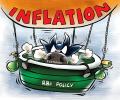
The RBI on Friday retained inflation forecast for FY23 at 6.7 per cent amid uncertain price trajectory on "geopolitical shocks" and on hope that inflationary pressures would ease with pick-up in kharif sowing and supply chain improvements. In its previous monetary policy review in June, it had projected retail inflation for 2022-23 at 6.7 per cent, higher from 5.7 per cent forecast in April. The six-member Monetary Policy Committee (MPC) unanimously decided to raise the benchmark repo rate by a steep 50 basis points to 5.40 per cent with immediate effect to tame inflation while supporting growth.

Private sector ICICI Bank on Friday said its board has approved additional 2 per cent increase stake in its asset management arm ICICI Prudential Asset Management Company. The board of the bank on Friday approved purchase of up to 2 per cent additional shareholding in the ICICI Prudential Asset Management Company, ICICI Bank said in a regulatory filing.
