
Under its Turnaround 2.0 programme, Tata Motors will work to improve its sales capabilities -- "as the product itself is not enough" -- use experiential marketing to excite the market and cut costs to make its offerings more competitive.

Analysis of the 7th Pay Commission's recommendations.

After a spectacular show in 2016, Kwid's sales have contracted by 20 per cent during the April-December period of FY18 to 65,572 units.

Its trajectory in telecom is well known but now it is pushing for a similar leap into the ranks of the top players in its other businesses: media and entertainment, e-commerce, a series of online businesses ranging from health to education, and retail.

JLR, the maker of Jaguar F-Type and Range Rover Evoque, was a jewel in the crown of Tata Motors till two years back. But, it has been struggling because of the pending Brexit, a sharp contraction in sales in China, a shift in consumer preference from diesel to gasoline in Europe, higher taxes on diesel vehicles, and tightening regulations.
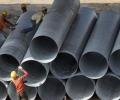
A bleak demand outlook for steel in the domestic as well as global market is also another reason Tata Steel may be looking to have additional liquidity as margins are expected to take a hit in the coming quarters.

Banks lend 60,000 cr in 8 weeks since Nov 8; Y-o-Y credit expansion slows further.

'We have seen a host of businesses across sectors generate economic value and wealth for investors.'

In the aftermath of the PMC Bank mess which was in the RBI's highest rating of 'A' category, trustworthiness of these ratings may be up for a review.

Banks in India are expected to cut lending rates by up to 50 basis points by September as there is sufficient liquidity in the system.

Demonetisation impact, earnings growth, central bank policies will get attention.

A vast majority of borrowers are in the essential services' supply chain with tiny and micro businesses, and this has sprung back.

IDS-2 and raids to uncover black money stash keep receipts flowing

Demonetisation, Donald Trump's surprise victory in the US presidential elections, and the fear that US Fed may hike rates in the upcoming policy review in December have dented market sentiments, report Puneet Wadhwa & Deepak Korgaonkar.
The government has managed Rs 21,000 crore through stake sales and buybacks in the first six months, the highest-ever first half divestment revenue for any year by a good margin, raising expectations for the rest of FY17.

The combined share of customs and excise duties, service tax, and value-added tax in India's gross domestic product reached an all-time high of 10.5%.

The change in policy for the three companies, from listing to merger, shows the level of discomfort within the government about their ability to take on the expanded load for insurance coverage with their current financial strength, including the massive premium and claim settlement cover under the proposed universal health coverage plan announced in Budget 2018.

The industry expects Iran to purchase at least 1 million tonnes this financial year

Enfield enjoys almost the entire 250-350 cc motorcycle market in country

'Over the next two to three years, hiring will come down further.' 'You will see the industry intake of freshers go down to 150,000 from the current 200,000.'

GNPAs of public sector banks are now at a staggering 11.2 per cent of their advances.

The biggest spender was Tata Motors, with Rs 4,224.6 crore assigned under the R&D head.

Giants like Pepsi and Coke are fast losing shelf-space to healthier, functional options.

Tata Steel's domestic operations have been its cash cow.

The report, however, said a sustained weakness in USD against the emerging market forex remains a key risk to this view.

'We believe 2017 could see higher flows from foreign institutions as money comes back to growth markets like India.'

With inflation down, the government's twin deficits are largely under control.

The global demand recovery is likely to stay sluggish.

Infosys, however, cut 2017-18 revenue growth guidance to 5.5-6.5 per cent from 6.5-8.5 per cent in constant currency.
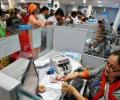
On a sequential basis, banks have had to set aside a substantial amount for bad loans, up 30 per cent from Rs 3,459 crore in the June quarter to Rs 4,508 crore.

The market capitalisation of BSE-listed companies surged to Rs 98,11,322 crore.

Loss takes analysts by surprise, as they were expecting the bank to post a net profit of Rs 19 billion.
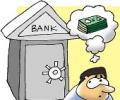
RBI's draft guidelines on computation of base rate, if implemented in its current form, will significantly impact the profitability of banks.
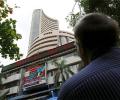
The positive bias was aided by metal, realty and auto indices

Lower cost and easier termination may well be among the reasons that companies seek to have employees on contract. The share of employees on contract has increased to 57.3 per cent of the total workforce this year as compared to 53.7 per cent in the previous year.
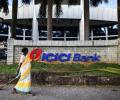
Consensus continues to be cautious with analysts pointing towards tougher days ahead

Prices of two-wheelers, passenger and commercial vehicles are set to rise 15-25%

Infrastructure stocks are once again gaining traction.

Bankers said as part of its debt reduction plan, Canada's Brookfield-sponsored India Infrastructure Trust acquired a pipeline for Rs 13,000 crore from East West Pipeline Ltd, an arm of Reliance Industries Holding Private Ltd, and all the liabilities are now off the subsidiary's books.
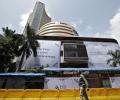
ONGC was the top performer while private banking major ICICI Bank extended gains
