
Chandra's tenure also saw a big jump in Tata Sons' other income, such as brand fee from group companies, treasury gains, and other non-recurring income.

UPI transactions saw a 27% volume increase and 20% value increase in the first half of the current fiscal year. Despite a slight moderation in September, the digital payment system is set to implement a 0.4% merchant discount rate on transactions over Rs 2,000, aiming for a sustainable revenue model. Small merchants and person-to-person payments remain exempt, and UPI's global presence continues to expand.
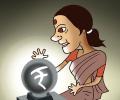
The Reserve Bank of India (RBI) has endorsed the introduction of a Merchant Discount Rate (MDR) on UPI transactions exceeding Rs 2,000, effective October 15. This move, which levies a 0.4 per cent fee on merchant payments above the threshold, aims to bolster the long-term sustainability and growth of India's digital payments ecosystem. The RBI clarified that person-to-person (P2P) transactions and small person-to-merchant (P2M) payments below Rs 2,000 will remain free for users, ensuring no direct charge on customers.
The Indian government has mandated that banks and payment providers cannot levy charges on UPI transactions up to Rs 2,000 or on payments made via RuPay debit cards. This directive follows an amendment to the Payment and Settlement Systems Act, 2007, aiming to sustain and expand the digital payments ecosystem.

A high-level committee, including representatives from banks and payment associations, is set to decide on Merchant Discount Rate (MDR) for UPI transactions exceeding Rs 2,000 to merchants. While person-to-person and person-to-merchant transactions up to Rs 2,000 remain free, the move follows a recent amendment to the Payment and Settlement Systems Act, sparking debate and clarification from the Finance Minister that only certain high-value merchant transactions might incur charges.

N Chandrasekaran not only faces muted financial performance from the group's listed companies, but also mounting losses at Tata Sons' unlisted subsidiaries, many of which have been set up by him in the last decade.
Unified Payments Interface (UPI) transactions in India reached Rs 29.8 lakh crore in August, approaching record levels. Volume also hit a new high of 24.51 billion transactions, driven by festive activities like Raksha Bandhan. The digital payment system continues its rapid growth, expanding its global presence to 11 countries, with further growth anticipated during the upcoming festive season and new use cases like credit on UPI.
India's Unified Payments Interface (UPI) recorded an unprecedented 24.51 billion transactions valued at Rs 29.8 lakh crore in August, largely propelled by the Raksha Bandhan festival. This surge marks a 22% annual increase in volume and 20% in value, highlighting the expanding reach and depth of the UPI ecosystem. Experts anticipate further growth during the upcoming festive season, while UPI's international acceptance now spans 11 countries.

'The share of the private sector is at its all-time high of around Rs 42,000 crore in FY26, reflecting its expanding role in the defence ecosystem.'

The refreshed Brezza will target first-time, replacement and additional-car buyers as Maruti responds to changing preferences and intensifying competition in compact SUVs.
Unified Payments Interface (UPI) has reached a record Rs 314 lakh crore in transaction value in FY26, representing more than a 4,000-fold increase since inception.

Tata Consultancy Services' (TCS) annual dividend payout declined to a four-year low of approximately 39,820 crore in FY26, marking its steepest decline in a decade and potentially adversely affecting Tata Sons' finances, which heavily rely on TCS's dividend income.

State-owned Indian Oil Corporation (IOC), Bharat Petroleum Corporation Ltd (BPCL), and Hindustan Petroleum Corporation Ltd (HPCL) are reportedly incurring losses of Rs 18 per litre on petrol and Rs 35 per litre on diesel, as they continue to absorb rising crude oil costs without increasing retail prices. This situation is leading to expectations of a fuel price hike after upcoming state elections.

The army has been behind the other two forces in capex since FY21.

Non-banking financial companies (NBFCs) such as Bajaj Finance, Shriram Finance, Muthoot Finance, and IIFL Finance have regained their growth momentum after losing market share to banks in the post-Covid period. The growth surge is being led by diversified lenders and gold-loan companies while development-finance institutions such as Power Finance Corporation (PFC), REC, and Housing & Urban Development Corporation (Hudco) continue to grow at a slower pace.

A shift appears underway in India's tax landscape. States with relatively smaller tax collections like Odisha and Telangana are emerging as the fastest-growing contributors to indirect and direct tax collections, respectively.

Shiv Nadar and family donated Rs 2,708 crore (Rs 27.08 billion) in 2024-2025.
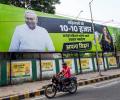
Voters are weighing a stark trade-off -- between preserving a socially driven policy and reversing course to revive revenue, restore fiscal balance, and rein in the underground liquor economy.

Between FY09 and FY25, 101 IAF fighter jets have crashed, costing the lives of 28 pilots.

Any potential tariffs on pharmaceutical imports into the US are unlikely to impact the credit profiles of Indian firms except for a short-term pricing blip, according to a report by India Ratings and Research (Ind-Ra). The report stated that the US generics market contributes around 35 per cent to the total revenue of the leading Indian pharma firms.

TCS kicked-off the Q1FY17 earnings season for information technology companies on Thursday.
As the potential threat of a steep 200 per cent tariff on pharmaceutical imports hangs in the air, analysts and industry insiders feel that focus on exports to non-US regions as well as domestic market will increase as a long-term trend. US President Donald Trump told CNBC's Squawk Box in the first week of August that planned tariffs on import of pharmaceutical products to the US could eventually reach up to 250 per cent.

Without changes to the taxation rules, buybacks are expected to remain scarce.

Pharma major Dr Reddy's Laboratories delivered a muted operational performance in the fourth quarter of financial year 2024-25 (Q4FY25), even as revenue growth remained healthy. Lower gross margin performance and muted domestic growth are key concerns. Most brokerages have a "Sell" or "Reduce" rating as there are uncertainties related to the development of a new product portfolio and the launch timelines.

41 companies take back shares worth Rs 27,783 crore in FY17

'We are at a time and position that we do not need higher number of visas.'

This was the companies' highest loss in two years.

India's growth rate is expected to improve to 7 per cent by FY 2017, while inflation and current account deficit are likely to moderate in the coming years, a Citigroup report said.

Historically, overall credit has grown at 1.6 times GDP growth

Indian Americans contribute approximately 5% to 6% -- roughly $300 billion -- in federal tax revenues annually.
Tata Consultancy Services (TCS), the country's largest player in information-technology (IT) export, has seen a sharp decline in its contribution to the Tata group's market capitalisation in recent years though it remains the most valuable company in the conglomerate. Its 44.8 per cent share in the combined market capitalisation of the listed Tata group companies is the lowest since March 2009 and is down sharply from the all-time high contribution of 74.4 per cent at the end of March 2020.

Using buyback as a divestment tool is not new, the amount raised this year is phenomenally high.

FY17 GDP growth faces cash crunch heat

A bonus is given to existing stockholders in proportion to the number of shares they already hold.

Raamdeo Agrawal, joint managing director at Motilal Oswal Financial Services, tells Sheetal Agarwal key trends in this earnings season and investment themes in Indian markets.

Corporate clients form more than half of the business for most branded hotels, especially in cities.

By democratising access to finance, empowering women and marginalised groups, and adapting to India's diverse regional landscapes, PMMY has helped fortify the country's grassroots growth engines, says Chief Economic Advisor to the Government of India, V Anantha Nageswaran.

Anmol Singh Jaggi and Puneet Singh Jaggi, once hailed as rising stars in India's clean energy sector, are now facing serious regulatory action.

A total of 25 companies raised Rs 28,220 crore during the financial year.

Mukesh Ambani-led company will squeeze market shares and margins of existing players
