

Voters are weighing a stark trade-off -- between preserving a socially driven policy and reversing course to revive revenue, restore fiscal balance, and rein in the underground liquor economy.

As Bihar heads into two-phase assembly elections, its decade-old prohibition law has emerged as a political flashpoint.
What began as a moral and social reform drive under Chief Minister Nitish Kumar in April 2016 has evolved into a debate over fiscal losses, illicit trade, and a grim toll of spurious liquor deaths.
Prohibition's fiscal hangover
When the state government enforced a liquor ban, Bihar gave up a major source of own-tax revenue.
Excise collections, which stood at Rs 3,142 crore (Rs 31.42 billion) in 2015-2016 (FY16), dwindled to about Rs 30 crore (Rs 300 million) the next year.
A Comptroller and Auditor General report pegged the FY17 revenue shortfall at Rs 1,490 crore (Rs 14.90 billion), while analysts estimate the ongoing revenue hit has averaged 1 per cent of Bihar's GSDP and over 15 per cent of its own tax receipts annually.
To offset the loss, the state leaned on alternative income sources -- boosting property registration revenues to Rs 7,648.88 crore (Rs 76.48 billion) in FY25 and relying more heavily on central transfers.
But the replacements have not matched the predictability or scale of excise inflows.
The gap has tightened Bihar's fiscal room, making it more dependent on Union funds and limiting its spending flexibility.
What other states are pouring in
Alcohol remains a fiscal mainstay for state governments. Delhi earned Rs 7,484 crore (Rs 74.84 billion) from excise and VAT on liquor in FY24.
Uttar Pradesh, among India's top earners, has set a target of Rs 63,000 crore (Rs 630 billion) from alcohol excise in FY26.
The human cost
Since the ban took effect, Bihar has reported 190 confirmed deaths from spurious liquor, with districts such as Saran, Siwan, Gaya, and Bhojpur worst affected. The 2022 Saran tragedy alone claimed more than 70 lives.
Illicit trade has proven resilient despite enforcement crackdowns. Until March 31, 2025, authorities registered more than 936,000 prohibition cases and made 1.43 million arrests.
Roughly 38.6 million bulk litres of liquor have been seized and over 74,000 vehicles auctioned, generating about Rs 340 crore in revenue.
Supporters of the policy credit it with reducing domestic violence and improving household health.
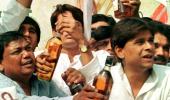
Critics counter that demand for alcohol has merely shifted underground, fuelling unsafe consumption and empowering a parallel black economy.
Repeal, reform, or retain?
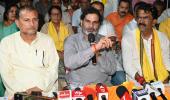
The Jan Suraaj Party, led by strategist-turned-politician Prashant Kishor, has made scrapping the ban a centrepiece of its campaign.
It argues that ending prohibition could recoup Rs 28,000 crore (Rs 280 billion) annually, funds that could be leveraged to secure development loans from institutions like the World Bank.
The Rashtriya Janata Dal has called for moderation, seeking exemptions for traditional local brews and leniency for minor offenders.
Nitish Kumar's Janata Dal-United and its allies remain firm in their defence, framing prohibition as a moral and public health imperative.
The government credits the policy with curbing addiction and promoting safer homes.
As Bihar heads to the polls, voters are weighing a stark trade-off -- between preserving a socially driven policy and reversing course to revive revenue, restore fiscal balance, and rein in the underground liquor economy.
Feature Presentation: Aslam Hunani/Rediff. Photograph curated by Anant Salvi/Rediff




 © 2026