
A feasibility study on the proposed Free Trade Agreement, officially known as the Comprehensive Economic Cooperation Agreement, has long been finalised but cannot be acted upon in the absence of Russia joining the WTO.

'We have got Brexit done and we can now take full advantage of the fantastic opportunities available to us as an independent trading nation, striking trade deals with other partners around the world,' Downing Street said in a statement.

Stating the volume of trade between India and Finland is "not big enough", Finnish Minister for Foreign Trade Alexander Stubb today said it would increase only after signing of the much-talked about free trade agreement between India and European Union.

Two-way trade between ASEAN and India in 2011-12 reached $80 billion.

British Prime Minister Rishi Sunak on Monday unveiled a new scheme for the world's 100 most talented young professionals in the field of artificial intelligence (AI) as part of his vision to make the UK a "beacon" to attract the "brightest and best" from around the world. Addressing the Confederation of British Industry (CBI) annual conference in Birmingham, Sunak told an audience of business chiefs and professionals that control over the country's post-Brexit immigration policy remains crucial. However, he pledged to create "one of the world's most attractive visa regimes for entrepreneurs and highly skilled people" and make use of the "Brexit freedoms" to strike trade deals with "the world's fastest-growing economies".

Indian drug firms get a shot in the arm in the $12 bn Australian drug market as the Therapeutic Goods Administration (TGA), Australia agrees to accelerate the drug approval process in that country for Indian players who already have an approved plant and product from one of the stringent regulatory authorities like US, EU or Canada. From current sales of $340 mn, the Indian firms can see a significant upside in sales; felt Dinesh Dua, former chairman of the Pharmaceutical Exports Promotion Council of India (Pharmexcil), and the MD of Nectar Lifesciences. He highlighted that only 12 percent of the Australian drug market is generic, as against 80-90 per cent in the US or EU. Of this $1.5 bn generic drug market in India, Indian companies have a small share.
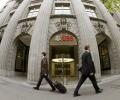
India has received the third set of Swiss bank account details of its nationals under an automatic exchange of information pact with Switzerland, as part of an annual exercise under which the European nation has shared the particulars of nearly 33 lakh financial accounts with 96 countries.
India-ASEAN Free Trade Agreement talks are in troubled waters with Asean insisting on New Delhi to eliminate its big list of negative items, contrary to the stand taken by the former.
Roadblocks in the way of ASEAN-India Free Trade Agreement appear to have been removed following Prime Minister Manmohan Singh's intervention on the crucial issue of sensitive farm products like pepper, rubber, palm oil, coffee and tea.

Amid demands for snapping trade ties with China for its transgressions on the border, former Niti Aayog vice chairman Arvind Panagariya has opined that cutting trade with Beijing at this juncture would amount to sacrificing India's potential economic growth. Instead, Panagariya suggested that India should try to enter into free trade agreements (FTA) with countries such as the UK and the European Union to expand its trade. "Engaging China in a trade war at this juncture will mean sacrificing a considerable part of our potential growth... purely on economic grounds, it will be unwise to take any action in response to it (transgressions on the border)," the eminent economist told PTI.

Prime Minister Rishi Sunak has made a clear break with the past on UK-China relations as he declared that the "so-called golden era" of bilateral ties is over in the face of the "systemic challenge" posed by the Chinese regime to British values and interests.
India is close to signing a free trade pact with the South-East Asian nations to boost exports in the face of a global economic downturn and rising protectionism, a top official said on Wednesday.
Talks on the ambitious India-Asean Free Trade Agreement have received another setback due to the violent protests at the Asean summit venue in Thailand last Sunday.

The visiting minister said that trade and economic relations between the two countries are constantly gaining momentum.

The talks between the two leaders covered the entire gamut of bilateral ties as well as key regional and global issues, including the Ukraine conflict.
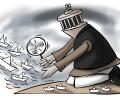
As India goes into firming up trade deals with developed nations like Australia, the United Kingdom (UK) and the regional bloc, and the European Union (EU), it will have to be well prepared to negotiate on new-generation issues, such as data protection regulation, e-commerce, and environment. India is yet to negotiate pacts with its trading partners on these evolving issues since discussions between them have until now been largely focused on tariff and non-tariff barriers and the rules of origin. "We can no longer look at trade just as trade. We have to look at it in totality of global and regional conditions.
The FTA will provide Indian trade and industry with access to a large and vibrant market in a region that is increasingly prosperous. This market is bound to expand further as the Asean trading bloc is already in talks with countries like China, Japan, South Korea, Australia and New Zealand for free or preferential trade pacts.

Braverman, 42, resigned from the cabinet of former prime minister Liz Truss last week, having breached the ministerial code by sending secure information from her private email.
The action came after investigations carried out by an inter-ministerial committee formed by the home ministry in 2020.

In fact, India stands to gain in sectors such as textiles, handicrafts, chemicals and pharmaceutical from its trade with the Asean economies.
The European Union may back off from its insistence on including non-trade issues like human rights in the proposed free trade pact with India.
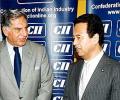
Amari is on an official five-day visit to India which began against the backdrop of talks on a free trade agreement in the Indian capital last week that ended with big differences.

After more than a year since the free trade agreement (FTA) between India and the 10-member Association of Southeast Asian Nations (Asean) became operational, it is now approaching consolidation.
With India and the Asean clearing a major roadblock to a proposed free trade agreement, Prime Minister Manmohan Singh is expected to seek a broad consensus for its early implementation during the India-Asean Summit in Philippines.

After his wide-ranging talks with Modi on the second and final day of his India visit, Johnson said the new defence and security partnership will enable India to strengthen its domestic defence industry as well as help the two countries protect vital shared interests in the Indo-Pacific.

While the 27-nation bloc is pressing hard for a significant duty cut in automobile sector in the proposed Broad based Trade and Investment Agreement, Indian industry is strongly opposed to such a move.
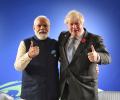
The visit next week, which is yet to be formally announced by Downing Street, follows the successful completion of four out of 26 chapters in the ongoing India-UK free trade agreement negotiations.
So far 15 rounds of negotiations have been held.

During the talks, both sides failed to reach on a conclusion and has agreed to meet again in June.

Commerce and Industry Minister Anand Sharma and European Union Trade Commissioner Karel De Gucht concluded another round of talks on Monday at the European Commission headquarters in Brussels, which the Commission said 'provided a renewed momentum to bring the negotiations forward'.
India was apprehensive because EU was pushing for data exclusivity provisions that would have affected domestic pharma companies.

Malaysia and India are expected to sign a free trade agreement during Prime Minister Manmohan Singh's visit to that country later this year.

With 47 per cent of Australians favouring Free Trade Agreement with India in a recent poll, the feasibility study by the two sides has revealed the agreement could boost Australia's GDP by AUD 45 billion in the next 20 years.

In the past, several other Indian nationals have been named in such notifications after the Swiss FTA was approached by Indian authorities for information about those people with regard to the pending tax-related probes against them.
Prime Minister Manmohan Singh on Monday mooted a Pan-Asian Free Trade Area, along the lines of North American Free Trade Area and the European Union, as part of efforts to make the Asian region an economic power house.
Asian Development Bank and Reserve Bank on Thursday advocated that India should go in for a free trade agreement with China and five other nations in the Mekong region to sustain high growth.

Officials from India and the Association of Southeast Asian Nations would resume their talks to widen of the scope of a Free Trade Agreement with the 10-nation trading bloc to cover services and investment.
