
The Indian FMCG industry has recorded a 9.4 per cent growth in the January-March quarter of 2021, helped by a consumption-led growth and value growth by increased prices of products, especially of staples, said data analytics firm Nielsen. The rural market continued to perform with strong growth of 14.6 per cent during the period and the metro markets have registered a positive growth after two quarters. Fast Moving Consumer Goods (FMCG) industry sales growth from the traditional trade channels jumped to double digits, while growth in e-commerce normalised down to single digits in the January-March quarter.
Temasek is nearing a deal to acquire a 10% per cent stake in Haldiram Snacks Foods, valued at $10 billion.

During the conversation with the owners, Gandhi delved into the fascinating journey of the iconic start-up that seamlessly blends legacy with modern ambition.

Among Sensex shares, Mahindra & Mahindra, Bharti Airtel, Bajaj Finance, Zomato, Nestle, Bajaj Finserv, Maruti and Titan were the biggest gainers. Sun Pharma, Power Grid, Tata Consultancy Services, Tech Mahindra, Asian Paints and Tata Motors were among the laggards.

Brokerages expect a further slowdown in Indian firms' revenue and earnings growth in Q4FY25, following low single-digit growth in the preceding three quarters, as factors like weak consumer demand and credit growth linger on.

Some analysts see more upside in FMCG stocks given the performance gap between the sector and the market.

Domestic rating agency ICRA on Monday said Indian companies are likely to clock 7-8 per cent revenue growth during the March quarter of the current fiscal year, led by revival in rural demand and uptick in government spending. ICRA expects the private capital expenditure (capex) cycle to remain measured in view of the uncertainties around geopolitical developments and relatively subdued outlook on merchandise exports from India.

Ask rediffGURU and PF expert Nitin Narkhede your mutual fund and personal finance-related questions.
However, rural demand continued to remain a concern for FMCG companies during the quarter.

Adani Wilmar on Monday posted over twofold jump in consolidated net profit at Rs 410.93 crore for December quarter 2024-25 on strong edible oil sales. The company had logged a net profit of Rs 200.89 crore in the year-ago period.

Leading FMCG companies in the country are expecting their sales growth numbers in high double digit in the April-June quarter, a period when the broader market was severely impacted by the second wave of the COVID-19 pandemic. FMCG companies such as Godrej Consumer Products Ltd (GCPL) and Marico, in their quarterly updates to bourses, informed about double-digit sales growth. While Tata Consumer Products Ltd (TCPL) MD and CEO Sunil D'Souza in an interview had told PTI, the Tata Group FMCG firm expects higher growth in the Q1/FY'22 over Q4/FY'21.

Clearly, the domestic market has taken sharp knocks in April, which is likely to be visible in May as well, said analysts tracking the market, as FMCG companies are grappling with improving capacity utilisation and dealing with labour shortage.

Fast-moving consumer goods (FMCG) distributors' association has written to the Ministry of Commerce and Industry, expressing its apprehensions that the "unchecked expansion" of quick commerce platforms was leading to severe disruptions in the retail ecosystem. India Consumer Products Distributors Federation on Thursday shot an email to the government, saying that significant challenges were posed by the rapid growth of quick commerce platforms such as Blinkit, Zepto and Instamart to the traditional retail sector and the FMCG distribution network in the country.

HUL, ITC, Nestle, Colgate, Dabur, Britannia, Asian Paints, P&G are trading at nearly 48 times. The previous record high was 53 times at the end of March 1994.

Automobile, apparel and electronics are among sectors that see a sales boost during the festival season, a time when investors expect gains in related stocks. This year could be different: Analysts have factored in all positives and do not expect such stocks to deliver lucrative returns. "Indian households spend across sectors like automobiles, consumer durables, and consumer staples during the festival season.

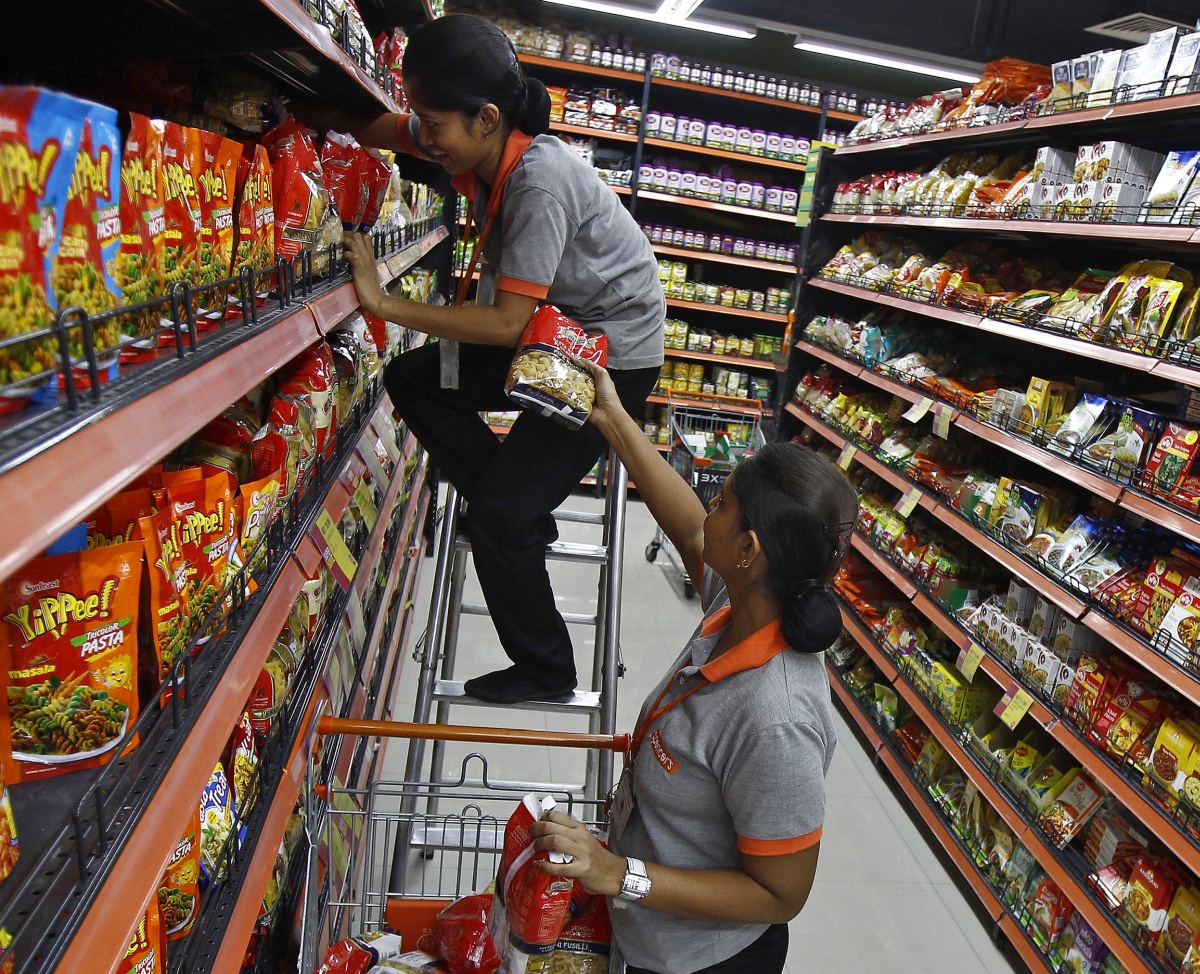
Amazon's pantry division across 29 cities in India helps sellers sell FMCG products on its platform.

ITC, Sun Pharma, Maruti, M&M, Tata Motors, HCL Tech, Wipro, Infosys, HUL, Bharti Airtel and Reliance were among the major losers. Kotak Bank rose the most by 1.59 per cent, followed by IndusInd Bank, Bajaj Finance and Bajaj Finserv. L&T, SBI, TCS and HDFC Bank also closed higher.
The country's top FMCG stocks, such as Hindustan Unilever, ITC, Nestl, Britannia, Godrej Consumer Products, and Dabur, among others, are currently trading at around 41x their trailing 12-month earnings, down from their peak P/E multiple of around 48x at the end of December 2018.
Delay in demand recovery and higher stock valuations mean low safety margin, say analysts.

Equity benchmark indices continued to gain for the third day running on Monday, with the BSE Sensex climbing 781 points in early trade, amid firm global market trends. The 30-share BSE Sensex was trading with a jump of 781.52 points to 53,509.50. The NSE Nifty also gained 228.2 points to 15,927.45.

Billionaire Gautam Adani's group on Monday announced its exit from FMCG joint venture Adani Wilmar by selling its entire stake to the Singaporean partner and in the open market for an estimated over $2 billion in a first major deal since the US bribery indictment. In a statement, Adani Enterprises Ltd -- which held 43.94 per cent stake in Fortune brand cooking oil, wheat flour and other food product maker Adani Wilmar Ltd -- said it will sell 31.06 per cent stake to Wilmar International. About 13 per cent will be sold in the open market to meet minimum public shareholding requirements.

Capital market regulator Sebi on Tuesday rejected the competing open offer made by the US-based entity Danny Gaekwad Developments & Investments for acquisition of Religare Enterprises Ltd (REL) as it did not meet necessary regulations.

Homegrown fast-moving consumer goods (FMCG) major Dabur India is set to record low single-digit growth in consolidated revenue in the December quarter, it said in an update on Friday. The maker of Hajmola candy and Real fruit juice said rural consumption continued to be resilient and grow faster than urban in the third quarter.

Most of the changes have come about in the last four years and ITC is now reaping the dividends - standalone revenues from the non-cigarettes FMCG business have grown 40 per cent from FY17 to Rs 14,728.21 crore in FY21 and pre-tax profits 30 times to Rs 823.69 crore. The business accounted for 30.58 per cent of gross revenues and 4.85 per cent of pre-tax profits in FY21. "In the last four years, our margins in FMCG have gone up by 640 basis points (bps) and EBITDA margins have been moving up consistently. "We created levers that enabled a sustained growth trajectory," said ITC chairman and managing director Sanjiv Puri. Puri took charge as the chief executive officer in 2017; in 2018, he was redesignated managing director and effective May 2019, he became chairman.

The 70 launches were made in the first half of the financial year alone and were mostly focused on hygiene, health & wellness, naturals and convenience, which were in high demand as Covid -19 raged across the world.

With just four trading sessions to go for the ITC-ITC Hotels demerger record date shares of ITC continue to consolidate in a thin range of Rs 460 - Rs 480 in an otherwise volatile equity market. On Tuesday thus far despite a near 1 per cent fall in the Sensex and Nifty; ITC traded on a flat note. ITC had set the demerger ratio at 1:10 - meaning 1 share of ITC Hotels for every 10 shares of ITC as of the record date January 6, 2025.

Nearly all FMCG companies like Marico, HUL, ITC and the rest have been indicating that the operating environment has been challenging, with drop in consumption, especially in rural areas, severe crunch in market liquidity conditions, and disruptions and floods in several parts of the country. To overcome this, they are boosting their direct reach in the countryside.

Tata Consumer Products Ltd (TCPL) on Thursday denied reports on the exit of cafe chain Starbucks from the Indian market, terming them as "baseless". Tata in a 50:50 joint venture with US-based Starbucks Corporation operates a cafe chain in India under the brand name of Starbucks, which is the leading cafe chain in India.

'There's a misconception that all Rs 1 lakh crore will be spent immediately, leading to higher consumption of FMCG goods, travel, and vehicle purchases.' 'While some of this money will go toward consumption, not all of it will.' 'The impact depends on where people deploy their savings.'

Markets to track inflation data, global trends, FII trading this week: Analysts New Delhi, Dec 8 (PTI) Investors' sentiments will be guided by a host of domestic and global macroeconomic data announcements this week, along with the trading activity of foreign investors and trends in world stocks, analysts said. Besides, the rupee-dollar trend and movement of global oil benchmark Brent crude will also be crucial in dictating terms in the market, experts added. "The domestic stock market is likely to be shaped by a mix of global cues, domestic economic indicators, and the flow of investments from foreign and domestic institutional investors. Key factors like the rupee's exchange rate and crude oil prices will play a critical role in determining market trends. "Globally, geopolitical tensions, particularly the ongoing Russia-Ukraine conflict, continue to pose challenges. However, recent declines in the dollar index and US bond yields have created a more favourable environment for emerging markets like India," Pravesh Gour, Senior Technical Analyst, Swastika Investmart Ltd, said. On the economic front, significant macroeconomic releases, including retail inflation and industrial production data from India as well as US core CPI, are expected to influence overall market sentiment, Gour added. Last week, the BSE benchmark jumped 1,906.33 points or 2.38 per cent, and the NSE Nifty climbed 546.7 points or 2.26 per cent. "FIIs turning buyers in early December, in a total reversal of their sustained selling strategy during the last two months, has altered the market sentiments. The change in FII (Foreign Institutional Investors) strategy is getting reflected in stock price movements, particularly in large-cap banking stocks in which FIIs have been sellers," VK Vijayakumar, Chief Investment Strategist, Geojit Financial Services, said. The release of US CPI inflation data will give some insights into the Fed's December meeting, an expert said. "The markets' attention is expected to turn towards macroeconomic indicators like IIP and CPI inflation. Additionally, the trend of FII inflows, following their recent buying spree, will remain a key focal point for market participants," Ajit Mishra - SVP, Research, Religare Broking Ltd, said. Siddhartha Khemka, Head - Research, Wealth Management, Motilal Oswal Financial Services Ltd, said this week will see significant economic data releases, including GDP numbers from Japan and the UK, along with China's CPI and India's CPI.
FMCG CEOs indicate that the market should stabilise post the general elections and that some growth should make its way back especially in rural areas
A break-up of business shows that 75% of a firm's turnover is led by volume growth, while 25% is price-led. Companies such as Britannia, Nestl, Dabur, Marico, Kellogg, Parle Products, and Hindustan Unilever have increasingly focused on smaller packs of their key products, aimed at improving sales.

... catch up with Blinkit, Swiggy Instamart and Zepto...

Overall, the domestic FMCG market bounced back to levels of 98 in June compared with 75 in May and 101 in March before the nationwide lockdown was announced. The pre-Covid March index for foods was 103, and for non-foods, it was 99.

The Eicher Pro X is assembled on an all-women assembly line.

While green shoots are beginning to emerge, with June sales rebounding to pre-Covid levels thanks to a rural revival, most FMCG chief executives have voiced concerns about localised lockdowns that began in July and have extended into August in some states.

The severity of the second wave of COVID-19 infections in India poses a key challenge for the FMCG industry and the spread of the virus to rural areas on a relatively higher scale as compared to the first wave is also expected to weigh on industry growth outlook, according to ITC Ltd. There is heightened uncertainty around the timing and shape of the recovery trajectory of overall economic growth in India due to the virus, the company said in its Annual Report for 2020-21. In terms of consumption, urban-led recovery may be relatively muted compared to the first wave as consumers switch to precautionary savings mode and rising healthcare costs eat into household spending, while rural demand may also be blunted by the large-scale spread of the virus to the hinterland in the second wave.

Maharashtra, Karnataka and Delhi are emerging as major hubs for employable talent.
Recent data from market analytics firm Nielsen shows that the rural market in the country's 630,000-odd villages is pulling down the overall FMCG business.

State Bank of India, Adani Ports, Tata Consultancy Services, ICICI Bank, Reliance Industries and PowerGrid were also among the laggards.
