
FMCG distributors on Thursday said it has suspended their boycott of certain products of oral care maker Colgate after talks with the company representatives over the issue of the price disparity between the traditional distributors and organised business-to-business channel. A day after a virtual meeting with Colgate-Palmolive (India) Ltd (CPIL) representatives, the All India Consumer Products Distributors Federation (AICPDF) called off its stir to boycott certain products of the company starting from January 1, 2022. "From today, the movement against Colgate is postponed till further notice," the AICPDF said in a statement.

Biryani is set to get its own valuation. Devyani International, the largest franchisee of Kentucky Fried Chicken (KFC) quick-service restaurants (QSRs) in India, is considering the acquisition of Sky Gate Hospitality, which operates restaurants under the brand Biryani By Kilo (BBK), it said in a statement to BSE on Monday.

Regional and local fast-moving consumer goods (FMCG) brands are gaining momentum at the cost of national brands for the second quarter in a row. Consumer brands are now losing out on share, especially at the mass end of the market. Local brands have been able to capture market share as prices of raw materials are lower.

Patanjali Foods Ltd on Thursday said food regulator FSSAI has directed the company to recall a specified batch of packed red chilli powder due to non-conformity with food safety norms. The Food Safety and Standards Authority of India (FSSAI) issued an order in this regard on January 13, the company said in a regulatory filing.

Demand for fast-moving consumer goods (FMCG) fell in April owing to lower stocking by kiranas, according to the data from Bizom. Kiranas stocked lower quantities in April as they resorted to heavy stocking in March. Sales in value terms were down 8.4 per cent in the month as against the same period last year while on a month-on-month basis, they declined 17 per cent.

Equity benchmark indices Sensex and Nifty stayed on the back foot for the second straight session on Friday as investors offloaded FMCG, IT and teck stocks amid a weak opening in European markets. Selling pressure in index heavyweight Reliance Industries also added to the weak trend in equities. The 30-share BSE Sensex fell 223.01 points or 0.35 per cent to settle at 62,625.63.

The industry may account for just 0.05 per cent of the total volume of single-use plastics in the country. And the product it uses is just one among the 22 - including spoons, forks, plates, knives and trays - that will be banned across the country from July 1 by government order. Yet, it is the plastic straw that is at the centre of public focus as fast-moving consumer goods (FMCG) companies make a last-ditch effort to get the government to extend the deadline.

Reliance Retail has entered the Indian fast-moving consumer goods space as it takes its private label brands, sold at its supermarkets and hypermarkets, Reliance Fresh and Reliance Smart, to general trade. The company had internally set a target of Rs 50,000 crore turnover from the FMCG business, which will fall under Reliance Retail's consumer brand division. Business Standard accessed a presentation which includes the brands it has taken to the general trade.

From the Sensex firms, Tech Mahindra, Tata Steel, Tata Motors, Titan, HDFC Bank, IndusInd Bank, Infosys and Kotak Mahindra Bank were among the biggest laggards. On the other hand, Adani Ports, Mahindra & Mahindra, Power Grid, Eternal and Hindustan Unilever were among the gainers.

Market reaction to the Union Budget was overall neutral. The income tax "gift" wasn't enough to move the needle. There was some apparent rationalisation of Customs duty structure as well as cuts on import duties of some key components for the telecom and IT industry and duty cuts on vehicle imports. Other proposals related to development of agriculture and rural economy and renewables seem to be generally positive.

N Chandrasekaran, chairman of Tata Consumer Products, has said in the company's annual report for FY25 that India remains one of the bright spots of economic growth amid a volatile global environment. He said India's long-term growth was underpinned by strong demographic and economic fundamentals as well as structural reforms.

FMCG major Hindustan Unilever Ltd (HUL) on Thursday reported a decline of 3.35 per cent in its consolidated net profit at Rs 2,475 crore for the fourth quarter ended March 31, 2025.

'Spending by the middle class is limited with a focus on savings. However, there is buoyancy at the top-end.'

Consumer stocks remain the biggest laggard on the bourses. The Nify50 weighting of FMCG stocks declined to a decade low of 9.9 per cent at the end of March this year, down 150 basis points from 11.4 per cent a year ago. At their peak in March 2013, major FMCG stocks, such as Hindustan Unilever, ITC, and Asian Paints, together accounted for 15 per cent of the Nifty50. But now together with automobile stocks, the consumer goods sector accounts for only 14.7 per cent of the index, down 200 basis points in the past 12 months and 37 per cent from the record high weighting of 23.4 per cent at the end of March 2014.
Demand for fast-moving consumer goods (FMCGs) went up last month across India, as kirana stores stocked up their shelves in anticipation of a sizzling summer, according to data by retail intelligence firm Bizom. There was a spike in beverages sales across the country despite inflation inching up in February after moderating downward previously, Bizom noted.

While sales momentum from rural areas may last another three to six months, sales growth in urban areas could stage a comeback by next year's June quarter as people learn to live with the coronavirus and economic activity gradually improves in the cities.

rediffGURU Dr Ganesh Natarajan offers advice on how to build and scale your first start-up.

White-collar hiring activity in December witnessed a 9 per cent increase compared to the same period of the previous year, driven by high-skill and strategic roles, a report said on Thursday. According to Naukri JobSpeak, the index reached an impressive 2,651 points in December 2024, reflecting a robust 9 per cent year-on-year growth, a promising sign for the year ahead.

Consumer companies have started taking orders via phone calls and are also pushing retailers to order through their B2B applications.

Fast-moving consumer goods (FMCG) sales continued to be lower in June compared to May with urban sales witnessing a steeper decline than rural. Sales of goods from shampoos to biscuits stayed lower due to inflationary pressures on commodities. This pushed consumer companies to continue taking price hikes, thus impacting demand, according to data by Bizom.

The six billion plastic straws sold with every small tetra pack of juice, milk, lassi, coffee and other drinks can be replaced by paper straws to protect the environment but it will have to be done in phases. That was the message of the presentation made by FMCG companies using small tetra packs last week by their body, the Action Alliance for Recycling Beverage Cartons. The association told the Environment Ministry that companies need 18 months from the ministry's deadline of July 1 - when the ban on the use of single plastics for straws, plates and spoons comes into effect - to make the transition.
Despite near-term headwinds of rising input costs and the possibility of lower demand for products as Covid dented rural & urban India, and impacts both production & consumption, analysts remain bullish on stocks of fast moving consumer goods (FMCG) companies and expect the index to relatively outperform its peers in the second half of fiscal 2021-22 (FY22). In the past one year, prices of key commodities such as groundnut oil, mustard oil, Vanaspati, soya oil, sunflower oil and palm oil have shot up in the range of 20 per cent to 60 per cent, data show. The FMCG sector macros in this backdrop, according to analysts, have further deteriorated because of weakness in consumer demand and likely margin pressure due to elevated crude oil, palm oil and global food prices.

FMCG major Hindustan Unilever Ltd (HUL) on Monday said its board has approved the demerger of the ice cream business, which owns brands such as Kwality Wall's, Cornetto and Magnum, into an independent listed entity.

Listed paint majors posted another lacklustre showing in the January-March quarter (Q4) of 2024-25 (FY25), with average revenue growth under 3 per cent. Sales were weighed down by Asian Paints - the market leader and the only major to report a year-on-year (Y-o-Y) decline.

FMCG major Hindustan Unilever Ltd on Wednesday reported a 19.18 per cent rise in consolidated net profit at Rs 2,989 crore in the December quarter.

From the Sensex pack, Infosys, Tech Mahindra, Nestle India, Tata Consultancy Services, HCL Technologies, Asian Paints, Axis Bank, Zomato, Hindustan Unilever, and Bharti Airtel were among the laggards. On the other hand, IndusInd Bank, Tata Motors, Kotak Mahindra Bank, Bajaj Finance, HDFC Bank, ITC, Sun Pharma, Bajaj Finserv and UltraTech Cement were the gainers.

Banks have outperformed the broader market in the past six months and most of the leading lenders have given positive returns to investors compared to a negative return delivered by benchmark indices.

Asian Paints dropped the most by 1.33 per cent. IndusInd bank fell 1.2 per cent, Axis Bank by 1.19 per cent, SBI by 1.12 per cent, Bajaj Finance by 1.07 per cent, Nestle by 1.04 per cent, and TCS by 0.97 per cent. Hindustan Unilever, Reliance Industries, Power Grid and Kotak Bank also retreated. Maruti Suzuki was the lead gainer, rising by 2.22 per cent.
Jiomart B2B is the latest among organised supply-chain companies to bite the bullet, shutting down its warehouses, and asking its employees to leave. Why are companies finding it difficult to sustain the supply-chain business? Experts point out that gross margins in supplying fast-moving consumer goods (FMCGs) are very low.

Shares of ITC Hotels Ltd, the demerged hotels business of FMCG conglomerate ITC Ltd, listed on the stock exchanges on Wednesday. The stock listed at Rs 188 on the BSE, while on the NSE it began the trade at Rs 180. Later the stock declined 5 per cent to Rs 178.60 on the BSE.

Marico reported consolidated revenue growth of 20 per cent year-on-year (Y-o-Y) during the January-March quarter (Q4) of FY25. Domestic revenue surged 23 per cent Y-o-Y, while volume growth was 7 per cent. International growth stood at 11 per cent (16 per cent in constant currency growth).

In spite of a severe second wave of the coronavirus pandemic, and a widespread disruption in public life therefore, India's fast-moving consumer goods (FMGC) sector seems to have emerged as one of the most resilient segments of the economy. The early numbers and estimates for the April-June quarter indicate a steady recovery in FMCG players' business, which is now set to exceed the pre-pandemic level. Amid nationwide lockdowns because of the first Covid wave, FMCG revenues had been severely affected in mid-2020.

Dabur's pre-quarterly update for Q3FY25 disappointed the market with the share dropping by 3.9 per cent. Growth was slower than expected and inflation hit margins. The management said that the fast-moving consumer goods (FMCG) consumption in rural markets was resilient and continued to grow faster than in urban markets.

From the Sensex pack, Asian Paints, NTPC, Reliance Industries, Tata Steel, Bajaj Finserv, Hindustan Unilever, Sun Pharmaceuticals, Adani Ports & SEZ, Axis Bank, Tata Consultancy Services, Titan and Bajaj Finance were the major gainers. Tech Mahindra, Kotak Mahindra Bank, Zomato, Tata Motors, and IndusInd Bank were the laggards.

As the second wave of the pandemic ebbs and the daily caseload falls, the struggles of the urban poor have come into focus. Many have suffered income and job losses after two successive waves. The second wave, in particular, has seen the poor being hit hard on account of lack of medical and financial help. For the fast-moving consumer goods (FMCG) companies this has meant that an important segment is under severe distress.

Three leading domestic voting advisory firms are not on the same page over the proposed demerger and separate listing of ITC's hotel business, ITC Hotels. Institutional Investor Advisory Services (IiAS) has recommended a vote "against" the resolution, while InGovern and Stakeholders Empowerment Services (SES) have advised their clients to vote in favour. Voting on the resolution is currently underway.
From the Sensex pack, Zomato jumped nearly 5 per cent, followed by Titan which climbed almost 4 per cent. IndusInd Bank, Maruti, Tech Mahindra, Adani Ports, Bharti Airtel and HDFC Bank were also among the gainers.
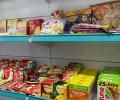
'In staples, we have still managed in rural areas.'
Mandates have been handed out to staffing solutions companies such as Randstad India and TeamLease, officials at these firms have said, as players increasingly push into rural areas to capitalise on the uptick in the hinterlands.

Quick commerce (Qcom) platforms are bringing upon a rapid change in the behaviours of online shoppers, with 31 per cent of buyers relying on the fast delivery option for grocery needs, according to a new study.
