
The United States' historical strategic alignment with Pakistan, dating back to the Cold War, has consistently aimed to create a political and military parity with India, despite India's significantly larger size and resources. This long-standing relationship continues to influence regional dynamics, particularly in West Asia and the Indo-Pacific.

The pause gives the US time to breathe, to regroup, to move its expeditionary force into position without risk of interception along the way. It gives Iran nothing -- on the ground, attacks against its infrastructure continue apace. Prem Panicker in his must read daily blog on the Gulf War.

For weeks, the war skirted the edge of catastrophe without tipping over. Missiles flew, there was much destruction, commanders were assassinated, cities across the Gulf and even in Israel struggled to absorb the shock. But one line held: Energy infrastructure, the arteries of the global economy, remained largely untouched. That is no longer true. Prem Panicker continues his must read daily blog on the Gulf War.

On the 95th anniversary of Bhagat Singh's martyrdom, Utkarsh Mishra revisits the ideas and philosophy of the revolutionary giant.

If Xi Jinping can establish control over the PLA Ground Force, relations between India and China will settle down to an even keel. The next few weeks will show whether Xi has finally succeeded in gaining control over the PLA Ground Force. That could bring about the substantive shift in India-China relations that both our leaders have been working for, observes Ambassador Prabhat Shukla.

'Our problem is not a budget deficit but a trust deficit. We need to trust our institutions and industries to innovate and lead. That is the way forward for India.'
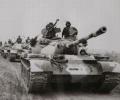
Why did Pakistan sign a cease-fire without acquiring Kashmir, which was the sole purpose of the 1965 War, asks Ahmad Faruqui.

The issues that figured prominently in these discussions included terrorism, Afghanistan and the situation in the Asia Pacific region.

No successive government thought of reviving the idea of an exit policy.
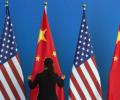
Chinese observers believe the Sino-US relationship will be impacted by issues in North Korea, Japan, India, Ukraine and Iran and that conflicts with these 'third parties' will without exception ultimately become conflicts between China and the US, points out former RA&W officer Jayadeva Ranade.
 © 2026 Rediff.com - Advertise with us - Disclaimer - Privacy Policy - Sitemap - Feedback - About us - Terms of use - Grievances