
This comes hours after Madhya Pradesh Home Minister Narottam Mishra issued a "24-hour ultimatum" and threatened to send the police after him.

Expect fast-moving consumer goods makers (FMCG) to raise prices again next month owing to raw materials, transport, labour and packaging material costs remaining high or becoming even costlier. Whether it is packaged wheat flour and basmati rice or biscuits and shampoos, these products will become 2-10 per cent more expensive. Adani Wilmar will hike the price of its packaged wheat flour by 5-8 per cent and of its basmati rice by 8-10 per cent next month.
Besides, the ongoing war between Russia and Ukraine has also added another blow to FMCG makers as they expect a rise in the prices of wheat, edible oil and crude. Companies such as Dabur and Parle are watching the situation and will undertake calibrated price increases to mitigate the inflationary pressures.

Higher prices are burdening household budgets and threatening the margins of leading manufacturers.

Asia's fastest-growing companies are midsize operations that have flourished on a steady diet of venture capital and liberalized policies.

Blackstone, KKR, and Bain Capital, among others, are in the race for its general insurance arm, and Bandhan Bank, Bain, and Dabur Investments have shown interest for RCap's 51 per cent stake in the life insurance business.

While both Dabur and HUL have been aggressive in the 'naturals' market with new launches across its portfolio, unchecked distribution expansion and inconsistent quality of products have also been at the heart of Patanjali's problems.

60-65 per cent of the FMCG industry's overall sales come from urban areas; 35-40 per cent from rural areas.

These stocks offer the best combination of maximum 'buy' recommendations from brokerages and share price upside over the next 12 months.

Some analysts see more upside in FMCG stocks given the performance gap between the sector and the market.

Ajit Mishra, vice president, Research, Religare Broking, answers your queries.

After a turnaround in performance by Indian equity markets since July that has seen the S&P BSE Sensex and the Nifty50 wipe out the year-to-date losses, analysts suggest investors start nibbling into stocks that are focused on the domestic economy. While they say intermittent corrections, led by policies of global central banks and other economic data, cannot be ruled out, analysts expect India's relative outperformance among global equity markets to continue as it looks better placed with a healthy economic recovery, and remains one of the fastest growing major economies. In this backdrop, Neeraj Chadawar, head of quantitative equity strategy at Axis Securities, believes that amid global slowdown, aggressive tightening by the central banks, and preference for domestic interests first (by the local government), export-oriented themes are likely to be muted or will deliver conservative returns in the near-term.

In spite of a severe second wave of the coronavirus pandemic, and a widespread disruption in public life therefore, India's fast-moving consumer goods (FMGC) sector seems to have emerged as one of the most resilient segments of the economy. The early numbers and estimates for the April-June quarter indicate a steady recovery in FMCG players' business, which is now set to exceed the pre-pandemic level. Amid nationwide lockdowns because of the first Covid wave, FMCG revenues had been severely affected in mid-2020.

The move is significant since it signals the growing importance of foods in Marico's overall strategy. It also comes six months after Marico stepped into honey, a Rs 1,500-crore category dominated by players such as Dabur.

Around 300 promoters serve their company boards for free.

Chief executives in the real estate, consumer products, automobiles, construction, and textile sectors said they were all expecting workers to re-join in the next 45-60 days, which would help them ramp-up production from July.

"Some vidharmis are constantly hurting Hindu sentiments. The video 'Madhuban me Radhika nache' is one such condemnable attempt. I am warning Sunny Leone ji, Shaarib and Toshi ji to understand. If they don't remove the song after apologising in three days, then we will take action against them," Mishra told reporters when asked about the song.

The biggest challenge is crude oil's sustained rally - it is nearing $80 a barrel - stoking inflationary pressures and consequent price hikes in the sector.

Earlier in the day, the Kendriya Police Kalyan Bhandar circulated an order stating that 1,026 products manufactured by firms such as Bajaj, Dabur, VIP industries, Eureka Forbes, Jaquar, HUL (foods) and Nestle India will not be sold at CAPF canteens anymore as they are not 'swadeshi' or are prepared from 'purely imported products'.

The Centre has decided to keep ayurveda products in the mid-range of the goods and services tax

The issue of pollution caused due to the non-degradable material is keeping consumer goods majors - from ITC and Dabur to Nestl and PepsiCo - on their toes.

The country's largest retailer Reliance Industries on Monday announced that it will enter the fast-moving consumer goods (FMCG) business this year as part of its expansion plan. Addressing the 45th AGM of Reliance Industries on Monday, Reliance Retail Ventures Ltd (RRVL) Director Isha Ambani said: "This year, we will launch our FMCG goods business". The objective of this business will be to develop and deliver products and solve every Indian's daily needs, with high-quality products at affordable pricing, she said while addressing Reliance Industries' annual general meeting.

Analysts believe that investors should look at stocks that hit 52-week lows only if they have a dividend paying track record, are debt-free and have sound fundamentals.

The six billion plastic straws sold with every small tetra pack of juice, milk, lassi, coffee and other drinks can be replaced by paper straws to protect the environment but it will have to be done in phases. That was the message of the presentation made by FMCG companies using small tetra packs last week by their body, the Action Alliance for Recycling Beverage Cartons. The association told the Environment Ministry that companies need 18 months from the ministry's deadline of July 1 - when the ban on the use of single plastics for straws, plates and spoons comes into effect - to make the transition.
Mandates have been handed out to staffing solutions companies such as Randstad India and TeamLease, officials at these firms have said, as players increasingly push into rural areas to capitalise on the uptick in the hinterlands.

'The spurt in demand for Ayurvedic products has exhausted our production capacity.'

"We are ready to evaluate purchase for any additional shares including from the IndusInd Bank. But, our headroom is about four per cent. We will keep our holding below 25 per cent," Dabur India Vice Chairman Mohit Burman told PTI from Greece on Sunday.
With a revival in demand and consumption, FMCG companies are looking forward to 2022 with positivity and hopes of sustaining a healthy growth trend across both rural and urban markets while gearing up to cater to the ever-increasing digitally active consumers and tackle the challenge of higher commodity prices. Health and wellness and convenience are going to remain key trends and FMCG companies are strengthening their core brands, driving premiumisation across their portfolios with targeted innovations as consumers are gravitating towards trusted brands looking for quality, purity and hygiene, in continuation of the trend that started since the pandemic last year. FMCG makers are accelerating digitalisation and are investing in building capability in e-commerce and Direct-to-Consumer channels, identifying it as a key vector of their growth as the threat of a possible third wave is still not away.

Last week, Dabur India Private Limited had withdrawn its Fem cream bleach advertisement, which showed same-sex couple celebrating Karva Chauth and watching each other through a sieve, after minister Mishra termed the ad as objectionable and warned that legal steps would be taken against it.

Hindustan Unilever (HUL) hiked prices across its portfolio of products by 3-13 per cent in multiple tranches in February, with the sharpest increase of 13 per cent seen in the 100 gm Lux soap pack, the price of which increased to Rs 35 from Rs 31 earlier. The price of the 125 gms soap pack of Lifebuoy was hiked from Rs 31 to Rs 33, a rise of 6.5 per cent. In January, the company had hiked the price of the same stock-keeping unit from Rs 29 to Rs 31.

As wholesalers largely failed to meet GST norms, companies were in a fix. According to industry veterans like Sunil Duggal, chief executive of Dabur, the hazard led many to look beyond third-party distribution and take the leap to cover unattended markets directly.

If he tenders an apology, we are going to think over it, said Madhya Pradesh HM Narottam Mishra.

FMCG CEOs indicate that the market should stabilise post the general elections and that some growth should make its way back especially in rural areas
The slowdown had been brewing since 2016 but was intensified further by several disruptions in the past two years including demonetisation.
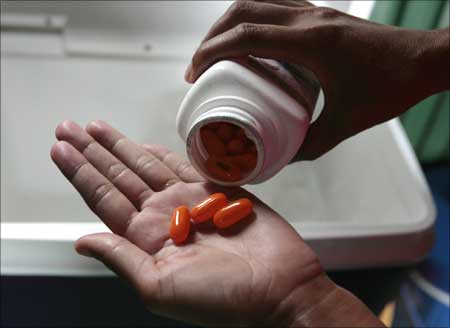
Dabur has moved quickly to take advantage of the ban.

Baba businesses are sprucing up their act as they expand product portfolios and enhance brand image

Supreme Court judge DY Chandrachud has expressed anguish over the withdrawal of a 'Karva Chauth' advertisement featuring a same-sex couple due to "public intolerance," saying there is a need to change the mindset of both men and women.

Sebamed's campaign for its cleansing bar of the same name, released across print, television, digital and outdoor, has also named Santoor, a popular soap brand from Wipro Consumer Care.

Three stockmarket experts give their best picks for the New Year.
